
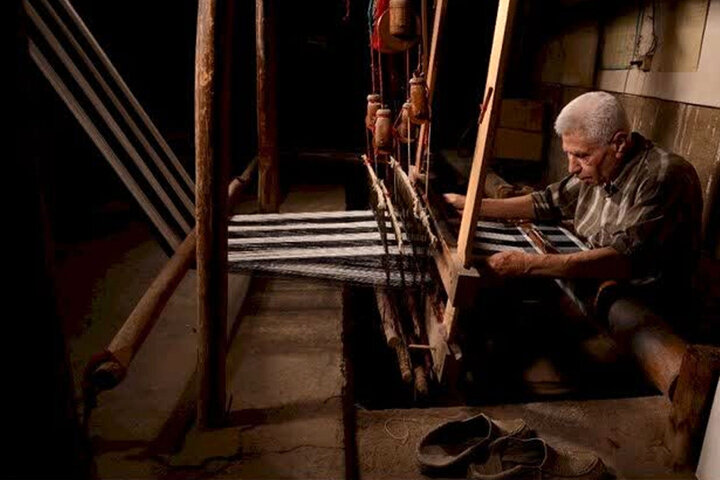
TEHRAN — Kashan, Isfahan province, has long been considered one of the most important textile centers in the world, but given its rich history, serious, targeted action is needed to preserve and develop this precious heritage.
As global demand for Iranian handloom products increases, activists in the sector believe that the city’s current production capacity does not meet orders and that the sector needs investment and urgent infrastructure development, Miras Alia (CHTN) reported.
Mohammad Binaba, Deputy Director-General of the Kashan Cultural Heritage, Tourism and Handicrafts Department, emphasized the need to strengthen Kashan’s production infrastructure.
Commenting on the historical importance and economic potential of traditional textile arts in the region, he pointed out the unique antiquity of textiles in the Sialuk region. Based on archaeological discoveries, its origins date back to approximately 4200 BC.
He explained that the discovery of objects such as knife handles with textile patterns and other weaving tools in the Sialuk Hills clearly shows that the local population has been skilled in weaving techniques for thousands of years.
This not only confirms Kashan’s glorious history but also solidifies its status as the world’s oldest textile center, he added.
Throughout history, Kashan has been known as a city with a textile identity, especially in the post-Islamic era. Among them, the art of zari weaving, one of the most luxurious textile fields, occupies a special place.
Zari weaving is the art of carefully and skillfully weaving threads of gold, silver, and silk to create intricate and precious textiles. A fabric that has been a symbol of prosperity and social status for centuries. It is used to enhance the luxury of formal dresses, tablecloths, cushions, etc.
Binava continued, “Traditional weaving in Iran and Kashan has been in decline for some time, but fortunately in recent years we have witnessed a resurgence of this art due to government support, artists’ efforts, and increased public attention to authentic handmade products.”
He pointed out that in recent years, with the development of workshops, the establishment of training courses, the revival of forgotten fields and the organization of specialized events, Kashan has once again become one of the important centers of traditional textiles in the country.
As a result of these efforts, Kashan was registered as a national traditional textile city in 2018, he said.
Five years later, in 2023, the city officially received the title of World Textile City in recognition of the presence of active workshops, its glorious history and influential role in preserving Iran’s textile heritage, he added.
Commenting on this important achievement, Mr. Binaba said, “These titles are not only an honor for Kashan, but also place a great responsibility on our shoulders. To maintain Kashan’s global brand, we must take serious actions to develop our infrastructure and increase our production capacity.”
KD