
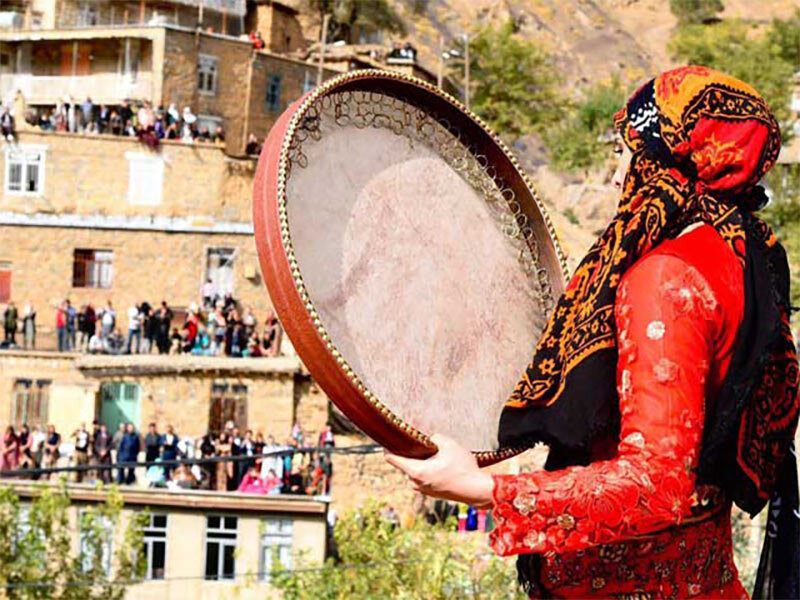
Beyond the union of two individuals, a Kurdish wedding represents a deeply rooted social and cultural event, a vibrant expression of tradition, community, and joy. These ceremonies, often held in fields or village courtyards, reflect the strong Kurdish identity, hospitality, and love of music and dance.
Kurds and their homeland
Iran’s Kurdish population is mainly concentrated in the western provinces of Kordestan, Kermanshah, Western Azarbaijan, and parts of Iram. Although each region has its own dialect, clothing style, and distinctive customs, they share a common cultural foundation rooted in Kurdish history and tradition. Cities such as Sanandaj, Mahabad, Kermanshah and Mariban are known for their rich folklore, traditional music and warm hospitality.

engagement and preparation
The road to marriage begins long before the wedding. Traditionally, an elder from the groom’s family visits the bride’s home to formally propose marriage. Once the families reach an agreement, they exchange symbolic gifts such as sweets, cloth, and sometimes gold, marking the beginning of the engagement period.
Wedding preparations are extensive and involve the entire community. Relatives and neighbors provide food, decorations, musical arrangements, and more, turning the celebration into a collective effort that strengthens social bonds.

wedding
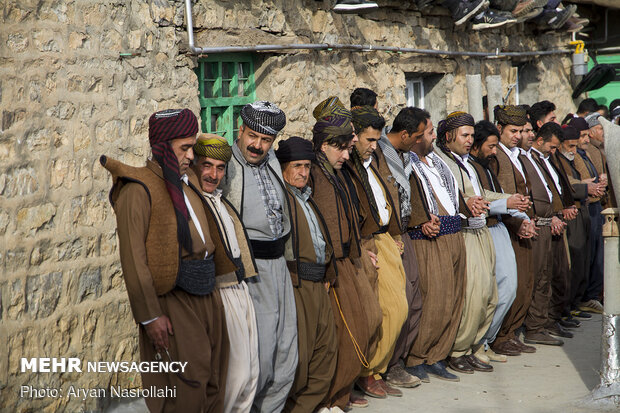
Kurdish weddings typically last several days filled with music, dancing, and festivities. One of the most iconic elements is the halparque, a traditional group dance. Men and women hold their hands and little fingers in a large circle and move rhythmically to the sounds of the daf (frame drum) and sorna (wind instrument). The lead dancer often carries a colorful handkerchief and sets the pace and energy of the dance.
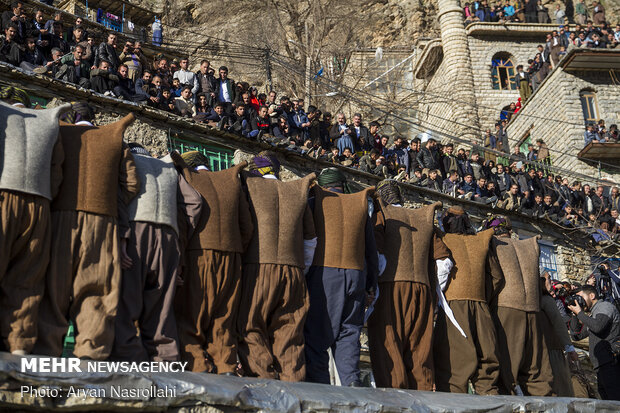
The bride usually wears a stunning traditional dress made of bright velvet or silk, adorned with coins and jewels that sparkle in the sunlight. The groom wears Kurdish costume, which often includes a wide belt and vest. During the ceremony, guests present the couple with sweets, rice, and flower petals, symbols of prosperity and happiness.

symbolism and community spirit
Every element of a Kurdish wedding has a symbolic meaning. Music represents unity and resistance, dance celebrates life and collective strength, and feasting represents abundance. Community participation emphasizes the Kurdish belief that marriage is not just between two people, but between families and, indeed, entire villages.

Even today, as modern influences reshape many aspects of life, Kurds continue to preserve these ancient traditions. Kurdish weddings are not only joyful events, but also proud expressions of cultural identity and living proof of the resilience and beauty of Kurdish traditions in Iran.
Report by Marji Rahmani