
TEHRAN – Washington appears to be persisting in its elementary demands for a de-escalation deal with Tehran, a situation underscored by two senior Iranian government officials who reiterated the country’s firm stance against its nuclear activities and missile range (the very weapons used in June to thwart a US-Israeli attack on Iranian infrastructure).
Iran and the United States began indirect negotiations in April to develop a deal to replace the Joint Comprehensive Plan of Action (JCPOA), the 2015 nuclear deal that limited Iran’s nuclear program in exchange for sanctions relief. During his first term, President Trump announced the U.S. withdrawal, reimposed sanctions on Iran, and then annulled the deal. He also helped Israel launch a 12-day war against Iran on June 13, just days before the sixth round of talks was to be held in Oman, derailing the diplomatic process he had begun during his second term. Last week, President Trump acknowledged that the United States entered the war on its 10th day in public, bombing three Iranian nuclear facilities, and that it had been “pretty much in charge” of the invasion from the beginning.
It remains unclear whether Iran’s deep underground nuclear facilities were destroyed in the war. Iran has adopted a policy of ambiguity, and analysts have suggested that even if its facilities become inoperable, the country could resume nuclear activities soon, given that its industry is fully indigenous.
However, the US government wants to assume that Iran’s nuclear capabilities no longer exist, the Tehran Times understands. As a result, the United States is now insisting that Iran agree to reduce the range of its missiles in new talks, a condition Iran has long considered unacceptable. Recent wars have also heightened public alarm over the possibility of losing the country’s main defense weapon. On Saturday, Revolutionary Guard aerospace officials announced that civilians are calling on the military to use their funds to build more missiles.
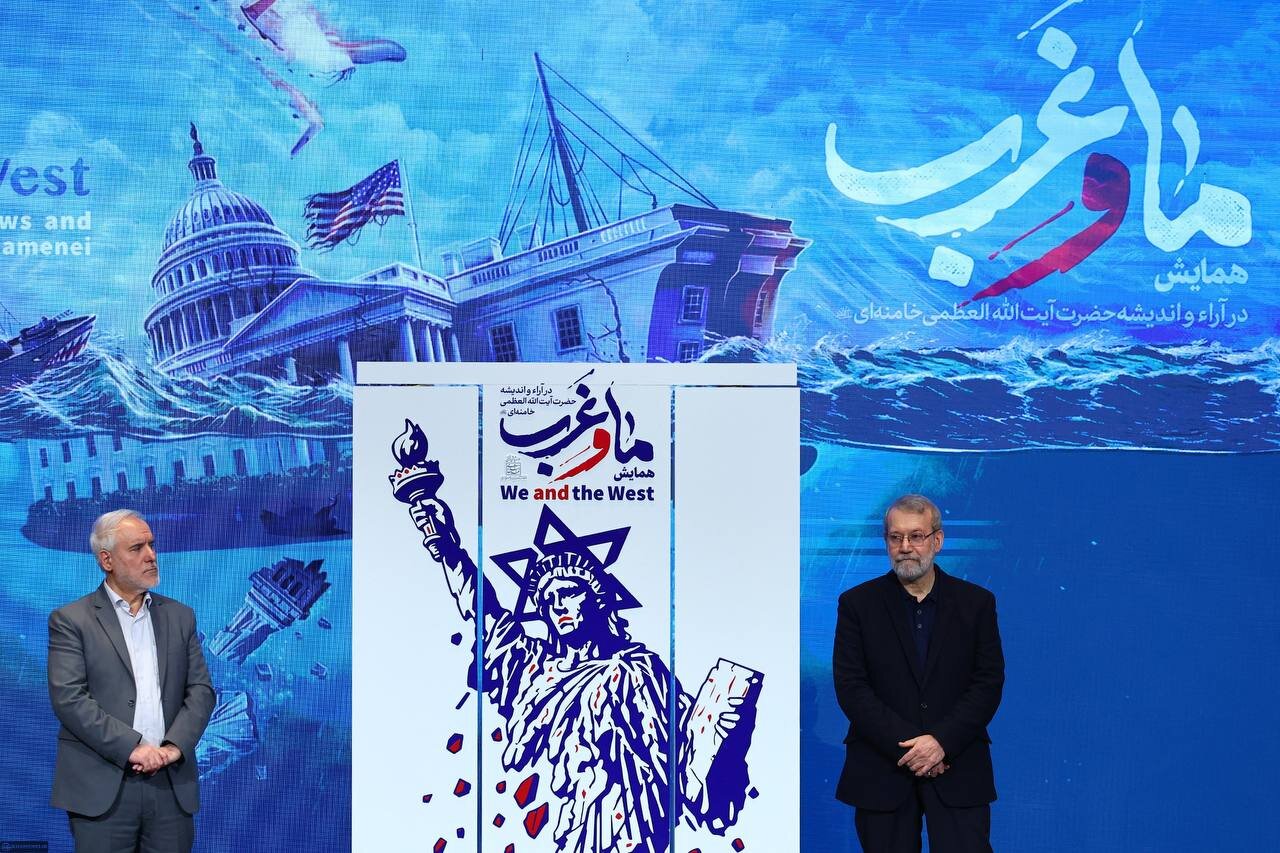
Ali Larijani, the secretary of Iran’s Supreme National Security Council who became the country’s security chief after the war, said on Monday that the United States is not in a position to determine the range of Iran’s missiles. “What does it have to do with Western countries commenting on the range of Iran’s missiles?” he asked. “No country has the right to interfere in the defense capabilities of the Iranian state,” Larijani said, adding that this is an independent issue. He spoke at the closing ceremony of the conference “We and the West: Thoughts and Views of the Leaders of the Islamic Revolution.”
The security chief also claimed that Western countries were using Iran’s nuclear program as a pretext to put pressure on Tehran. This claim is supported by an earlier Tehran Times report that revealed in September that Iran had offered to transfer all of its 60% enriched uranium to the West if the three European countries lifted the snapback of pre-JCPOA UN sanctions. The United States rejected the proposal and told European countries to proceed with their plans.
Iran has also not abandoned its nuclear program. Foreign Minister Abbas Araghchi, who led Iran’s negotiating team in April, said after visiting Iran’s Atomic Energy Organization headquarters on Monday that the country had “worked hard, fought and shed blood” for its nuclear achievements and had no intention of abandoning them, regardless of the pressures it faces.