
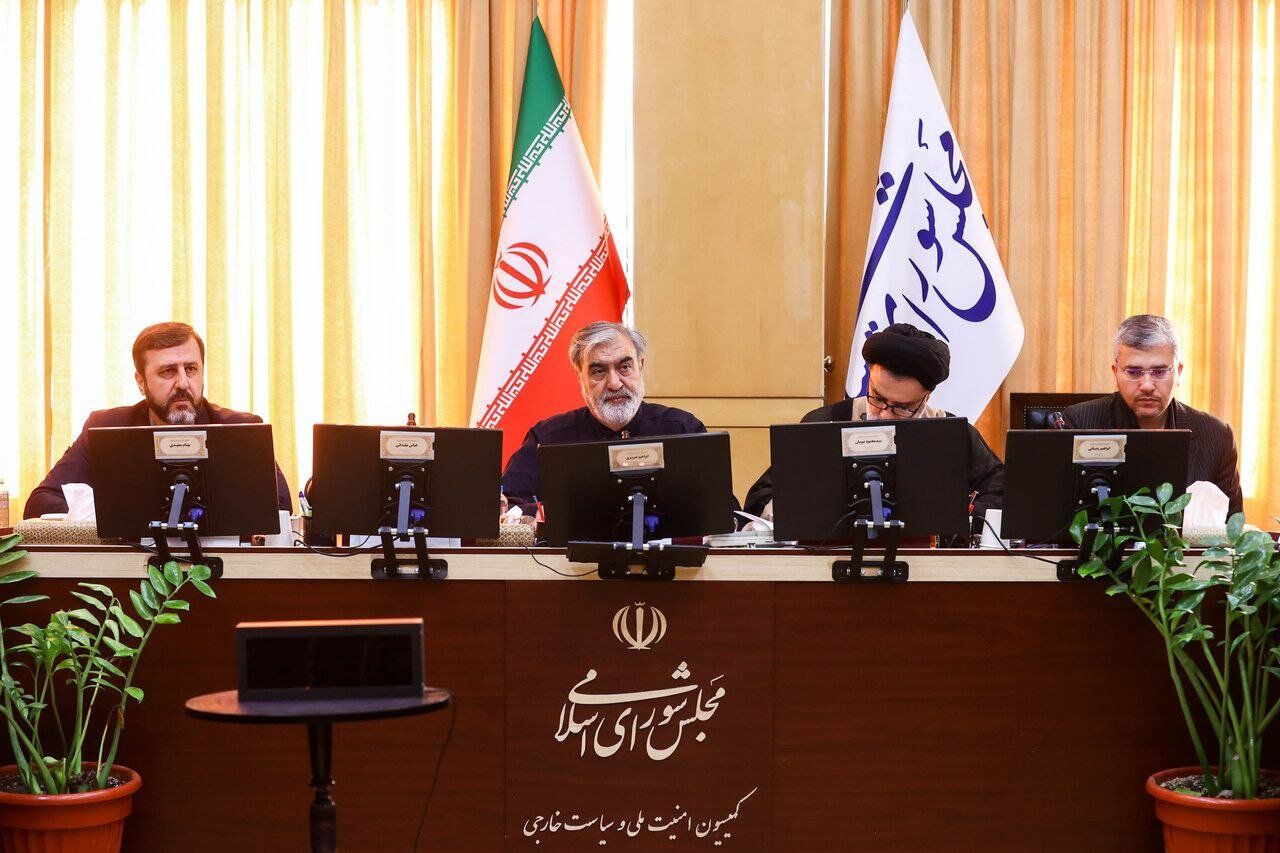
TEHRAN – The National Security and Foreign Policy Committee of the Iranian Parliament has firmly condemned the anti-Iranian resolution recently adopted by the International Atomic Energy Agency (IAEA) Board of Governors, after starting the process of devising appropriate countermeasures.
Committee spokesman Ebrahim Rezaei dismissed the resolution as politically motivated and illegal, stressing the need for a strong and deterrent response to the move. He made the comments after an extraordinary meeting of the committee attended by Iran’s deputy foreign minister and deputy head of Iran’s Atomic Energy Organization. Mr. Rezaei had previously suggested that Tehran withdraw from the Non-Proliferation Treaty (NPT).
“This meeting was held to consider the IAEA’s recent resolutions against the Islamic Republic of Iran,” he explained.
The IAEA board on Thursday narrowly approved a resolution drafted by the European troika (France, Germany, Britain) and the United States, passing by 19 votes to three, with 12 abstentions, calling on Tehran to report “without delay” on Iran’s enriched uranium stockpile and facilities damaged in June’s military invasion by Israel and the United States, but making no mention of Iran’s longstanding cooperation with the agency.
Rezaei added: “At the[committee’s]meeting, Deputy Foreign Minister Kazem Ghalibabadi presented a report on the developments in the adoption of the[IAEA’s anti-Iran]resolutions, stating that it is illegal.” He added that Iran will definitely take the necessary response.
Iran’s Foreign Ministry has already condemned the move, saying it is evidence that the US and European troika are trying to exploit the IAEA to increase pressure on Iran.
The ministry said in a statement that the resolution violates the fundamental principles of the NPT, which gives member states the right to use nuclear energy for peaceful purposes.
Separately, Iranian Foreign Minister Abbas Araghchi said the US and European troika had “nullified” a new cooperation agreement Iran signed with the IAEA in Cairo through provocative actions. In a post on his X account on Friday, Araghchi accused the US and E3 of attacking diplomacy at every step and bringing about the collapse of the Cairo agreement.
The deal establishes a new framework for cooperation after Iranian lawmakers suspended engagement with the IAEA following the U.S. and Israeli attacks in June. Iranian officials have said the locations of many attack sites were known only to Iran and the IAEA, and that the U.N. nuclear watchdog had leaked that information to the regime. Iranians also reported discovering a secret letter sent by Iran to IAEA Director-General Rafael Grossi in the occupied territories during intelligence operations conducted before the war.