
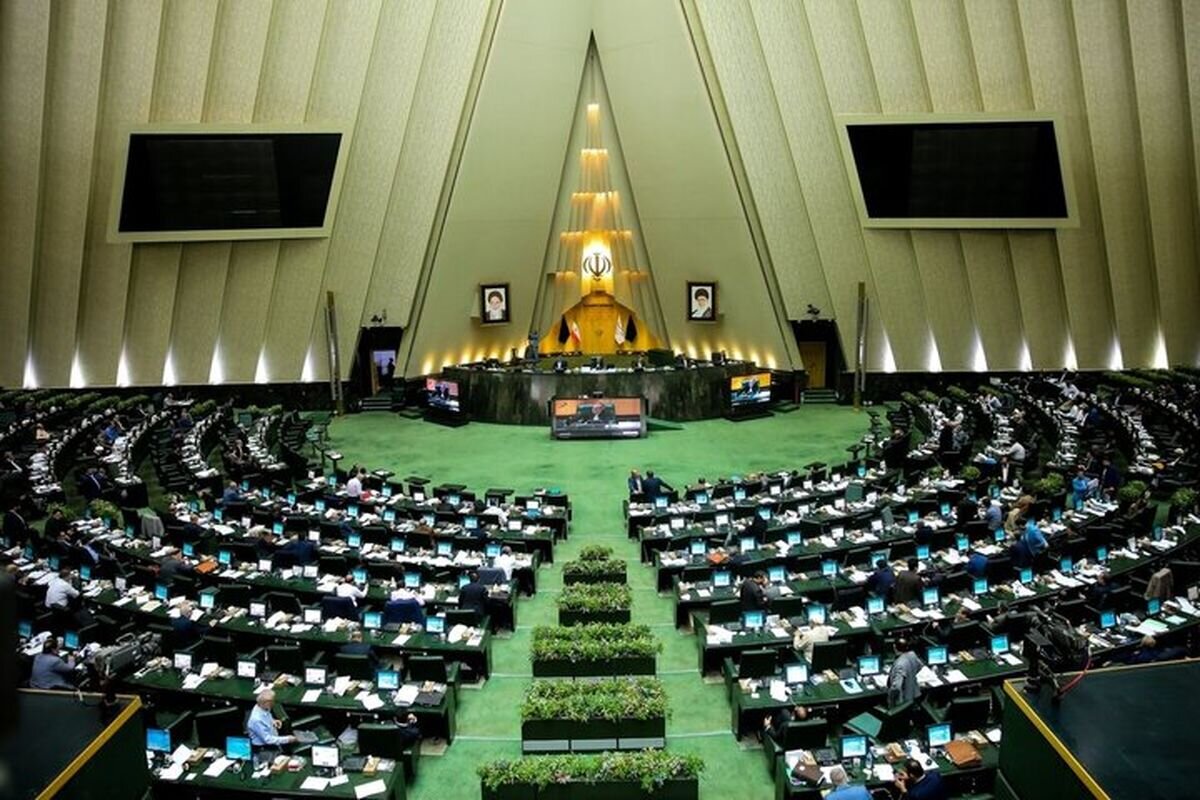
TEHRAN – Members of the Iranian parliament’s National Security and Foreign Policy Committee met with Ali Larijani, secretary of the Supreme National Security Council on Tuesday to discuss a variety of issues, including the future of the nuclear program, regional dynamics and the situation on Iran’s strategic islands.
Committee spokesman Ebrahim Rezaei told reporters during the meeting that lawmakers emphasized the need for a firm response to Western non-compliance with the nuclear file and called for a redefine Iran’s role in regional equations. He said lawmakers also expressed concern over the weakening of certain national institutions, urging prompt measures to address the difficulties faced by vulnerable social groups and seized regions. The housing issues and the importance of Bumusa Island were also highlighted.
According to Rezaei, the conference further explained the situation in Afghanistan, past negotiation failures, the importance of national unity, and the need to guide public opinion through responsible media involvement. He noted that the head of the Congressional Committee emphasized the need for continued interaction and coordination between Congress and the Supreme National Security Council. On his part, Larijani emphasized the importance of protecting national solidarity and strengthening social cohesion.
The debate comes amid an increase in parliamentary calls for Iran to reconsider membership in the Nuclear Non-Proliferation Treaty (NPT). Rezaei revealed on Monday that about 15 individual proposals have been submitted to the committee urging encouragement to retreat in response to the decision by the European trio (UK, France and Germany) to trigger a “snapback” mechanism. He said the committee has combined the proposal into a single draft, but has not yet been placed on the parliamentary agenda.
“The illegal activities of three European countries have led many lawmakers to submit proposals for withdrawal,” Rezaei said, stressing that the committee has concluded about one draft, but has not yet made a final parliamentary decision.
This controversy stems from the 2015 Joint Comprehensive Action Plan (JCPOA). Iran has accepted restrictions on its nuclear program in exchange for sanctions relief under UN Security Council resolution 2231.
Iran has long argued that the US did not respect its commitment, even before Washington withdrew from the agreement under then-President Donald Trump in 2018 and reimposed sweeping sanctions. After waiting more than a year for Europe to offset the US withdrawal, Tehran gradually reduced compliance with the JCPOA restrictions, claiming that the action was legal and reversible under the transaction if sanctions were lifted.
On September 19, the 15-person Security Council failed to adopt a resolution that would hamper the re-challenge of UN sanctions against Iran after E3 triggered a snapback mechanism and accused Tehran of failing to comply with the JCPOA.
Subsequent resolutions that sought to allow both the JCPOA and resolution 2231 to be extended by six months were also not passed by the Security Council on Friday.
Tehran repeatedly dismissed the move as illegal, claiming that Washington had confiscated its legal authority to invoke the JCPOA mechanism after leaving the agreement.