
TEHRAN – Venezuela has forcefully rejected President Donald Trump’s latest threat to close its skies, arguing that the United States has no legal authority to impose restrictions on other countries’ airspace. Caracas officials claim the move is not only illegal, but a direct challenge to the principles of international law.
The basis of Venezuela’s position is the 1944 Chicago Convention, the treaty that governs civil aviation around the world. This treaty stipulates that each country has exclusive sovereignty over its own territorial airspace. This principle has guided international aviation for more than 80 years and remains the basis of the world order. By seeking to dictate conditions over Venezuela, the United States is ignoring the treaty it helped draft and has relied on for years.
The Trump administration has sought to legitimize its position by linking Venezuela to drug trafficking networks. However, these claims are not supported by verifiable evidence. Since early September, the U.S. military has reported 21 attacks on vessels suspected of carrying drugs in the Caribbean, killing more than 80 people. No independent evidence has been provided to substantiate these operations. Venezuela says the accusations are politically motivated and aimed at overthrowing President Nicolas Maduro. Without transparent evidence, the story of Venezuela as a drug hub remains speculative and unconvincing.
This lack of evidence is significant. International law requires that punitive measures be based on facts that can withstand scrutiny. By designating a group of Venezuelan suspects as a terrorist organization, the United States is expanding its legal authority while circumventing the need for reliable documentation. Such unilateral actions undermine trust in a system intended to maintain fairness and legitimacy.
Venezuela responded by appealing to the international community. The country is calling on governments, the United Nations and multilateral organizations to reject the alleged act of aggression. Officials have stressed that Venezuela will respond to external pressure “with legitimacy and dignity,” reinforcing the idea that sovereignty must be protected by law, not force.
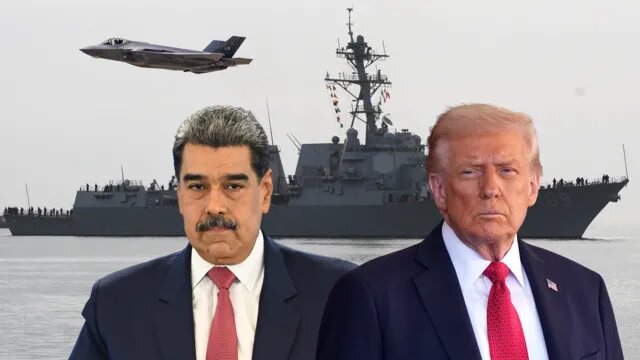
Looking at the big picture reveals a familiar pattern in Latin America. The United States has significant military assets near Venezuelan territory, including aircraft carriers and thousands of troops. President Trump has even raised the possibility of a ground attack “from the ground” in Venezuela, further escalating tensions.
Officially, its presence is part of an anti-drug operation. In fact, it is reminiscent of previous interventions in the region where criminal charges were used to justify political and military pressure. From Panama in 1989 to recent sanctions regimes, Washington has often blurred the line between law enforcement and regime change.
For Venezuela, the issue concerns not only control of the skies, but also the principle of independence. By invoking the Chicago Convention, Caracas is reminding the world that rules apply equally and that no nation has the right to impose its will on another.
Ultimately, this controversy highlights the conflict between law and advocacy. Venezuela maintains that its sovereignty is protected by international treaties and that accusations must be proven, not presumed. By acting without basis, the United States risks undermining its own credibility and the very legal framework it claims to protect.