
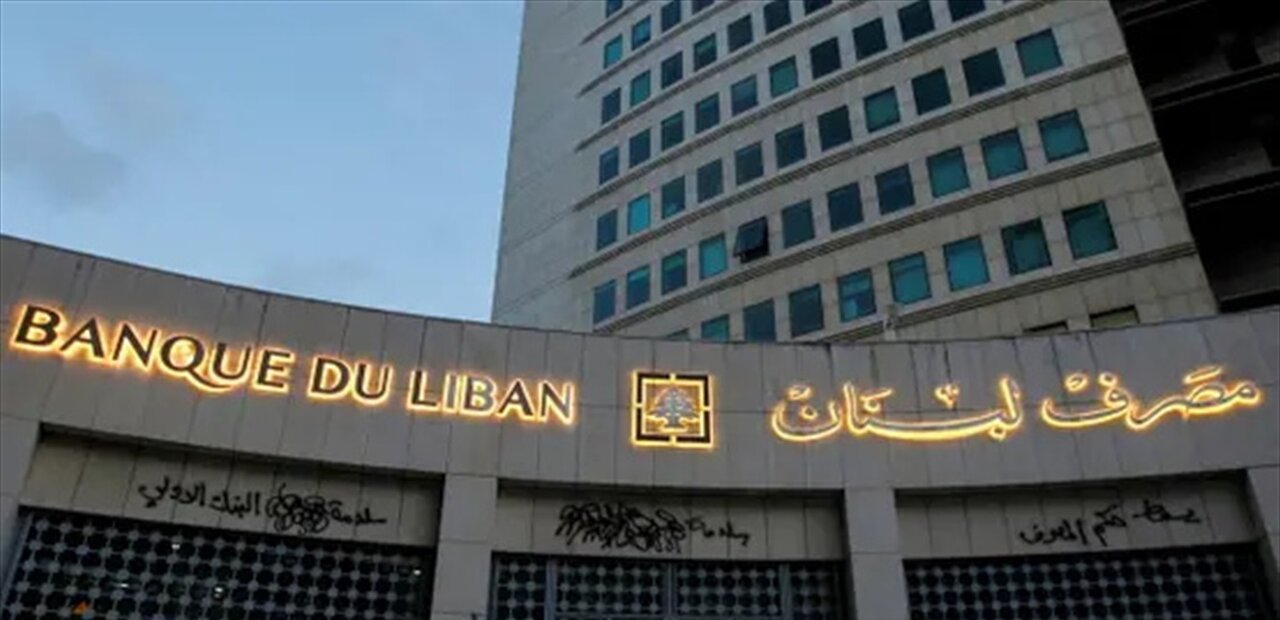
BEIRUT — When Banque du Liban (BDL) released Circular No. 3, it was embellished with the usual technocratic jargon of “compliance,” “monitoring” and “risk mitigation.”
But peel away the sophisticated language and a less flattering reality emerges. Lebanon’s central bank effectively relinquished its authority, handed over the master key to Washington, and at the same time volunteered to police its own people in place of the US Treasury envoy, who was in Beirut only a few hours before issuing its latest financial precepts.
Circular No. 3 is addressed to all money exchangers, e-wallet providers, transfer operators, loan offices, and financial institutions and requires customers to declare cash transactions of $1,000 or more.
Not 15,000, as required by Lebanese law. 1000. In other words, the price of a modest refrigerator or a month’s rent can now trigger a serious financial investigation.
According to the circular, all entities authorized to handle cash will be required to collect and store exhaustive customer data under the banner of ‘know your customer’. Exhaustive is an understatement.
The form, which has been reviewed and “proudly” approved by the Central Council, asks for all information except a blood sample. That is, complete identity information, birth data, address to the nearest landmark, employment history, monthly salary, source of income, purpose of transaction, marital information, frequency of remittances, and expected cash activity.
Lebanon has entered the realm of forensic accounting. Beneficiaries, business activities, financial health, family circumstances, ownership percentage, etc. are all taken into consideration for the privilege of transferring $1,000 of your own money.
Ironically, or perhaps predictably, this circular both asserts the legal basis for existing regulations and violates them. The Lebanese Law (No. 42/2015) explicitly sets the cash declaration threshold at $15,000, in accordance with FATF guidelines.
But the BDL, eager to demonstrate its deference to Washington’s “recommendations,” simply rewrote the rules. Without Congress. Don’t overlook it. without discussion.
To make matters worse, the circular expanded the scope of surveillance from cross-border transactions to transactions within Lebanon, effectively turning every money exchanger into a mini-intelligence desk.
Meanwhile, the same political and financial class that plundered depositors’ savings expects citizens to trust the very banking system that evaporated their lifetime incomes.
The message is clear. “Go back to the bank you robbed, or prove your innocence every time you get a thousand dollars.”
Lebanese currently face greater scrutiny than many countries on the FATF’s gray list. To be clear, even the UAE, an internationally vetted country, has never humiliated its residents with such intrusive and arbitrary demands.
As the saying goes, “If you quack like a duck…” this circular facility walks, talks, and quacks like a foreign-imposed surveillance regime masquerading as reform.
I can’t help but pay attention to this timing. U.S. officials visit Beirut on the pretext of “depleting Hezbollah’s financial resources” and then immediately leave behind a regulatory time bomb.
A few days later, the Central Council rubber-stamped this document, expressing the enthusiasm of students to submit homework written by someone else.
Deadlines are equally telling. Institutions must forward their declarations by December 1, 2025. New clients must be processed immediately. Existing customers have six months to hand over their data.
Whether any of these truly combat money laundering is beside the point. After all, political utility is the message, because this is not about $1,000, but about domination, subordination, and the quiet normalization of foreign interference disguised as “compliance.”
If Lebanon’s central bank is willing to rewrite domestic law at the snap of a foreigner’s fingers, what happens next? How long until every financial transaction becomes a political weapon? And when will Lebanon regain the right to regulate its own economy without having foreign guards at every cash register?
To underline the gravity of this moment, the fact that US Special Envoy Ortagus publicly praised Central Bank Governor Karim Said as the “spearhead” of Washington’s fight against Hezbollah is nothing short of a national scandal.
Not figuratively, but literally. A U.S. special envoy publicly appointing the governor of Lebanon’s central bank to a front-line role in the U.S. strategic conflict is the kind of spectacle one would expect in a de facto occupied country, where the institutions of a so-called sovereign state function as mere administrative appendages of the occupying power.