
On the sidelines of the 80th session of the UN General Assembly in New York, Iranian diplomats face unprecedented and unusual restrictions imposed by the US government. Observers note that these restrictions are not only a strict contradiction with international norms and regulations, but also serve as clear indications of hostility and extremism among American policymakers.
One of the strangest measures is the US State Department’s requirement that Iranian diplomats obtain prior permission for regular purchases and even daily necessities. Experts and public opinion from Iran and around the world have described the move as “embarrassing,” calling it a symbol of Washington’s most irrational behavior towards Tehran.
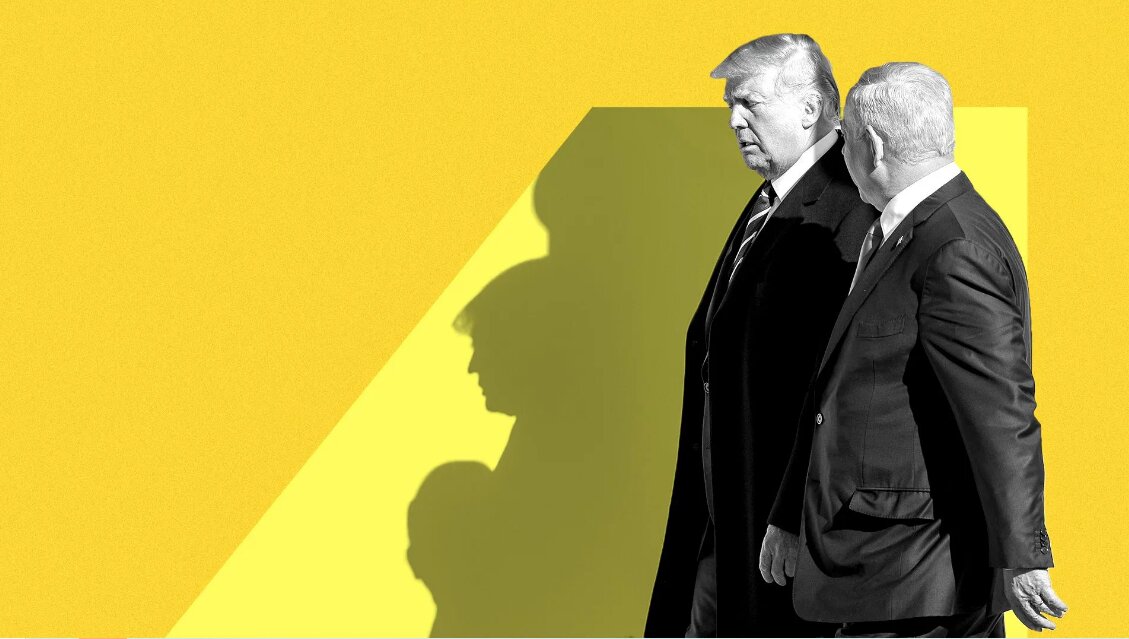
Meanwhile, politicians accused of war crimes, such as Prime Minister Benjamin Netanyahu, who issued an arrest warrant by the International Criminal Court, move around freely in New York without issuing obstacles. This blatant contradiction reveals, above all, American double standards in addressing principles of international law.
News of these restrictions prompted a wave of reactions across the media and social networks. Many viewed the policy as a sign of disruption and debilitating US foreign policy, emphasizing that rather than creating a real obstacle for Iranian diplomats, they portrayed the image of Washington on the world stage as an unreliable actor.
One of the most important aspects of recent debate is the double standard that America applies to its foreign policy and diplomacy. Iranian diplomats must obtain permission to purchase the simplest daily items, but politicians accused of international crimes will walk freely in New York. This contradiction undermines the legitimacy of US foreign policy not only from a legal perspective but also from a moral perspective.
The most obvious example of such overlap is Washington’s stance on the ICC’s warrant for the Israeli Prime Minister. The court issued warrants and many countries declared that if he entered their territory they had an obligation to enforce it. However, the United States has openly said it would not impose restrictions on his entry and defend his immunity. At the same time, the very same government is imposing unprecedented restrictions on Iranian diplomats.
Such selective actions demonstrate that the American standards for applying international rules are rooted in political interests and local alliances, not legal principles. This approach places the United States as a country that accepts rules only if it benefits itself, and is easily ignored otherwise. This is exactly what many countries call “double standards” and “instrumentation of international law.”
The consequences of this overlap have led to increased distrust of the United States worldwide. Today, countries not directly targeted by such restrictions will conclude that tomorrow could fall victim to the same selective policy. Over time, this erodes both bilateral and multilateral cooperation with Washington. In other words, through such actions, the United States will not only put pressure on Iran, but will gradually undermine global confidence in itself.
Results of double standards as a UNGA host
First, the Washington movement erodes America’s iconic capital as a “neutral host” than creates practical obstacles for Iranian delegations. The countries that host the UN headquarters are responsible beyond bilateral conflicts. Violating this responsibility strengthens the perception that it uses host status for political gain, undermines America’s moral legitimacy in managing multilateral events.
Second, this approach raises costs to Washington’s international reliability. Even governments and elites that do not align politically with Tehran are sensitive to host neutrality as stakeholders of institutional order. When extraordinary restrictions are imposed on member state delegations, the cross-border message is that host rules are flexible and subject to convenience. As a result, questions are growing about America’s credibility in the role of future mediation and hosting.
Third, the reliability of the United Nations itself is reduced. When host countries become tools of pressure, hosted institutions are inevitably faced with questions about their operational independence and equal access. This will revive the demand for “geographical diversification” of conferences and revive the old proposals to move some events to more neutral grounds.
Finally, domestic political expenditures cannot be ignored. The gap between American slogans about the rule of law and actual selective behavior provides new ammunition for domestic and international critics to challenge their policies. Rather than constraining our rivals, we will gradually erode America’s soft power. This is crucial in forums like the United Nations.
Why our actions are a clear violation of international rules
Beyond the issue of US dual standards, Washington’s move to limit Iranian delegations is itself a clear violation of its international obligations as a UN host.
Under the Headquarters Agreement signed between the United States and the United Nations in 1947, Washington is obligated to ensure that all representatives of the Member States have free, unobstructed access to UN facilities and related activities. The diplomat’s daily purchases or conditioning that limits their movements is openly violating these commitments.
International law emphasizes the principle of neutrality in host countries of international organizations. Hosts must provide equal terms to all states, regardless of political or bilateral conflicts.
However, recent US measures have violated this principle, indicating that Washington is using its hosting status as a lever for political pressure. This would politicize legal positions and subordinate the independence of the United Nations to the interests of a single state.
While there have been cases in UN history where the US has rejected visas to delegates from certain countries and imposed travel restrictions, new restrictions on Iran, which covers purchasing basic essentials, represent an unprecedented level of interference. These measures are independent of security or legal frameworks. They are purely political decisions and are incompatible with the spirit of international cooperation. That’s why experts called them “unprecedented” and “embarrassing.”
Moreover, such actions have meaning far beyond US-Iranian relations. If a country like the United States is able to arbitrarily impose restrictions on delegates of UN member states based on political motivation, other states can follow suit in similar circumstances. This trend will weaken the entire system of multilateral diplomacy and outlaw one of the most important areas of international dialogue.
Conclusion
America’s recent treatment of Iranian delegations in New York goes beyond isolated acts, indicating the prioritization of political interests over Washington’s international rules. The Diplo Party’s daily purchase constitutes a clear violation of host state duties under the UN framework, and instead of truly limiting Iran, it projects an internationally hostile and unreliable image of the United States.
This contradiction becomes even more evident when the Israeli Prime Minister moves freely to New York while Iranian diplomats face unprecedented restrictions despite the ICC’s arrest warrant. Such double standards could undermine Washington’s moral legitimacy and erode global trust in the United States, and this path could reinforce calls for moving some of the UN operations to more neutral grounds.
MNA/