
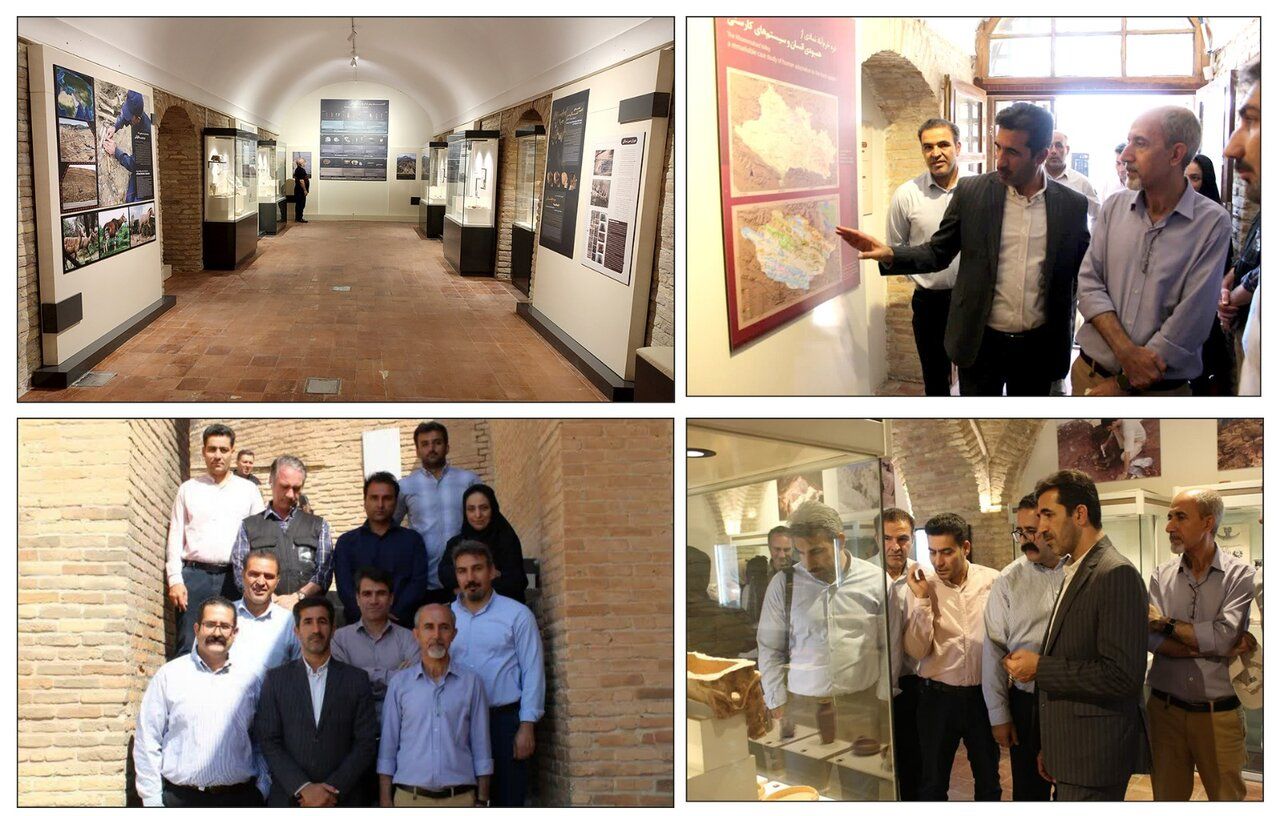
TEHRAN – The Lorestan Archaeological Museum, located within the historic Falak-ol-Aflak Castle in Khorramabad, officially reopened to the public on Thursday, October 9, after a three-month closure.
The temporary closure was a precautionary measure to protect the valuable collection during the recent 12-day conflict.
The reopening ceremony was attended by several prominent figures, including Fereydun Biglari, Deputy Culture Secretary of the National Museum of Iran. Ata Hassanpour, Director of Cultural Heritage, Tourism and Handicrafts of Lorestan Province. A delegation of academic staff from the Archeology Department of Raj University, Kermanshah.
In a statement at the event, Ata Hassanpour detailed the reasons for the closure. “Following the 12-day forced war in June this year, museums across the country, including the Archaeological Museum of Lorestan in Falak ol Aflak Castle, were temporarily closed by direct order of the Minister of Cultural Heritage, Tourism and Handicrafts, in order to ensure the protection of valuable cultural and historical relics,” he said.
Hassanpour added that the period of closure was a great opportunity to make necessary improvements to the new museum. “One of its galleries, which was previously equipped to display finds from the caves and prehistoric sites of the Khoramabad valley for the World Heritage nomination document, has been further enhanced and prepared for its reopening,” he explained.
The Director-General concluded his remarks by emphasizing that: “In the crisis of the 12-day war, protecting historical monuments and securing the heritage of our ancestors was our top priority. Fortunately, the necessary protective measures were implemented in the shortest possible time, by complying with all the necessary standards.”
The Lorestan Archaeological Museum has two main galleries dedicated to prehistoric and historical periods. Its collections display artifacts from various archaeological periods representing more than 100,000 years of human settlement in the region.
Approximately 390 archaeological artifacts are on display, from the Paleolithic, Paleolithic, Neolithic and Chalcolithic periods, through the Bronze and Iron Ages, to the Seleucid, Parthian, Sasanian and Islamic periods. The collection also includes recent finds from archaeological excavations carried out on the tombs of Falakol-Aflak Castle.
As a complement to the archaeological finds, the museum also displays a collection of fossils from the Dime site, with some specimens dating back more than 7 million years.
morning