
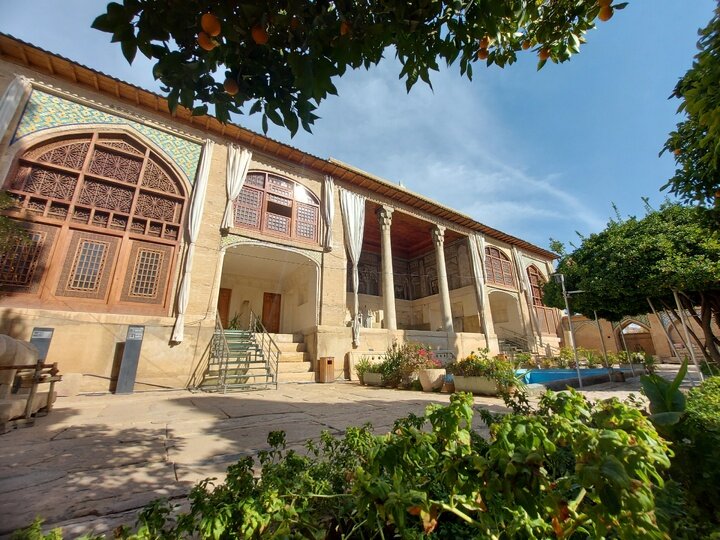
TEHRAN–Director of the Fars Cultural Heritage Department Sadegh Zareh announced the implementation of restoration work on 34 historical monuments located in different regions of the province.
Milas Alia said these projects are being implemented with the aim of protecting Fars’ precious heritage and providing the basis for sustainable tourism development.
He added that the Fars Cultural Heritage Department has developed a comprehensive plan for the preservation and restoration of historical monuments this year, and efforts are being made to preserve the heritage of the past while offering the possibility of introducing and utilizing these monuments for tourism.
He stressed that Fars province is a treasure trove of Iranian history and civilization, adding that preserving the province’s historical monuments is considered a means of preserving the country’s national and cultural identity.
Zareh cited the restoration of the Sassanid Sarvestan Palace as one of the main projects, and said that the introduction of sanitary facilities, the restoration of the base building and the restoration of the main building are among the measures taken at the complex.
Referring to the restoration project in Shiraz, he added that the restoration and organization of the Hafezieh tombs, the Haft Tanan Stone Museum, the New Mosque, and the historic houses of Salehi, Alamdar, Medat (allegedly belonging to Saadi) and Barakat have also begun.
He continued that in the city, the restoration of the Aldesil Babakan Palace in Firzabad, the reliefs in the Chogan Valley in Kazerun, the reliefs of Parthian soldiers in Kiir and Kalzin, and the garden walkway in Pasargadae are among the notable projects in the field of historical sites.
Zareh also announced attention to religious and folk monuments, saying that restoration is underway of the Jame Mosque in Neiris, the Jame Mosque in Darab, the Jame Mosque in Surian in Bavanat, the Mosques of Ali Khan and Baga Khan, and the ancient baths in Lamed district.
He mentioned research activities, adding that the registration of intangible monuments in the cities of Shiraz and Yahrom and the completion of the archaeological map of Sarcehan province are on the agenda.
He emphasized that the development of scientific research and documentation complements the development of the cultural heritage field and physical measures, and plays an important role in transmitting knowledge and experience to the next generation.
Historically known as Persis, the province of Fars was the center of the Achaemenid Empire (550-330 BC), founded by Cyrus the Great. It then became the administrative center under Darius I, who established Persepolis as the ceremonial capital of the empire. Fars remains one of Iran’s most culturally important regions, home to iconic poets, historic sites, and architectural wonders.
Shiraz, the capital of Fars, is famous for its poetry, nightingales and gardens. It was a major center of learning in the medieval Islamic world and served as the capital of the Zandid dynasty (1751-1794). The city is home to some breathtaking landmarks, including the Afif Abad Gardens, Hafez Tomb, Sadi’s Tomb, and Attig Jamek Mosque. In addition, lush Persian gardens such as Narenjestan Gardens and Elam Gardens continue to attract visitors from all over the world.
KD