
TEHRAN – The intensive U.S. military presence in the Caribbean, including warships, patrol aircraft, MQ-9 drones, F-35 squadrons, and bomber flights, is sharply narrowing the political and diplomatic space around Venezuela.
A B-52 mission joined by a Marine F-35 was followed by a supersonic B-1 Lancer flight near the Venezuelan coast on October 23, but to many observers it looked more like a show of military power designed to put pressure on Caracas than a routine exercise.
Additionally, the United States announced it would send troops for “military exercises” in Trinidad and Tobago, just less than 13 miles from the Venezuelan coast and across the strait.
The US government claims the deployment is aimed at cross-border drug cartels. But critics have highlighted the scale of the operation, the shift from law enforcement language to a wartime framework, and the belligerent rhetoric of the U.S. president and other senior officials.
They argue that these factors suggest that counternarcotics is serving as a pretext for broader objectives, such as regime change and securing access to Venezuela’s hydrocarbon and mineral resources.
The shift is particularly evident when U.S. authorities borrow post-9/11 language and operational logic, treating cartels as external “terrorist” networks pursued across maritime and sovereign boundaries.
These changes are already having devastating consequences. Since early September, the United States has attacked ships off the coast of Venezuela and in international waters in the eastern Pacific Ocean, killing dozens of people.
According to a public tally, approximately 46 people were killed in the incidents. Lacking transparent evidence and clear legal procedures, the strikes risk extrajudicial killings and have drawn accusations from local governments and international rights experts that they erode established norms.
Rhetoric is matched by power. President Trump’s recent declaration that the United States has the “legal authority” to attack suspected drug traffickers, and his clear warning that “we will attack them very severely if they come in by land,” increases the danger by openly considering ground operations that cross sovereign lines. “We’re not happy with Venezuela for a number of reasons,” Trump said bluntly.
Such public signals narrow diplomatic options and increase the likelihood of miscalculation.
Caracas responded with a combination of defiance and public appeals for calm.
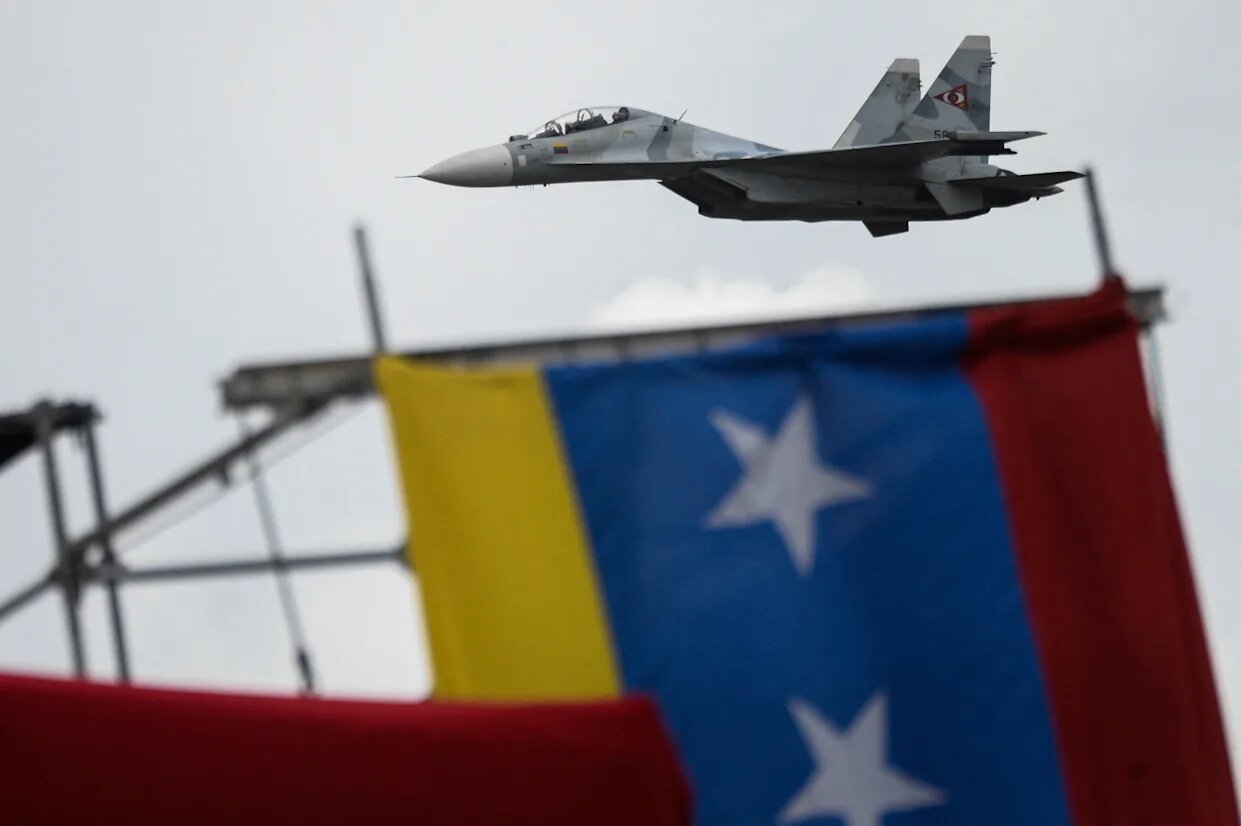
President Nicolas Maduro has accused Washington of an “open plot” to oust him, announced an expansion of coastal defenses and advocated, among other things, the large-scale deployment of Igla-S and other air defense systems, a message aimed at deterring invasion while projecting military and militia unity.
Still, his repeated and unmistakable appeals for “no crazy wars…peace, peace, peace” underline that Venezuela’s leadership wants to avoid all-out conflict.
Diplomacy has stalled. Previous engagements led by U.S. envoy Richard Grenell collapsed amid mutual mistrust and Washington’s insistence that President Maduro relinquish power, but Caracas treated the terms as evidence that the talks were a prelude to regime change. Opposition leader María Colina Machado’s Nobel Prize win raised her profile and provided outside forces with a new focus to advance the interventionist narrative.
At the same time, Secretary of State Marco Rubio’s hard-line stance has taken hold, branding Maduro illegitimate, imposing sanctions, and supporting coercive measures, further narrowing the political space for genuine dialogue.
Additionally, Admiral Alvin Holsey’s sudden announcement to retire from the U.S. Southern Command two years ahead of schedule has fueled speculation at the Pentagon and on Capitol Hill about internal opposition and friction with civilian leadership over the legality of attacks near Venezuela, The Intercept reported.
His departure underscores growing tensions in command cohesion and oversight amid the Caribbean military buildup.
In a country already scarred by sanctions and economic blockades, each new attack or threat increases the risk of miscalculation.
The choice is extremely difficult: to ease the spiral of unilateral force and coercion, or to accept the dangerous normalization of regime change by military means.