
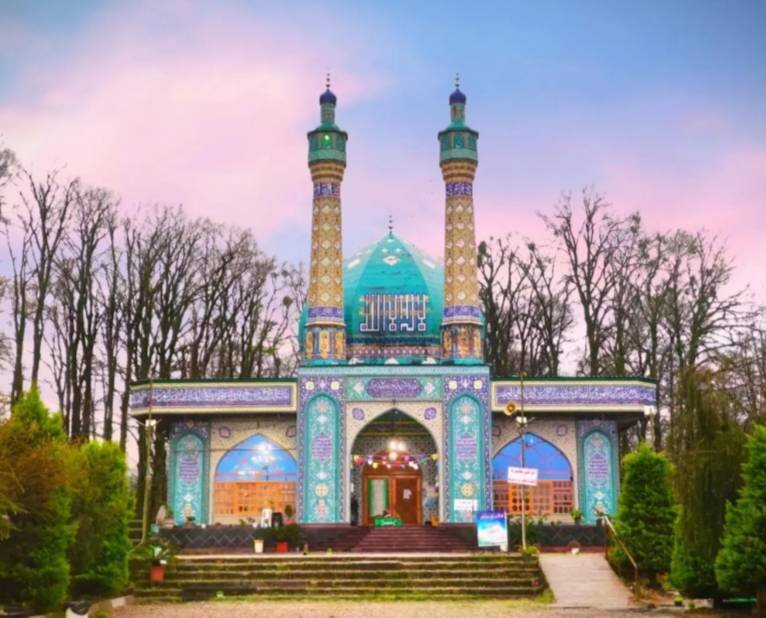
Mazandaran is rapidly emerging as a premier destination for religious tourism, an aspect that adds deep historical depth to its famous reputation for its scenic coastline and lush forests.
A beautiful region called Mazandaran in northern Iran is becoming a major destination for a special type of travel: religious tourism.
Famous for its beautiful coastline along the Caspian Sea and lush mountains, this province has hidden treasures. There are 1,262 sacred shrines here.
These sites are dedicated to important figures of Shia Islam, making the area a profound spiritual center.
This new focus adds a deep historical and cultural layer to Mazandaran’s identity, already well known for its natural vacations and local food.
Iran even has an official Mazandaran Day on the national calendar to celebrate its unique culture.
This recognition helps promote the region’s diverse attractions, from its natural wonders to its rich heritage, and invites visitors to explore a land where faith and history are beautifully woven into the landscape.

Split between the coastal plain of the Caspian Sea and the mountain range of the Alborz Mountains, the northern province of Iran is home to an astonishing 1,262 Imamzadeh shrines.
This extensive network of sacred sites positions the region, with Sali as its capital, as an important center for faith-based travel, complemented by its renowned ecotourism, countryside holidays and local cuisine.
This multifaceted identity was formally recognized when the 14th of Abang (November 5th) was designated as “Mazandaran Day” in the national calendar.
The annual event serves as a platform to promote the state’s diverse attractions, from natural wonders to historical and cultural heritage, while encouraging the preservation of local languages and traditions through cultural ceremonies, art exhibitions, and public programs.

The province’s role as a hub for religious tourism is deeply rooted in its history as the holy city of Shiite Islam.
Mazandaran is widely known for its pleasant climate and beautiful scenery, but its historical importance stems from being the birthplace of Iran’s first Shiite state.
Historical records show that the people of the north were uniformly devoted to Ahl al-Bayt, and the region became the center of rebellion against the Abbasid caliphate.
The region’s unique topography, including the formidable Alborz Mountains and dense forests, served as a natural fortress.
This rugged terrain blocked the advance of Umayyad and Abbasid armies, effectively turning the area into a haven for the Imam’s descendants, Shiites and scholars.
This historical background directly explains the high concentration of Imamzadeh shrines, which form the basis of Mazandaran’s religious tourism potential today.
Founding of the Shiite tradition
The foundations of this heritage were laid with the establishment of the Arabid state in Tabarestan, the historical name of the region, which later became known as Mazandaran.
Iran’s first Shiite government began in the historic village of Salekhan Qajr in present-day Noshahr.
A pivotal moment occurred when Hasan ibn Zid Alavi, who had been invited to the region, led the Eid al-Fitr prayers on the 14th month of Abban in the year 243 of the Persian calendar.
The people’s allegiance to him on the same day marked a watershed in Iran’s history, marking the formal establishment of the first Arabid Shiite state.
Today, the people of Mazandaran celebrate this rich heritage during the national week that bears the province’s name.
Cities like Babol, located in the central plains, host festivals such as Zelf-e-She, where locals perform authentic Mazandarani music.
The word refers to the gentle rains that condition hair and is a poetic reflection of the state’s natural surroundings.

From the capital, Sari, to the mountainous hinterland, Mazandaland fosters collective pride in a history where geography protects faith and a commitment to religious identity shapes the country.
The growth of religious tourism in this state offers a compelling story that weaves together a tapestry of deep spiritual roots and an enduring and vibrant culture.
Mazandaran Day is celebrated every year to highlight the strong heritage that geography has had in protecting the faith.
The province’s transformation into a center of religious tourism is not a coincidence, but a direct result of its history as the holiest site of Shia Islam and the birthplace of Iran’s first Shia state.
This profound spiritual heritage, embodied by 1,262 shrines, adds a deep dimension to its scenic charm.
This annual event not only promotes tourism; It reaffirms its unique identity and invites everyone to explore a land where ancient beliefs are forever woven into the stunning landscape of forest and sea.
This synergy of faith and nature promises to be a lasting and meaningful attraction for visitors around the world.
Report by Tohid Mahmoodpour