
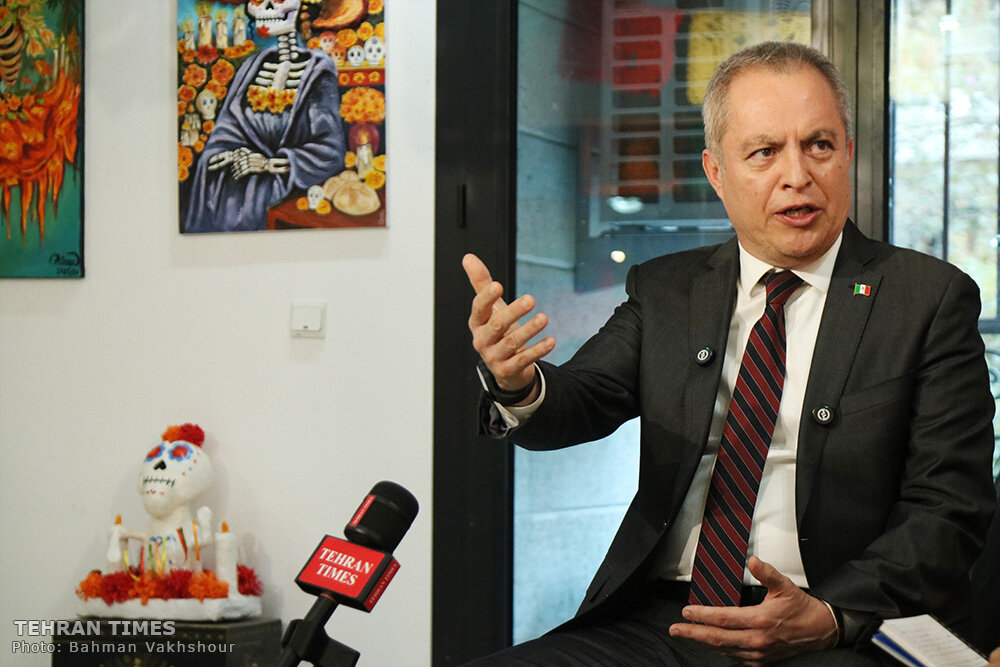
TEHRAN – The Mexican Embassy in Tehran held a visual art exhibition from November 3 to 11 to celebrate the Day of the Dead traditions.
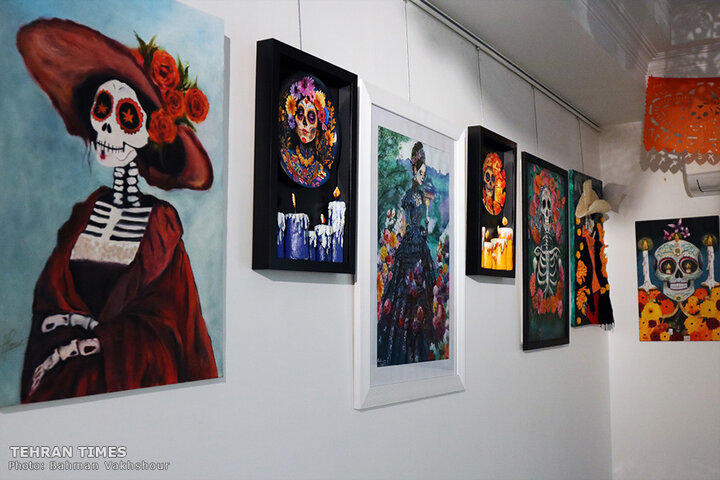
The exhibition, held in cooperation with the Tehran Visual Arts Association, featured 40 works of art from various fields, including paintings, illustrations, graphic design, and sculptures. All created by Iranian artists on the theme of the Day of the Dead, one of Mexico’s most beloved traditions, full of colors, flowers, scents and memories.
In an exclusive interview with Tehran Times, Mexico’s Ambassador to the Islamic Republic of Iran, Guillermo Puente Ordrica, explained the details of the Mexican tradition of the Day of the Dead and this year’s exhibition.
“The Day of the Dead in Mexico is an ancient tradition. Over the years, especially since the arrival of the Spanish and the influence of Catholicism, it has merged with pre-Hispanic beliefs. In the original indigenous worldview, death was considered a natural part of life, a cycle. One moment you are in this world, the next moment you are in the other world, but symbolically, you can still return. It is a continuous rebirth,” the ambassador elaborated.
“To participate in this cycle, of course, we must pay respect to our loved ones so that they do not feel forgotten. They should feel remembered and loved. I believe that every year, especially on November 2, we have the opportunity to call them and symbolically give them the opportunity to return to our world, which has become a national celebration in Mexico,” he added.
“The Day of the Dead is probably one of the most symbolic cultural festivals in Mexico, and definitely ranks among the top ones. It represents deep social and cultural values. If you look at the colors and various artistic expressions that surround this festival, you will see that they are derived from popular traditions and expressions,” he emphasized.
The Festival of Remembrance of the Dead, which takes place each November, is one of Mexico’s most deeply rooted traditions and has been practiced for more than 500 years.
Day of the Dead is an ancient Aztec festival commemorating deceased ancestors, celebrated on November 1st and 2nd. On this holiday, family and friends come together to pay their respects and remember friends and family who have passed away.
Asked whether this celebration has spread to other countries, Guillermo Puente Ordrica said: “For many years, UNESCO declared the Day of the Dead to be part of the list of intangible cultural heritage. Today, it is widely recognized and Mexicans all over the world celebrate this day.”
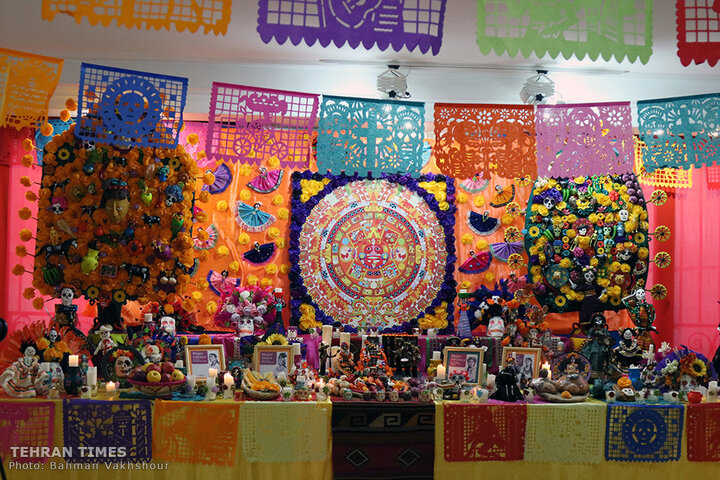
This holiday is especially popular in Mexico, where it is a national holiday. It is also celebrated in the Philippines, Mexican-American communities in the United States, and to a lesser extent other Latin American countries, especially by Mexican-Americans.
Traditions associated with this holiday include honoring the deceased with calavera and marigold flowers, building altars with the deceased’s favorite foods and drinks, and visiting graves with these items as gifts for the deceased.
No matter how great the differences are in the altars of different regions, certain elements are always present: water, salt, flowers, candles. Water quenches the thirst of the soul and refreshes the way to the afterlife. Salt is an invitation to the banquet and serves to purify its essence. The candle symbolizes the soul of a deceased loved one, and the bright yellow and orange colors represent light and the sun, helping the soul not get lost on its way home. It is also tradition to lay a carpet of flowers from the altar to the street so that the dead can make their way towards the altar.
Commenting on the similarities between Mexican traditions and ways of remembering loved ones in Iran and other countries, the Ambassador said, “Through conversations with colleagues and other Ambassadors, I realized that many countries have similar traditions of remembering loved ones who have passed away. I noticed that in Iran, at certain times, if I remember correctly, close to the New Year, people visit cemeteries, bring flowers, share food and drinks, and spend symbolic time with those who have passed.” This shows that the idea of remembering a loved one is universal, not just in Mexico. ”
“Aside from visiting cemeteries, Iranians also remember their loved ones throughout the year. I think this is very meaningful. This shows that Iranians, like Mexicans, maintain deep connections with their loved ones, both living and dead, both alive and dead. It also reflects the importance that our two societies place on family structure and emotional ties,” he said.
Commenting on the exhibition at the embassy premises, the Mexican ambassador said: “This year we decided to cooperate with Iranian schools, universities, cultural centers and institutions that teach Spanish in Iran. We also invited artists and creators who are interested in participating.”
“Iranian people have an extraordinary artistic sense, and this year the Tehran Visual Arts Association cooperated with us. They organized the contest with great enthusiasm and received around 400 works. Then a jury of three Iranian artists selected 40 works, which are now on display,” he said.
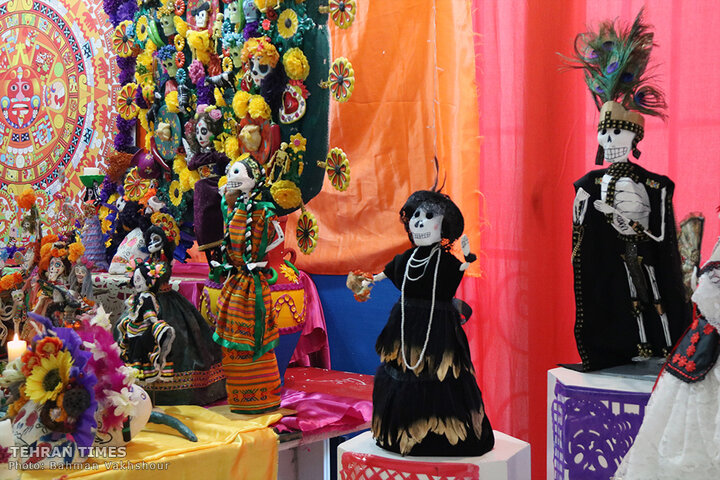
According to the Ambassador, “Another important aspect of this year’s program was the workshops we organized in the months leading up to the exhibition. Iranian participants, guided by Iranian teachers, learned how to make the Katrina doll, one of the most iconic symbols of the Day of the Dead. What we discovered was that Iran has a rich tradition of handmade dolls, so the idea of merging the concept of Mexican Katrina dolls with Iranian craftsmanship was born. Katrina doll made with Iranian techniques and materials.
Catrina is a frequent figure in Mexican visual art, depicted as an animated skeleton wearing a large feathered hat associated with the fashion of upper-class European women in the early 20th century. The piece was first created in the early 20th century by Mexican printmaker José Guadalupe Posada and became a Mexican icon through her popularization by artists such as Mexican muralist Diego Rivera and touring art exhibitions during World War II.
The skeletons depict individuals from all walks of life and professions, which scholars have interpreted as an eerie symbol of egalitarianism, suggesting that death comes to all, regardless of status.
Catrina has become a national symbol of modern Mexico. Her unmistakable features and hat are recreated in various forms during Day of the Dead celebrations. Katrina figurines are often displayed on altars dedicated to the deceased.
An important part of this year’s exhibition is the dedication of the Altar of the Dead to the women of the great pre-Hispanic civilizations. Elaborating on the issue, the ambassador said: “As you may know, Mexico recently elected its first female president in its more than 200-year history as an independent country. So this year is a year to celebrate that achievement.”
“Furthermore, in Mexico, 2025 has been declared the Year of the Indigenous Woman. Combining these themes, we decided to dedicate an altar to four outstanding women, each representing a different cultural tradition, from Mexico’s main ancient civilizations. Although they are not the only important women in our history, they are also very symbolic. Through them, we want to share with the Iranian people both the richness of these civilizations and the central role that women played in them.” Underlined.
These include the Mexican woman: Tecuichipo (Isabelle Moctezuma), the Mayan woman: the Red Queen, the Mixtec woman: Lady 6 Mono (Huaquino), and the Toltec woman: Ciusatsin (small Toltec flower).
Tecuichipo, the daughter of King Moctezuma II, was an important figure in Mexican history. Her name means “cotton flower” or “white flower”. During her lifetime, she witnessed the fall of Tenochtitlan, lived through the turbulent years of the Spanish Conquest, maintained her noble lineage in the face of the dramatic changes imposed by the conquistadors, and became a symbol of resistance and acculturation.
The Red Queen, consort of the famous ruler Pacal, was the queen of the city of Palenque, whose influence and sanctity marked the era. She was worshiped as a sacred figure, reflecting her association with the Mayan dynasty.
Lady 6 Mono was born in Jaltepec in 1073 and was a prominent queen, ruler, warrior, and empire builder in the Mixtec world of Oaxaca.
Xiutlaltzin, the first queen of the Toltec tribe, ascended the throne after the death of her husband, Mitl, in 1035. Her short four-year reign set a precedent in Toltec history and was notable for her conciliatory personality and role as protector of her husband’s legacy.
SS/SAB