
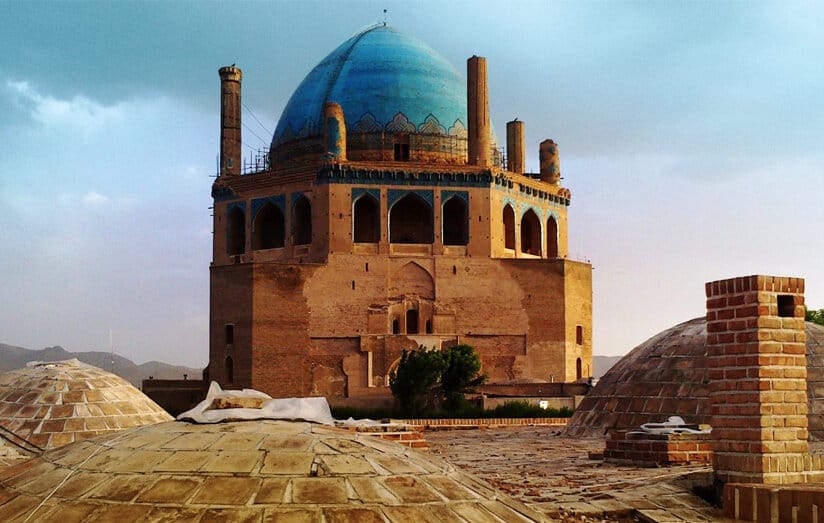
TEHRAN – Minister of Culture and Heritage Seyyed Reza Salehi Amiri highlighted the restoration of the UNESCO-listed Sotarnyeh Dome in Zanjan during his visit to Zanjan province.
According to IRIB news agency, he announced the government’s serious plans to strengthen scientific, research and restoration activities at this world-class monument, stating that the preservation of Soltanje Dome is a national and historical responsibility.
Salehi-Amiri also said: “300 billion rials ($300,000) has been approved for the restoration of Soltanye Dome and we are committed to spending this loan in full on this building at the earliest possible opportunity. Of course, the restoration needs of this complex are much broader than this amount, but the Government and the Government House consider it their duty to do everything in their power to protect, restore and revive this timeless heritage.”
He emphasized the need to strengthen the role of the Ministry in the field of specialized research, adding that the Ministry of Cultural Heritage’s laboratories should utilize the Ministry’s administrative and scientific capabilities to carry out research and restoration activities, and that the Ministry would fully support this process.
He called Soltaniyeh Dome a “shining jewel in Iran’s history and identity,” adding: “Be assured that this gigantic dome will continue to shine in Iran and that residents around the world will be proud of it.”
Soltaniyeh Dome is one of the architectural masterpieces of the Iranian Islamic period, located in Soltaniyeh Governorate, Zanjan Province. This building was built in the early 14th century AD as the tomb of Oljeitu, one of the kings of the Ilkhanid Dynasty. This dome is considered one of the most important brick domes in the world due to its unique design and large dimensions. The height of this dome reaches approximately 48 meters, and the beautiful decorations and colorful tiles give this historic building a special look.
Also, during his visit to Katale Khole Cave, the Minister termed this natural heritage as a symbol of the beauty of creation.
Stressing the need for infrastructure development and investment attraction, the ministry announced that its ultimate policy is to directly transfer the benefits of tourism in the region to the people of Garmab and surrounding villages.
Referring to the cave’s unique capabilities, he said, “We had the pleasure of visiting this beautiful and wonderful cave together with state officials. We encourage the dear people of Iran to experience this cave firsthand at least once, because in this place you can see a unique manifestation of nature and the most beautiful landscape of creation.”
Salehi Amiri emphasized that the development of the Katale Khor cave is a serious demand of the local population and its management, adding: “This cave needs to be developed, its new capacities identified and its wide possibilities of use offered to tourists from all over the country. The Ministry considers it an obligation to support this process with all its might.”
He went on to point out the need to improve access routes and said that completing the road leading to the cave is one of the key prerequisites for the development of tourism in Garmab. “We will follow up on this issue with the relevant ministers and at the national level.”
He also stressed the need to provide conditions for the presence of investors in the development of cave tourism facilities, adding that the development of welfare infrastructure and the promotion of tourist access are being seriously pursued.
KD