
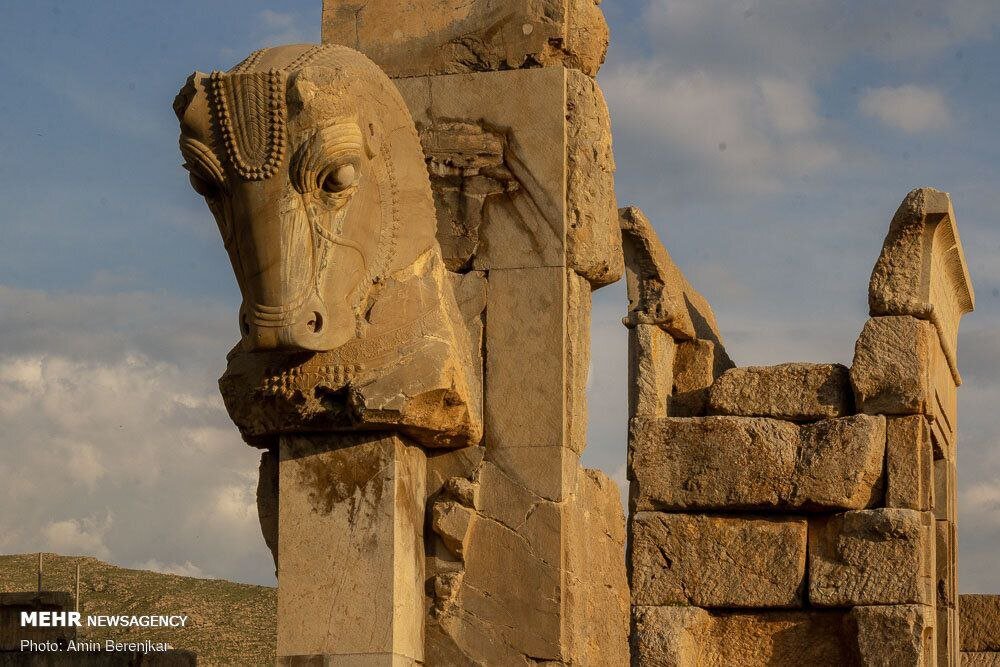
TEHRAN – Based on the technical report and periodic evaluation of Persepolis (also known as Takht-e-Jamshid) in Fars province, no new or worrying events have been observed so far regarding deformation of structures or damage related to ground subsidence, said Minister of Cultural Heritage Seyed Reza Salehi-Amiri.
Referring to recent statements by the head of Iran’s Department of Environment (DoE), he told Shafaqna: “Recently, the head of Iran’s Ministry of Environment announced that 30 provinces of the country are experiencing land subsidence phenomena. After raising this issue, concerns arose about the vulnerability of the country’s historical buildings, especially the world-class Persepolis complex located in public spaces.”
He added: “In this regard, I have submitted a report to the Parliamentary Committee on Culture on the extent of land subsidence and its impact on ancient monuments. After expert review, the committee approved the establishment of a National Special Committee to Combat Land Subsidence, headed by the First Vice President. This headquarters is now on the government’s agenda and its goal is to coordinate among agencies to manage the effects of this phenomenon.”
He continued: “With regard to Persepolis, I must emphasize that this complex is continuously monitored. I myself have visited the site several times in recent years, and our colleagues are also present there. Based on technical reports and regular assessments, so far no new or alarming events have been observed in terms of damage related to deformation or subsidence of the structure.”
Salehi Amiri stressed: “Of course, the subsidence phenomenon is a very serious problem at the national level and requires long-term planning, but in the case of Persepolis, monitoring shows that the situation is under control. There is an obligation to strengthen geological and structural monitoring so that if any changes are observed, the necessary measures can be taken quickly.”
KD