
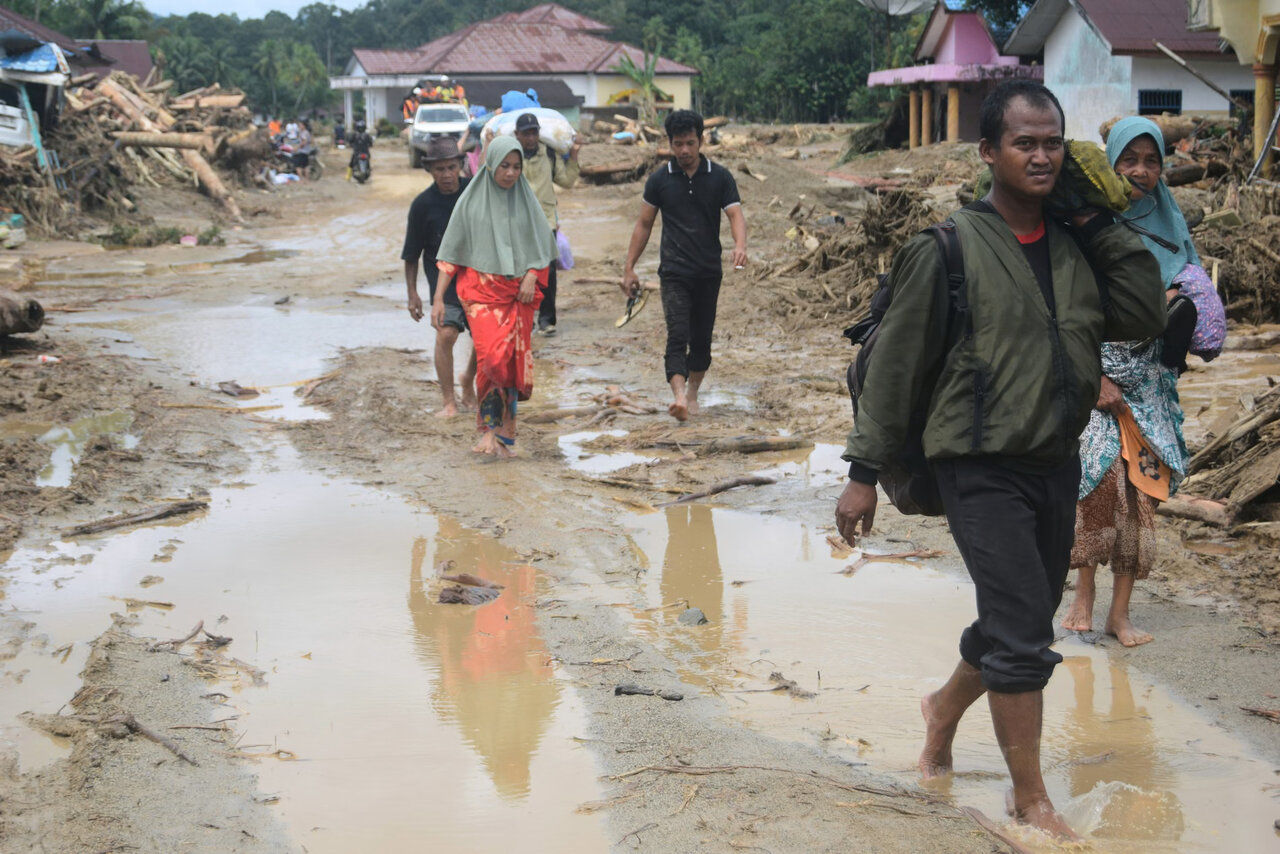
The death toll from the devastating flood and landslide crisis across South and Southeast Asia has soared to more than 1,140, with four countries reeling from the effects of intense monsoon rains exacerbated by a rare tropical storm system.
Indonesia has reported the worst damage, with 604 people dead and hundreds missing on the island of Sumatra, where flash floods have destroyed villages and cut roads.
Sri Lanka, hit by Cyclone Ditwa, declared a state of emergency after confirming 366 deaths, while Thailand and Malaysia recorded 176 and 3 casualties respectively.
Meteorologists attribute the prolonged period of extreme rainfall to a rare convergence of tropical and seasonal monsoon weather.
These “turbocharged” storms left entire regions without aid as residents clung to rooftops and relief efforts were hampered by collapsed infrastructure and damaged communication lines. Survivors said water levels were rising “faster than ever before.”
In response, both Sri Lanka and Indonesia mobilized military personnel and deployed air forces and navies to airlift supplies and reach isolated areas.
Sri Lankan President Anura Kumara Dissanayake called the event “the largest and most difficult natural disaster in our country’s history,” marking the worst disaster since the 2004 Asian tsunami.
Rescue teams are rushing to reach hundreds of missing people, even as water begins to recede in some areas. The immense challenge of assessing infrastructure damage has been amplified by growing public criticism of the slow initial relief response.