
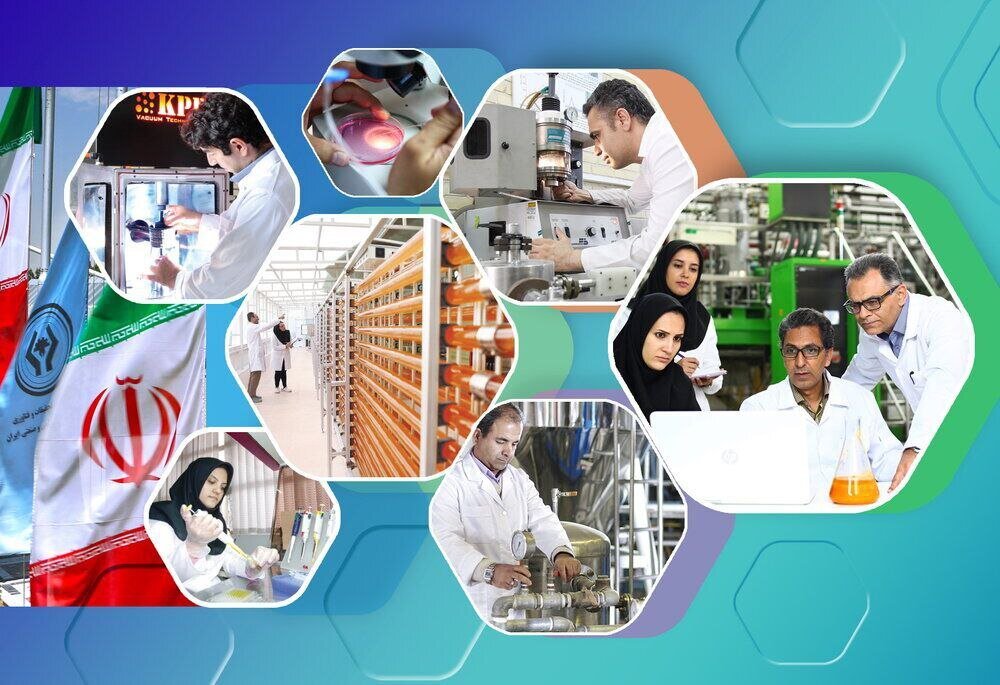
TEHRAN – Stanford University, in collaboration with Elsevier, placed a total of 2,772 Iranian researchers in the top 2 percent of its annual list of most-cited scientists based on lifetime impact.
This version is based on the August 2025 snapshot from Scopus and updated through the citation end year 2024.
This work uses Scopus data. Calculations were performed using all Scopus author profiles as of August 1, 2025.
According to the standard Science-Metrix classification, scientists are classified into 22 scientific fields and 174 subfields. All scientists with at least five publications will also be provided with discipline- and sub-discipline-specific percentiles.
Lifetime data is updated through the end of 2024, and recent single data pertains to citations received during the 2024 calendar year.
Selection is based on the top 100,000 scientists by C-score (with or without self-citation) or percentile rank of 2% or higher in the subfield.
Lifetime assessments capture a scientist’s cumulative research impact over their entire career up to the end of the previous calendar year (end of 2024).
This ranking uses a composite citation metric (c-score). It combines several bibliographic criteria to provide a comprehensive measure of a scientist’s lasting impact, focusing on quality and importance rather than mere quantity of publications.
The criteria used to calculate the c-score include total citations (NC), H-index (H), coauthor-adjusted hm-index, number of citations to single-author papers (NCS), number of citations to single-author or first-author papers (NCSF), and number of citations to single-author, first-author, or last-author papers (NCFSL).
According to the latest international data, the presence of Iranian researchers in the world’s top two percent list based on citation indicators continues to trend upward, indicating an improvement in the quality of the country’s scientific production.
The well-regarded Standardized Citation Index Science-Wide Author Database Update, which provides an updated version of scientist rankings based on standardized indicators, reported on September 19 that Iran has achieved unprecedented growth in both one-year performance and scientific lifetime indicators, IRNA quoted Deputy Science Minister Peyman Salehi as saying.
Based on this report, the number of Iranian researchers highly cited in one-year performance index increased from 2,326 in Iran 1403 (2024-2025) to 2,533 in Iran 1404 (2025-2026).
He explained that this figure represents an increase of 207 people compared to the previous year and clearly indicates the improvement in the quality and impact of the country’s scientific production in 2024.
The medical field (853 researchers) for one-year achievements and the engineering field (287 researchers) for lifetime achievements produced the most cited Iranian researchers.
Additionally, the number of highly cited Iranian researchers in the lifetime index increased significantly from 1,018 in 1403 to 1,021 in 1404. A five-year trend analysis shows that Iran achieved this remarkable achievement from 433 people in 1399.
Single-year indexes focus on the number of citations a paper received in a particular year.
In the recent report, citations received in 2024 form the basis of the ranking, which he concluded is indicative of current scientific impact and researchers’ ability to generate new knowledge.
In the 2024 edition of the Nature Index Research Leaders report, Iran was ranked 32nd among the world’s research leaders.
This report is based on Nature Index data from January 1 to December 31, 2023.
Domestically, the Institute of Basic Sciences (IPM), Tehran University, and Sharif University of Technology are ranked 1st to 3rd.
In the region, the country ranks second in physical sciences, third in chemical and health sciences, fourth in earth and environmental sciences, and fifth in biological sciences.
Iran’s highest world ranking is 27th in the field of physical sciences.
The Nature Index is an open database that records author affiliations and institutional relationships.
The index tracks contributions to research articles published in high-quality natural and health science journals, selected based on reputation by an independent group of researchers.
The Nature Index provides absolute and fractional shares of publications at the institutional and national levels, providing an indicator of high-quality research output and collaboration worldwide.
Nature Index data is updated regularly and displays the most recent 12 months. This database is compiled by Nature Research Intelligence, part of Springer Nature.
The director of the Islamic World Institute for Science Citation (ISC) said that in 2024, a total of 1,056 Iranian researchers were ranked among the top 1 percent of the world’s most cited researchers, representing an increase of 12 percent compared to the 938 researchers identified in 2023.
“The Ministry of Science, Research and Technology (427 researchers) accounts for 40.44%, while the Ministry of Health, Treatment and Medical Education (518 researchers) accounts for the most cited Iranian researchers at 49.05%,” IRNA quoted Ahmad Fazelzadeh as saying.
Clinical medicine accounted for 22.54 percent, interdisciplinary 21.78 percent, engineering 17.05 percent, pharmacology and toxicology 9.66 percent, chemistry 8.43 percent, and agriculture 7.01 percent, each accounting for the highest share of the most cited researchers.
Iran aims to be 12th in the world by 2027
Despite continuing sanctions, Iran plans to raise the country’s ranking in scientific achievements from its current 17th place to 12th place by 2027.
Health Ministry official Shahin Akhoundzadeh said Iran’s ranking in scientific output has fallen from 15th to 17th, especially in the past three years due to sanctions, economic restrictions and restrictions on publishing papers by Iranian academics.
Progress in the country’s scientific production will require compensating for research and technology setbacks through funding, promoting research and promoting meritocracy, which will also reduce the emigration of young elites, Akhoundzadeh was quoted as saying on the Health Ministry’s website.
MT/MG