
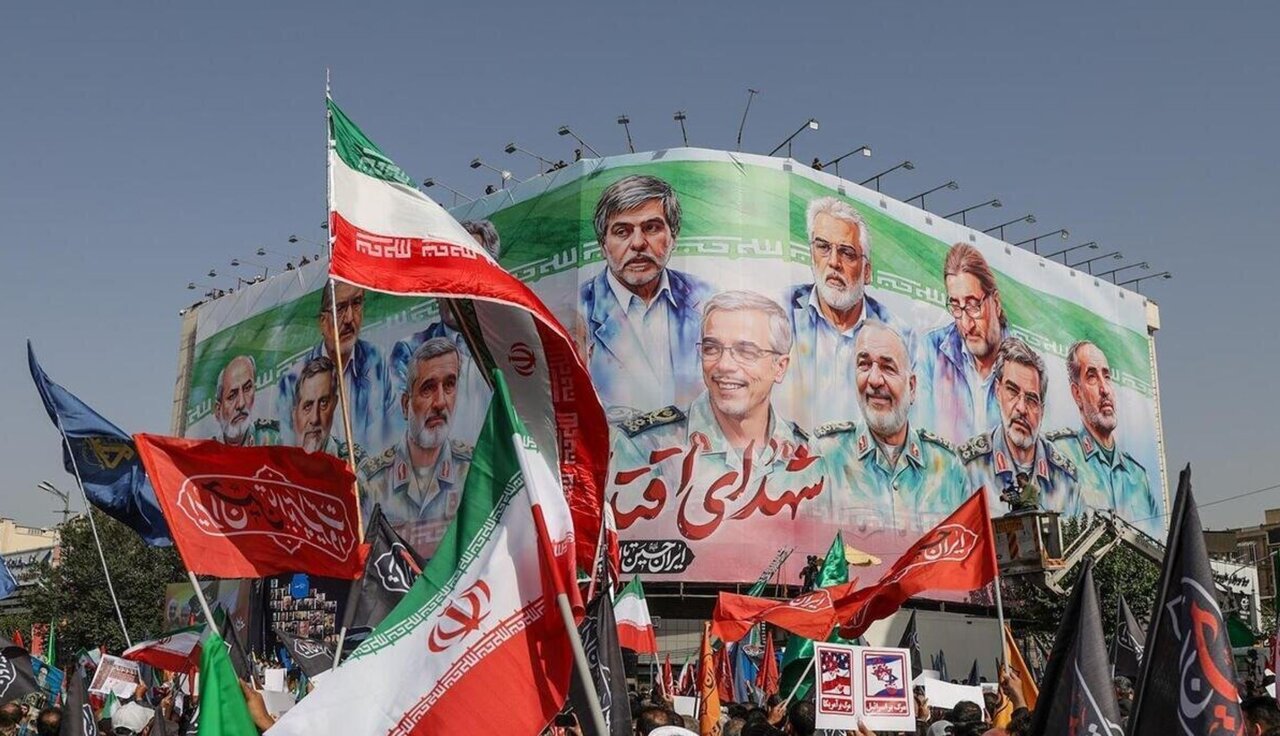
Tehran – For many foreign observers, important questions remain. Why was there an Israeli attack on Israel’s fostering among Iran’s political and social factions? Despite seven years of crippling inflation and dissatisfaction with the performance of different governments, why did the attack not raise public protest?
Even after Netanyahu’s direct video appeal to Iranian people, harm them as they stand up – no significant protests emerged. Why do many traditional critics of Islamic republics both inside and outside Iran gather behind leaders and military forces to protect the country?
The answer lies in part in the bitter historical memories of the Iranians of humiliation they endured during periods of foreign rule.
From a social psychology perspective, Iranians respond more vigorously to external threats to their sovereignty than most other issues. History provides a clear example. Long before the formation of a centralized central government, the Buscher people had heroic resistance to the attacks of Britain and Portuguese in southern Iran, while the Gilan and Azerbaijanis were vehemently opposed to the invasion of Russia in the north. This indomitable spirit ensured that Iran did not become a formal colony. For Iranians, every day was a battle to protect their independence.
With Saddam Hussein’s invasion, eight years of resistance in Iran’s western border regions (Husestan, Kermansha, Kurdistan) remains vividly etched into the consciousness of the people. Similarly, the Pahlavi dynasty’s dependence on the United States was so deeply resentful that the first slogan of the 1979 revolution was “independence” even before “freedom” or “Islamic republic.”
Today, many Iranians view their country’s peaceful nuclear energy programmes and missile capabilities as essential deterrents against foreign aggression. They believe that without these defenses, Iran cannot protect its sovereignty and will not be subject to foreign humiliation. This is why, from an Iranian perspective, negotiating (as Trump argued) demanding “enriching zero uranium” is unfeasible from the start. Iran has repeatedly stated that it will never waive its legal rights under the Nuclear Non-Proliferation Treaty (NPT), including enrichment for peaceful purposes.
Washington’s strategic mistakes came to light when Israel attacked Iran just two days before negotiations for the sixth round. For many Iranians, this confirmed suspicion that diplomatic consultations were merely a façade of military enforcement. It is a direct threat to their sovereignty. Recent history only reinforces this perception. The dire consequences of Libya’s disarmament, the invasion of Iraq, and the forced concessions of Syria remain fresh in Iran’s memory. Given these precedents, shouldn’t Iranians have the right to draw lessons from the fate of these countries? What options do they have other than uniting to protect their independence?
If future negotiations are successful, all parties need to internalize the costly lessons of Israeli aggression. The US must ensure that all proposals include a guarantee of “preserving Iran’s defensive capabilities.” From the perspective of the Iranian people, an agreement to weaken or leave their sovereignty unavoidable is tantamount to betrayal. Europe must also recognize that countries that have endured unprecedented US sanctions since 2018 will not abandon their independence under mere economic pressure.
If America truly seeks diplomatic resolutions, there is no choice but to comply with international law and to recognize the legitimate rights of the Iranian people.
Further attacks on Iran could have unpredictable consequences, particularly for the global energy market. This is because the US may not anticipate any potential responses from Iran, including unconventional measures.