
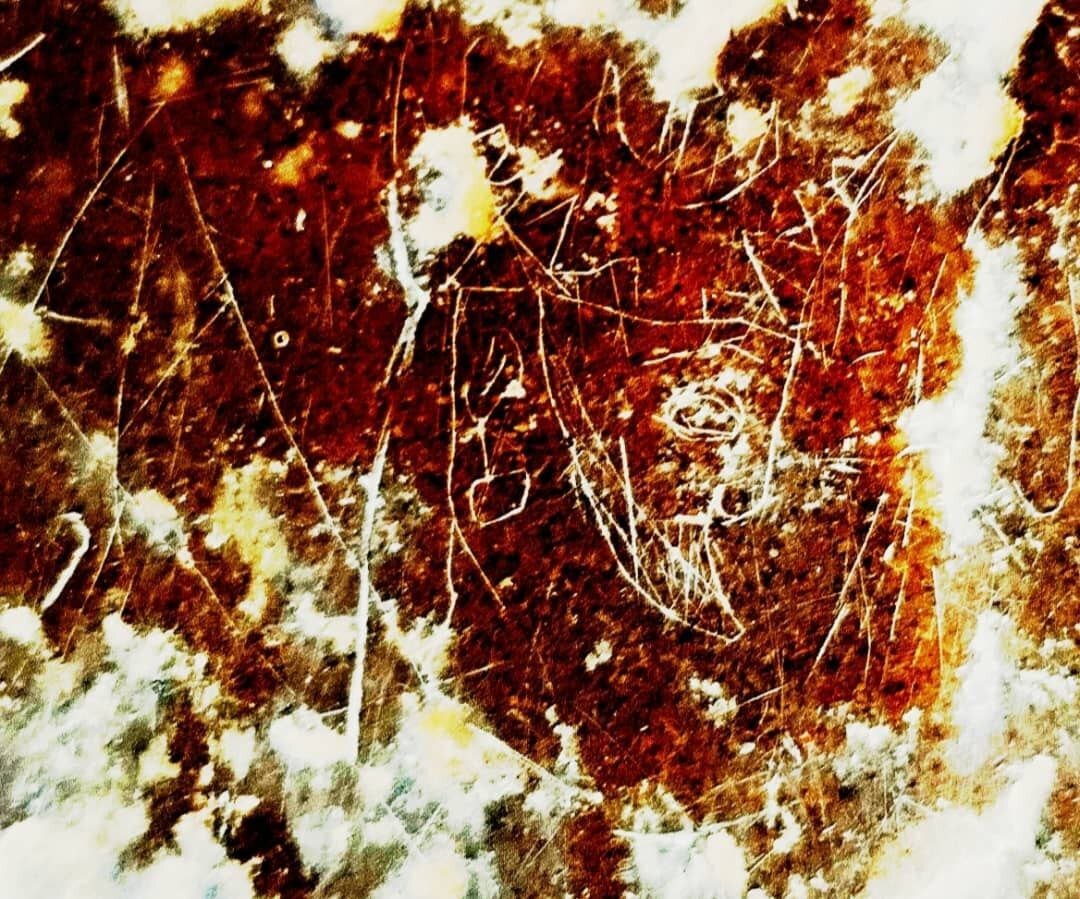
TEHRAN—A needle-carved rock statue believed to depict a Sasanian king has been discovered on a cliff in the ancient city of Istakhr, located on the Marbdasht Plain, archaeologists have announced.
Archaeologist and historian Abolhassan Atabaki said on Wednesday that the sculpture depicts a king wearing a crown, with symbols of the moon, stars and crenelated crown.
Atabaki said the similarities between these features and the crowns of late Sassanid rulers, found in rock reliefs, metalwork and coins, indicate the newly discovered statue’s close relationship with established Sasanian artistic traditions.
In this regard, historian Najme Ebrahimi said the discovery is reminiscent of the ancient practice of royal portraiture in Sasanian art. She cited a 10th-century account by historian al-Masdi, who referred to an illuminated manuscript depicting a Sasanian king found in Istakhr.
Ebrahimi said the newly identified carvings reflect the same artistic tradition, with stylistic elements similar to early Sassanian needle carvings from the Persepolis region.
He added that about 90 percent of rock reliefs in the shape of Sasanian kings have been discovered in the Marbdasht Plain, the birthplace of the dynasty, and that many valuable artifacts from that time remain unexplored or scientifically unexplored.

The ancient city of Istakr, home to many magnificent palaces, fortresses, and temples, was once the royal residence of the Sasanian kings of Persia and is located near Persepolis in southern Iran.
The political history of Istakhr dates back to 224 AD, when the Persian nobleman Ardashir deposed the Parthian king Artabanus IV, who had been recognized as the legitimate ruler of Persia.
The new ruler eventually chose Istakhr as one of his residences. This allowed the new Sassanids to identify themselves with their glorious past.
The builders of Istakhr often reused architectural elements from monuments at Persepolis. The Achaemenid royal tomb of Naqsh-e Rustam is also not far from Istakhr.
According to the Oriental Institute at the University of Chicago, geographer Istakli wrote that in the 10th century, houses were built of clay, stone, or stucco, depending on the wealth of the owner.
morning