
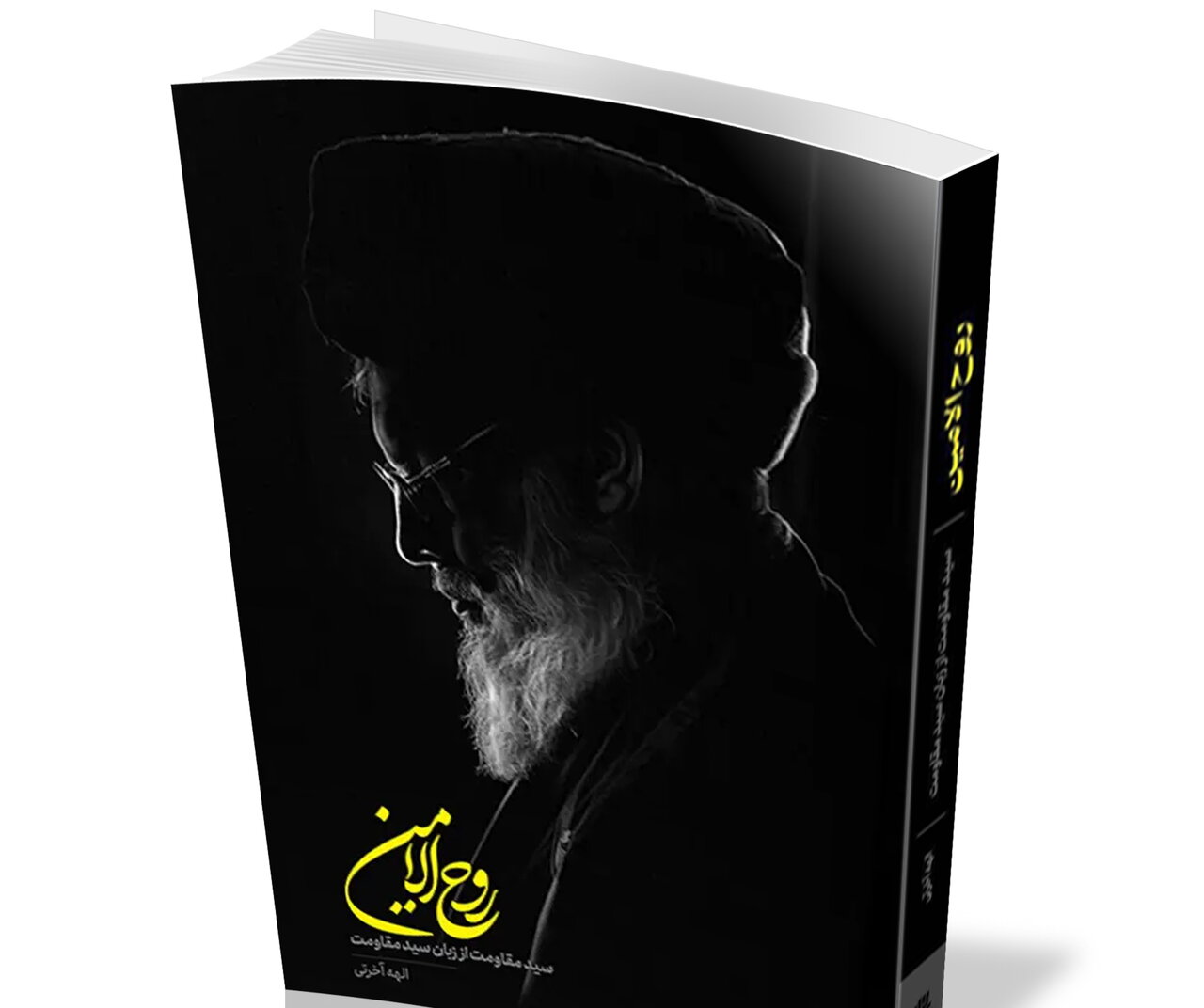
A compelling new book by Elahe Akherati, Ruh Al-Amin, published by Hamaseh Yaran, offers an unprecedented intimate portrait of Sayeed Hassan Nasrallah, one of the most important figures in West Asia.
This 312-page volume, more than a standard biography, is a meticulously curated collection of Nasrara’s own words, directly presenting his life and ideology through 170 hours of speeches and interviews, translated without converting from Arabic to Persian.
Structured in 17 chapters, the book traces the journey from Nasrara’s childhood to the week before his martialism.
It opens a unique window into his personal, religious, political, military and family life.
The readers are a figure like Imam Khomeini (RA), founder of the Islamic Republic, and have a deep understanding of the important influence on Ali Khamenei, the leader of the Islamic Revolution, to thinkers such as Shahid Mohammad Bakir Al Sadr and Imam Musa Al Sadr, and from leaders of the Islamic Revolution, the important influence on him.
The book also details his relationships with comrades such as Hajj Imad Mugniye, commander of the Islamic Revolutionary Guard Corps (IRGC) Quds forces, and respected martial artist General Kasem Soleimani.
The author’s methodology is the book’s greatest strength. In his introduction, Akherati states, “No one could speak more eloquently or accurately about Nasrallah than he himself said.”
She immersed herself in his vast archives of narratives and conversations, weaving together excerpts from various sources from each chapter to create an inclusive story.
The order of the paragraphs may be adjusted for consistency, but every line in the book is a direct translation of his speech. The text in parentheses is used sparingly for essential context, and nothing has been added or subtracted from his original word.
This first-person narrative style creates a strong sense of immediacy, making the reader feel as if he is a direct recipient of Said’s fascinating voice.
The book is strictly sourced, with footnotes in each chapter listing the origins of all excerpts, and Nasrara’s own humility provides supplementary information from family and fighters of resistance, where he omitted details.
Ruh Al-Amin is an important primary source of information for those seeking to understand the man behind the title, offering a deep, human perspective on Lebanon’s decades of resistance, faith and history.
Not just books to read, but testimonials to listen to. It doesn’t just document life, as “Ru al Amin” finds a way to readers. It secures a voice for history.
It allows Nasrara to define his own legacy, his path, and present a story of unwavering resistance, deep faith, and personal sacrifice directly to the Persian-speaking world.

Ultimately, “Ruh al-Amin” ensures that his voice, with all its certainty and complexity, will be heard much after his death.
By meticulously storing Nasrallah’s own words, Akherati created a timely and timeless documentary. “Ru al Amin” is not simply a book about leaders. It is a book about leadership, conviction, and the power of enduring faith in the face of adversity.
The book serves as a bridge that connects the Persian-speaking world to the hearts and minds of the man who shaped the fate of the region in a profound way. So it’s not just a book. It is an ink-embedded legacy, an audio amplified for listening for generations.
As readers dig into “Ru al Amin,” they embark on a journey that transcends the boundaries of traditional biography.
The book serves as a portal and allows direct access to Nasrara’s inner world, his spiritual beliefs, and his strategic vision for the region.
Born in Beirut on August 31, 1960, Sayyed Hassan Nasrallah began his religious education in Lebanon and continued in Najaf.
Forced to leave Iraq by the Bath regime, he moved to Iran’s QOM, where he encountered the Islamic revolution and the ideology of Imam Khomeini (RA).
The prominent figure studied Persians and became the representative of Lebanon’s Imam Khomeini.
Nasrara, known as “Syed of Resistance,” is the founder and third executive director of Hezbollah, which was positioned from 1992 to 2024.
Under his leadership, Hezbollah evolved into a regional power. Major events during his tenure include the liberation of Southern Lebanon in 2000, the prisoner exchange with Israel in 2004, and the victory of Hezbollah in the Lebanese War in 2006. His resistance to Israel cemented his reputation as a prominent leader in the Arab world.
Reported by Tohid Mahmoudpour