
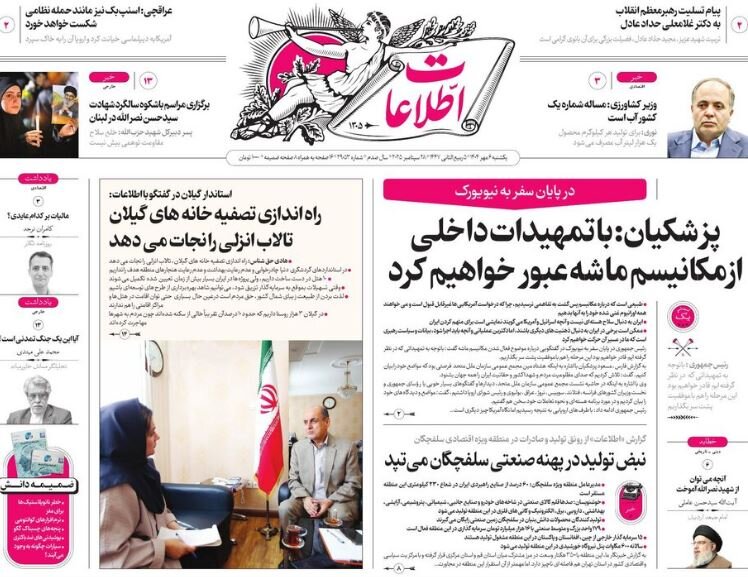
Tehran – In the article, Etterat discussed India as a new client of Iran’s black gold, but the UN Security Council did not vote for a resolution to permanently suspend sanctions against Iran.
Despite the atmosphere created after Europe stimulated its snapback mechanism, India resumed importing crude oil from Iran after a long-standing halt, importing shipments of crude oil worth $111 million from Iran. India’s move can be interpreted as a sign of a gradual distance of key countries from US sanctions policy. New Delhi has given the US the possibility of purchasing oil from Iran and Venezuela in exchange for reducing oil purchases from Russia. This shows that Iran has been able to maintain its maneuvering space against international pressure through aggressive diplomacy and diversification of its trading partners. The main consequences of current snapback activation seem to focus on Iran’s domestic market, with more psychological aspects than causing serious disruption in the oil export channel. The relative stability of energy exports allows for long-term planning for other sectors of the economy.
JCPOA Zero Time
In his analysis, Shargue investigated the future of Iran’s nuclear file in order to reject the resolution proposed by China and Russia by the UN Security Council, and delay snapback sanctions caused by the European troika. With the activation of snapbacks, troika actually gets sidelined from future processes surrounding nuclear files. It has proven that the Troika fulfilled its obligation to destroy diplomacy, no longer serves a meaningful role for Washington, and now it has lost importance to Tehran. Therefore, decision-making circles are limited to Tehran, Washington, Moscow and Beijing. By eliminating the troika, new spaces are created for future negotiation possibilities. However, experts warn that activating snapback mechanisms can overshadow diplomacy for long periods and make it even more complicated to return to the negotiation table.
Arman-e-Melli: The consequences of snapback sanctions
Arman-e-Melli spoke with Yousef Molaei, a professor of international law at the University of Tehran, to examine the process of energizing snapback sanctions and its political and economic outcomes. He said: Naturally, the security risks that activate snapbacks are greater than economic consequences. However, economic outcomes can also be challenging, and other conditions can arise as pressure on people’s lives intensifies. Given the 12-day war, the US and Israel could use this situation to their advantage on Iran’s disadvantage in line with the global consensus against Iran, but that’s not an easy task. In any case, when Iran is introduced as a threat to international peace and security based on snapback mechanisms, the conditions of international pressure on Iran will increase. Another point is that the social economic situation is also affected by this event. This problem can also create new challenges in the country in the long run.
Hamshahri: Unity against Snapback
In his commentary, Hamshari writes about the betrayal of Europe: After killing the JCPOA, the European troika committed a last possible betrayal by rejecting a resolution proposed by China and Russia to delay the snapback mechanism “to give room for diplomacy.” What’s important is that Europe is losing its last lever. What matters is the origin of the hostile decisions of the Troika on behalf of the United States, and Pezeschkian’s government did its best to pave the way for interaction. This one-sided interaction on the part of Iran encouraged the shameless West to become more rog-worthy rather than paying respect. They believe that their hostile actions against Iran are costly and therefore they can continue to be evil in the form of harassment operations. This Western miscalculation must be challenged. If we are united and consistent on the domestic front, it will soon be clear that if the government, the best national security council, and the judicial and intelligence reporting agencies are trying to control the mental state of the snapback and deal with proxy networks with severity, this Western mechanism is unreliable and Iran can overcome the threat posed by the West.