
Tehran – Iran’s military development is a unique story. Few countries can claim that in just 40 years it has changed military capabilities as dramatically as Iran has.
Remember the 1980s. When Saddam Hussein’s Iraq invaded, the idea that Iran would win seemed impossible. Supported by both the Western powers and the Soviet Union, Iraq has wielded horrible weapons: cutting-edge tanks, missiles, and even the terrifying ghosts of chemical weapons. Iran, by contrast, has scraped it with a mixture of equipment supplied from a small number of sympathetic states and once proud of F-14 fighter jets. Iranians desperately lacked basic protections like armor, air support, and even gas masks. But they decided that they were practically empty-handed and that was the time for Iran’s future to begin.
The invasion taught Iran a harsh lesson. If they wanted to protect the revolution, they had to depend on themselves. With incredible effort and strong will, Iranian military leaders began meticulously analyzing Western weapons and the few elementary systems they acquired from a few friends. Hassan Tehranni Moghadam, who became known as the “father of Iranian missiles”, is said to have learned about weapons in Libya and Syria. Iran was using Iran, offering tea to foreign operators sent specifically to Iran to protect their technology from the hands of Iran. They were tough times, but they were important times. Now, forty years after the Iran-Iraq war ended with Saddam’s failure to seize Iran’s territory, Iran is not a force to be considered in Western Asia. They built up missile and drone weapons that have created a nation like the United States, which has been the world’s largest weapons supplier since World War II.
Iranian missiles showed how dangerous they were during the 12-day war that Israel began in June. Israel’s sophisticated air defense systems, as well as the Arab forces stationed in the US, UK, France and regions, were unable to stop Iranian projectiles. The destruction was widespread, unlike previously seen in the history of the Zionist regime, with Israeli officials turning their eyes to the main supporter, the United States, calling for a ceasefire.
But the types of Iranian drones, especially Kamikaze, are something everyone has been talking about for several years. They are precise and inexpensive weapons that will attack your target completely or force your enemy to waste millions of dollars to defeat a drone worth thousands of dollars.
These drones have become hot items in the military market. According to reports that have not been officially confirmed, countries in Europe, Asia, Africa and South America are trying to buy or buy these weapons. And now that Washington has released its own copy of Iran’s Shahed drone, the effectiveness of Iran’s Kamikaze drone is more clear than ever.
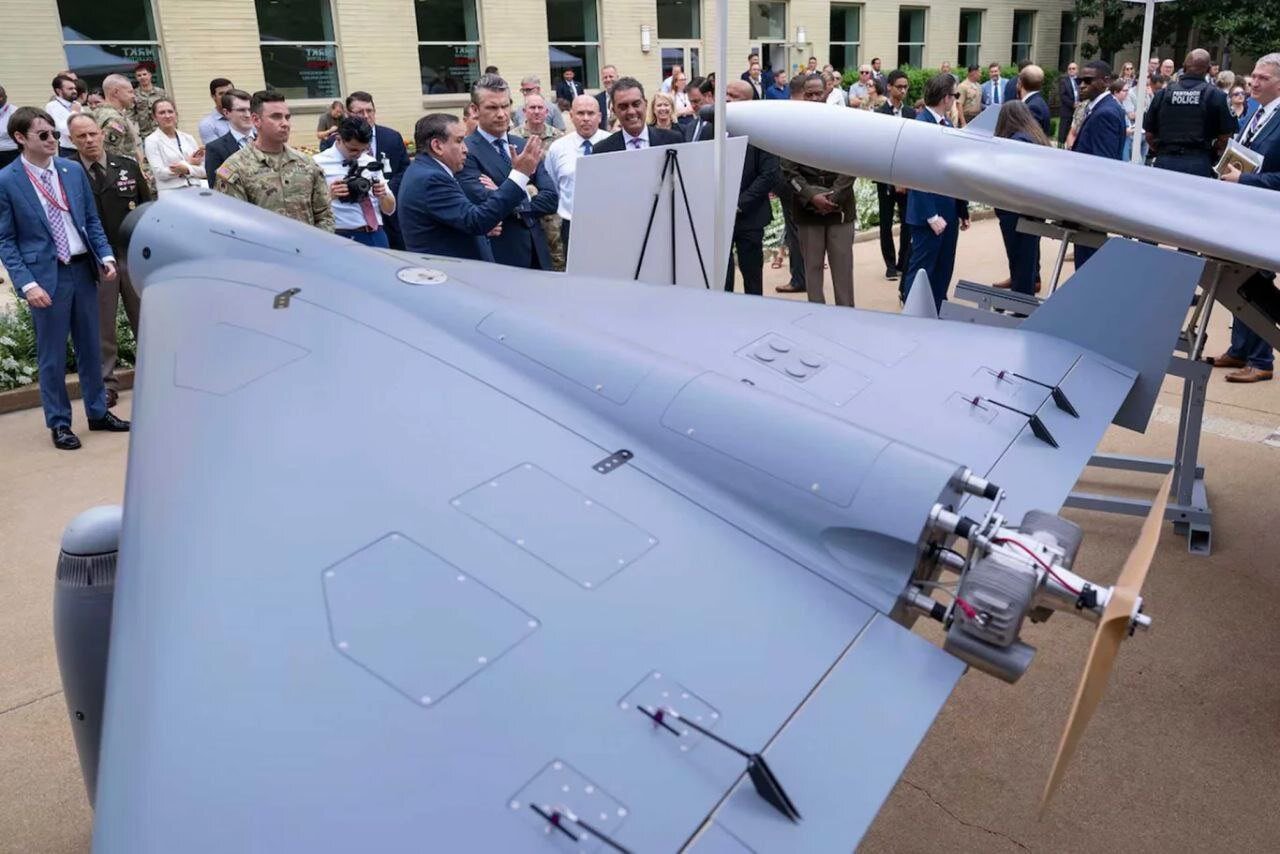
On July 16, 2025, the US military unveiled Lucas, or a low-cost, non-white wut combat attack system developed by Arizona-based defense contractor Spektreworks. The drone looked like an exact clone of an Iranian Sharp clone when it was shown to the US Secretary of Defense at an exhibition in the Pentagon Courtyard. The drone’s design, functionality and mission are very similar to Iranian Shahed, but still costly, weigh more, low range and less maneuverable.
This comes after the United States rejected Iran’s military advances over the years. Even during Donald Trump’s previous administration, one of his top men said Iranian weapons were not real, but rather photo-taking photos.
However, reality is undeniable now. The announcement of the US military’s Lucas drone is perhaps the best form of flattery, or at least the most clear entry of Iranian ingenuity. The lesson Iran is currently teaching the world in 2025 is simple. There is much that a country can achieve when it refuses to surrender to external pressure.