
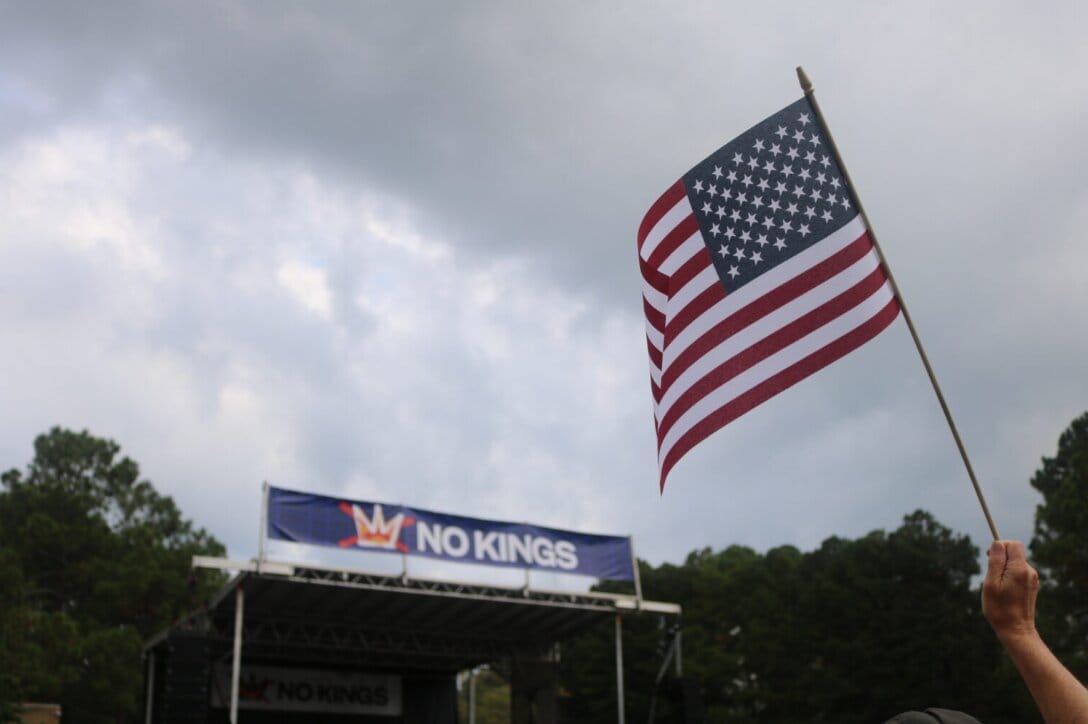
Pillar said the protests were an expression of public alarm over the weakening of institutional checks and balances and the erosion of democratic norms.
The text of the interview is below.
How might President Trump’s policies in his second term reshape the social fabric of the United States, particularly with regard to polarization, race relations, and public trust in institutions?
President Trump’s second term is in every way more radical than his first, and has caused serious damage to liberal democracy. Divisiveness has been a major part of President Trump’s political approach, and his role has increased political polarization. This includes a racial dimension, with President Trump increasingly applying white supremacist and outright racist themes, such as effectively abolishing asylum for non-white foreigners in South Africa. Unfortunately, public trust in government institutions is likely to suffer unless the public can clearly distinguish between the government agencies themselves and how President Trump has corrupted and abused them.
To what extent do economic inequality and disillusionment with political elites contribute to both Trump’s support base and the protests against him?
Much of Mr. Trump’s support comes from relatively less educated white men who feel left out of economic progress in a globalized world. Such a person finds it easy to blame the elite for his situation. Although President Trump’s thoughtless economic policies may eventually spark economically-based protests against him, current anti-Trump protests are primarily motivated by concerns about President Trump’s disregard for the rule of law and his move toward authoritarian rule and curbs on personal freedom.
From your perspective, what do the “No Kings” protests reveal about the state of American democracy and the balance of power between institutions?
The Republican majority in Congress and the Republican-appointed majority on the Supreme Court have failed to stand up to Trump and his illegal actions. In this sense, the balance of power between federal agencies has been disrupted. In response, citizens feel the need to take to the streets and take matters into their own hands.
Some critics argue that President Trump’s approach signals a shift from populism to full-fledged authoritarianism. Do you agree with this assessment?
Trump is not a true populist. Although he has used populist language and succeeded in fooling many voters, he and his party’s policies are not populist, as exemplified by the major legislation Republicans passed this year.
These are policies that support crony capitalism. President Trump took a major turn toward authoritarianism less than a year into his second term. He wants to be a dictator. It remains to be seen whether he will encounter enough resistance to stop him from doing so.
Does the “No Kings” movement have the potential to develop into a significant force capable of reshaping American political norms, or is it more symbolic than structural?
Mr. Trump himself is unlikely to back down from disrupting established American political norms. What the growing protests could do is signal to Republicans that President Trump has become sufficiently unpopular that it is no longer advantageous to meekly follow him.
Has Washington’s selective application of human rights in defending Israel’s actions in Gaza while sanctioning Iran further eroded the moral legitimacy of American foreign policy under President Trump’s leadership?
The issue did not start with President Trump, but he has taken it to extremes by effectively supporting Israel’s genocide, particularly in the Gaza Strip, for months. The moral legitimacy of U.S. foreign policy has been eroded under the Trump administration, not only by inconsistencies in human rights compliance, but also by rampant corruption that makes it clear that Trump’s policies have personal and domestic political motivations rather than the pursuit of international principles or U.S. national interests.
MNA/TT