
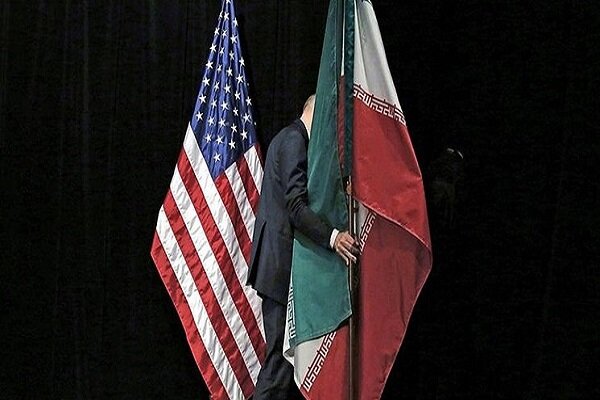
Foreign Ministry spokesman Baghaei answered questions regarding the claims of a planned meeting between Foreign Minister Araguchi and the US Special Envoy to the Middle East.
“At this point, the date, time or location of such meetings has not been determined.”
In response to questions about whether Iran has set prerequisites for negotiations, Baghey said, “Diplomacy should not be at the theatre or the deceit CE stage. We have always approached diplomacy with seriousness and sincerity.”
He pointed out that before the sixth round of talks, the Israeli regime had partnered with the United States to launch a military attack on Iran, which was malice from the other side.
Baghaei warned against the negative view of diplomatic framing or turning it into a divisive binary argument.
“Diplomacy is an instrument and an opportunity. We should not take this tool to the country. This is essential to clarify Iran’s stance, defending its interests, and ensuring the rights of the state.”
“Just as our military strongly meets our obligation to protect the nation, diplomatic devices must also work efficiently to serve Iran’s national interests through diplomacy,” he concluded.
The Zionist regime fought a war of attack on Iran on June 13, attacking Iranian troops, nuclear and residential areas for 12 days, but the US carried out a military attack on three nuclear facilities in Iran, Natanz, Fordou and Isfahan on June 22.
Iranian troops carried out a powerful counterattack shortly after the attack. The Islamic Revolutionary Guard Aerospace Force implemented 22 waves of retaliation missiles against the Zionist regime as part of Operation True Promise III, which caused significant losses to cities throughout the occupying territories.
In response to the US attack, Iranian forces fired waves of missiles at Aldead Air Force Base in Qatar, the largest US military base in West Asia.
The battle was suspended due to a ceasefire that came into effect on June 24th.
MNA/