
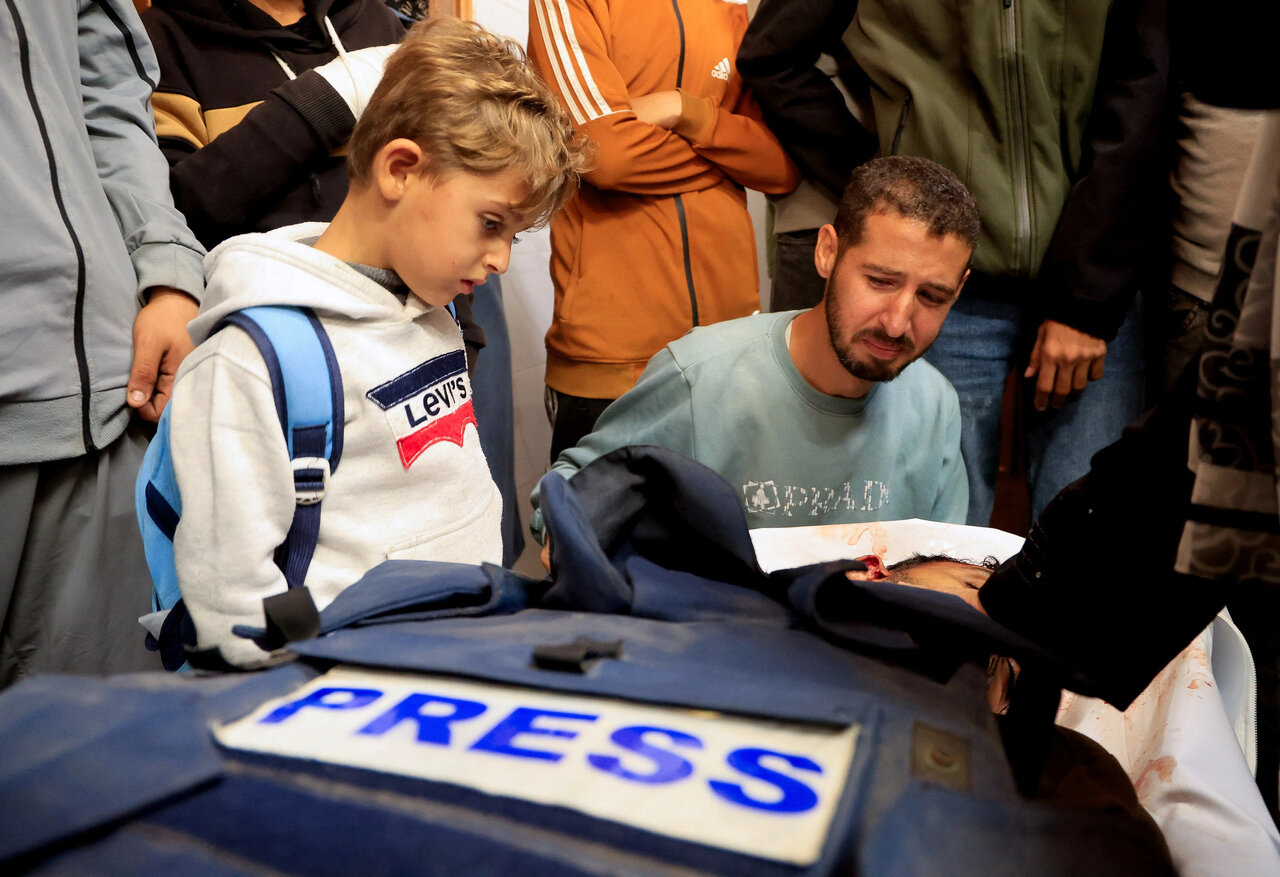
TEHRAN – Israel killed Palestinian photojournalist Mahmoud Wadi in Khan Yunis, Gaza Strip, in a precision drone strike on December 2, 2025.
Wadi, the owner of Alquz Studio, died instantly while filming on a street in Palestinian-controlled territory.
Another journalist, Mohammad Abdul Fattah Asli, whose brother Hassan had previously been killed in a drone attack on Nasser hospital’s emergency ward, was also injured in the same attack.
Wadi’s final footage would have shown Gaza still bleeding, two months after a ceasefire was signed. In fact, the drone that killed him prevented those images from reaching the world.
His Facebook page was silent for more than a year after his studio was destroyed in an Israeli attack in April 2025. In December 2025, she returned with one post that captured a wedding “despite all the difficult circumstances and war.”
Soon after, the celebrations were completely abandoned, replaced by drone footage of starvation and endless rubble.
His drone photography juxtaposed the reality of Israel’s legacy with memories of intact neighborhoods. The act of giving that testimony made him a target.
The October 10, 2025 ceasefire, brokered by American involvement, was likely intended to halt the genocide.
it’s not. Gaza authorities and monitoring groups have recorded more than 590 violations in the first seven weeks alone, including shelling, tank incursions and airstrikes that have killed at least 357 Palestinians since the deal was signed. At least 20 journalists were among the dead, with Mahmoud Wadi being the latest.
Since the Israeli military operation began in October 2023, the damage to Gaza’s media community has been catastrophic. The Palestinian Journalists Union reports 274 people killed, but the United Nations puts the number at more than 260, the highest number of journalists killed in a single conflict in modern history.
This pattern is unmistakable. A reporter wearing a news vest was attacked while riding along with a rescue team. The media office went bankrupt. The journalist’s entire family was wiped out in an overnight bombing. The evacuation tents were attacked while the journalists were sleeping next to the civilians they were interviewing.
Israel continues to ban foreign correspondents from entering Gaza alone, leaving local journalists as the world’s only eyes on the ground. Killing them is the most effective way to blind international scrutiny.
The ceasefire never applied to Gaza’s storytellers. Tanks are still advancing across the arbitrary “yellow line” that Israel has drawn across the Strip. Drones are still used for hunting. And journalists, diehard and important witnesses, die one by one.
Wadi’s life and death embody what Gaza’s press corps has endured. Ordinary people became important witnesses and were then systematically removed. This deliberate erasure amounts to a war over testimony and truth.