
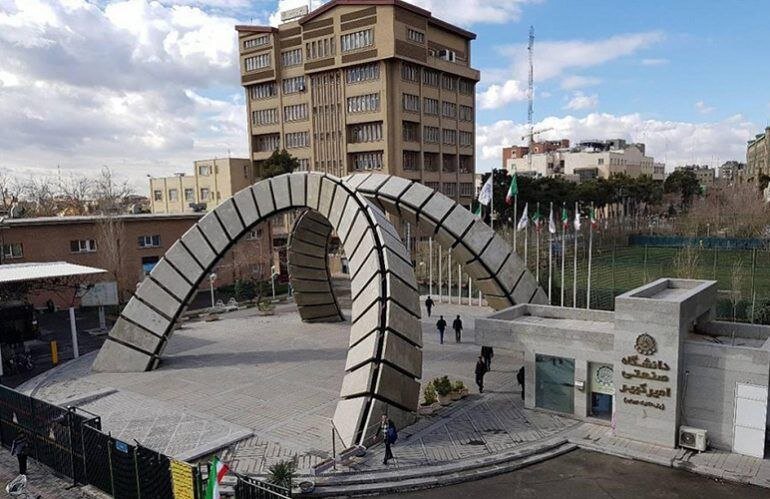
Tehran – Participants from more than 30 countries will attend the 10th Science and Technology Exchange Program (STEP), which is scheduled to be held at Amilkavir University of Technology, Tehran on September 7th.
The event, hosted by the Mustafa Science and Technology Foundation, will be held as part of the sixth Mustafa Prize Week. It served as a platform for scientists and technology experts, universities, research centers and policy makers in Islamic countries, sharing knowledge, experience and latest advances to further enhance synergy, the IRNA reported.
The tenth step will focus on two main domains: “Fashionable Engineering” and “Medicine of Tomorrow.”
State-of-the-art engineering includes a wide range of emerging technologies and interdisciplinary approaches that provide creative solutions to address challenges beyond traditional engineering boundaries.
From artificial intelligence and machine learning, advanced robotics, the Internet of Things (IoT), advanced materials and nanotechnology to clean energy systems and sustainable engineering, everything falls within the cutting edge engineering range.
The acquisition and development of these technologies is of paramount importance to organisations in Islamic countries and demonstrates effective conflicts of challenges such as increased productivity, creation of modern industries, reducing technology dependence, optimal resource management, and climate change and food security. Investment and collaboration in this field can trigger scientific and industrial leaps and enhance their position in the world’s knowledge-based economy.
Medicine of Tomorrow represents a new paradigm in medical science that is moving forward towards more accurate diagnosis, personalized treatments, and intelligent prevention strategies. Genomics and personalized medicine, cell therapy and tissue engineering, regenerative medicine, smart drug development, application of artificial intelligence in the analysis of medical data and disease diagnosis, and telemedicine are one of the key components of tomorrow’s medicine.
It is very important to consider the challenges of the health care system in many Islamic countries, including the prevalence of non-communicable diseases, aging, the need for equitable access to quality services, and investment and knowledge exchange. This new approach could lead to significant improvements in health indicators, reduced treatment costs, and increased life expectancy within Islamic society.
Mustafa Award Week
The sixth Mustafa Awards Week is scheduled to take place in Tehran from September 6th to 10th.
The award is awarded in three categories: Information and Communication Science and Technology, Life and Medicine and Technology, and Basic and Engineering Science.
The opening ceremony includes new additions to Mustafa Award Week, and will award the first medal to young researchers under the age of 40 to celebrate the achievements of young scientists in the Islamic world. The winners will also receive $10,000, the IRNA reported.
Several other programs will be held this week, including the student competition entitled “Noor (Light)” scheduled to take place on September 6th.
The Mustafa Award Science Cafe is another part of the program that runs throughout the week and focuses primarily on the achievements of the recipients in 2025.
The award is featured in two categories. Mustafa Prize winners and Mustafa Prize winners from Islamic countries, individuals or groups are citizens of 57 Islamic countries and are not limited to age, gender or religion.
The 5th Mustafa Awards were held in Isfahan in September 2023.
The awards included Mustafa Medals, award certificates and special cash gifts funded by the Science and Technology Fund. So far, more than 400 benefactors from various countries have supported the scientific and cultural movement as members of the Khadem Al-Mustafa community.
The Mustafa Award was established in 2012 as a biennial award, with the approval of the Supreme Council of the Cultural Revolution, which held its first edition in 2015. Since then, rituals have been held in Tehran (2015, 2017, 2019, 2021) and Isfahan (2023).
Over the past decade, the Mustafa Award has recognized and honored 19 well-known scientists from countries such as Singapore, Jordan, Turkey, Iran, Malaysia, Bangladesh, Lebanon, Pakistan, Morocco and Egypt.
The award is named after the holy prophet of Islam. Islam places a great emphasis on learning, and its title (one of many) means “chosen.”
The Mustafa Science and Technology Foundation has established a network of nearly 6,500 science and technology experts from 50 countries and has provided opportunities for the development of science and technology cooperation by interacting with 910 renowned international centres.
mt/mg