
TEHRAN – As snapback sanctions under UN Security Council Resolution 2231 are reimposed, the regional diplomatic, trade and security implications extend far beyond Iran. For Pakistan, a neighboring country with close geographic, trade, and security ties to Iran, the risks could be of some significance.
Located at the crossroads of South, West, and Central Asia, Pakistan must navigate relationships with world powers such as China, Russia, and the United States while maintaining important ties with Tehran. Pakistan’s Balochestan province plays a key role in this dynamic, with Iran-Pakistan relations deeply impacting local security and trade.
To find out Pakistan’s legal and strategic views on sanctions, Tehran Times spoke to Dr. Dost Mohammad Barech, an expert on regional geopolitics at the University of Balochestan and former ISSI researcher. Dr. Barech provides insight into Islamabad’s position, alliances, and the new broader regional implications of sanctions against Iran.
In this interview, Dr. Barech provides a critical analysis of Pakistan’s diplomatic posture, the influence of its key allies, and the broader impact of new sanctions on Iran on regional peace and economic development.
Below is the full text of the interview.
Given Pakistan’s preference for diplomacy over pressure in dealing with Iran’s nuclear program, what is Islamabad’s position on the reinstatement of snapback sanctions under Security Council Resolution 2231?
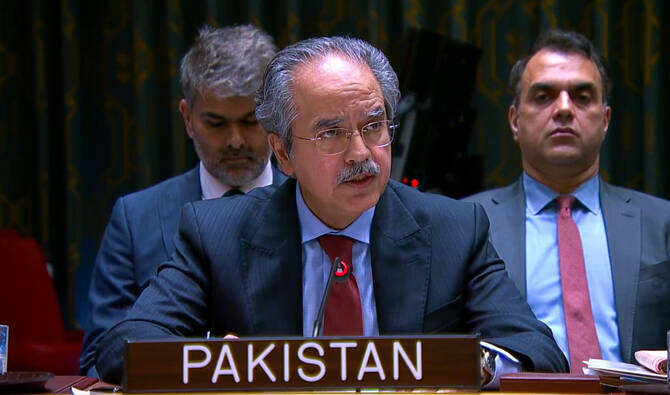
Pakistan has already voted in favor of a Security Council resolution halting the reimposition of sanctions against Iran. Islamabad believes that diplomacy and intimidation are incompatible and that such destabilizing actions will cause further chaos in a region already facing multiple crises.
Pakistan’s Permanent Representative to the United Nations, Ambassador Asim Iftikhar Ahmad, said: “As a neighbor and friend of Iran, we do not support any action that risks destabilizing a region that is already mired in multiple crises. The region cannot afford to escalate tensions further.” Pakistan is aware that Iran is an important neighbor and any kind of destabilization will have ripple effects in the region.
President Trump is obsessed with winning the Nobel Peace Prize, believing he has solved seven conflicts around the world. So why did he choose coercion over diplomacy against Iran?
How do Pakistan’s close ties with China and Russia, especially when compared to its ties with the West, shape Pakistan’s views on snapback sanctions?
I think Pakistan is pursuing a hedging strategy by maintaining a balanced approach to building strategic relations with China, Russia and the US. Maintaining a hedging strategy by not putting all your eggs in one party’s basket is a reasonable approach in the 21st century. In the evolving regional politics, Pakistan plays an important role due to its position as a flexible state. Politics is the art of navigating possibilities flexibly.
Although Pakistan, China and Russia share common interests in reimposing snapback sanctions under Security Council Resolution 2231, Pakistan also cannot alienate Washington. This is a very delicate position for Pakistan. While Pakistan has a strategic relationship with the United States, Iran is its immediate and important neighbor.
What impact will the reinstatement of snapback sanctions have on Pakistan-Iran relations, particularly with regard to trade, border security, and broader regional cooperation?
Annual bilateral trade between Pakistan and Iran is approximately $2 billion. The two countries have pledged that bilateral trade will reach $10 billion in 2024. Achieving the $10 billion figure is unlikely given snapback sanctions and constraints on financial transactions between Pakistan and Iran.
Closing down trade, both legal and illegal, would have a particularly big impact on Pakistan’s Balochestan province. Nearly 70% of exchanges here depend on Iranian trade. Sanctions against Iran could put pressure on the livelihoods of Balochestan residents and are likely to lead to increased recruitment by rebel groups.
Disgruntled youth will become easy prey for them, creating security challenges for Pakistan and Iran. As far as regional politics are concerned, snapback sanctions would drive Iran further into the wall and accelerate tensions in the Middle East by provoking Iran’s nuclear defiance, which could lead to withdrawal from the NPT and an escalation of a proxy war with Israel.
How does Pakistan legally interpret Security Council Resolution 2231, and what importance does international law have in shaping its diplomatic response to snapback sanctions?
Pakistan’s legal position has already been made clear by Ambassador Asim Iftikhar Ahmed, who deemed the snapback an “obstacle to dialogue” that risks escalating tensions in the region. Pakistan’s vote against snapback demonstrates Pakistan’s firm belief that the spirit of resolution 2231 favors negotiation over coercion.
How does Pakistan use forums such as the Shanghai Cooperation Organization and the Organization of Islamic Cooperation to disseminate its views on the snapback sanctions issue?
For Pakistan, the multilateral forms of the SCO and OIC are essential for promoting diplomacy, the Kashmir-Palestinian issue, and regional connectivity. It remains to be seen how Pakistan will assert its position on snapback sanctions within the above-mentioned forums.
I contend that Iran cannot afford to confront both the United States and Israel at the same time, so it needs to rethink its approach and seek to mend relations with the United States.
Domestically, it could be applied to frame Israel as an existential threat to Iran. However, viewing the United States as a permanent enemy internationally has proven counterproductive.
Iran appears to be the only country challenging the Western-led world order. The question remains: Can an isolated and economically weak country withstand such a challenge to a great power? To me, nations are dynamic and their foreign policies evolve in response to changing regional and international political developments.