
TEHRAN – Palestinian factions are united in demanding self-determination, rejecting foreign rule and asserting local control over Gaza.
In a significant move towards national unity, Palestinian faction leaders met in Egypt’s capital Cairo and agreed to reject any foreign regime and establish an interim regional committee to administer the Gaza Strip.
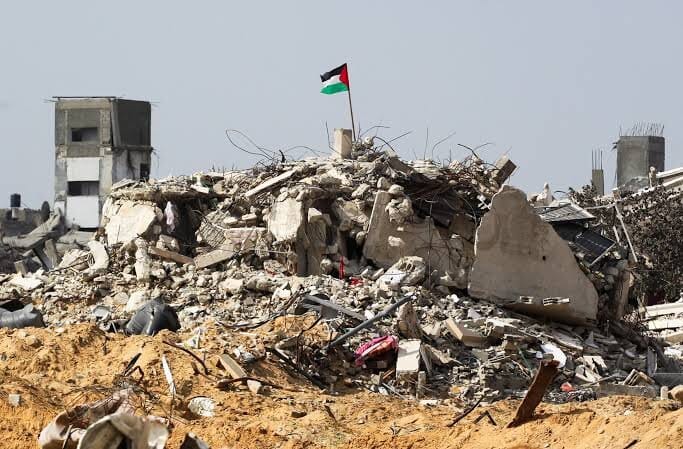
The two-day summit reflected the shared determination of Palestinian parties, groups and resistance movements to reaffirm their right to autonomy after the Israeli occupation regime committed two years of genocide and destruction, leaving Gaza in ruins and traumatizing its people.
The agreement reached in Egypt focuses on transferring Gaza’s administration to a temporary Palestinian commission made up of independent technocrats in the Gaza Strip.
This independent body will oversee essential services and day-to-day operations under Palestinian supervision, in collaboration with Arab partners and international organizations, on the basis of transparency and national accountability. The plan emphasizes a strong message that Gaza must be ruled by its own people.
The Cairo conference also created a framework for an international commission to handle reconstruction financing and logistics. However, Palestinian officials have made clear that the foreign presence in Gaza should be limited to humanitarian and technical assistance, not political control.
Mustafa Barghouti, Secretary-General of the Palestinian National Initiative, stressed that “foreign forces in control of Gaza are completely rejected.” He added that the goal of the summit is to prevent the political and geographical separation between Gaza and the West Bank, a separation that the Zionist occupation regime and some Western countries have sought to establish.
Echoing this, Hamas spokesperson Hazem Qasem stressed that “we have agreed to the second phase of Gaza governance arrangements, that there will be no separation between the Gaza Strip and the West Bank, and that Gaza will belong to Palestine.”
This assertion of self-determination comes amid continued aggression by the Zionist regime in Gaza, which is experiencing mass murder and starvation, forced displacement, and the systematic destruction of infrastructure.
The decision to establish a provisional regional government is also a strategic response to the growing international debate over the governance of Gaza following a genocidal war.
Some Western proposals have floated the idea of international monitoring or temporary external controls, which Palestinian factions see as a violation of their international autonomy.
For the past 10 days, U.S. officials have been in and out of Tel Aviv to discuss plans for Gaza’s future governance. Such Western-led initiatives are not new. The occupied West Bank is witnessing a record expansion of illegal settlements alongside foreign involvement, while the Palestinian Authority remains powerless to stop the ongoing land grabs.
By coming together, they seek to regain control over Gaza’s future and ensure that national decisions are taken independently before outside forces impose their plans.
The Cairo talks emphasized calls for a broad national conference to restore the Palestine Liberation Organization (PLO) as the sole legitimate representative of the Palestinian people. This measure is seen as essential to rebuild political legitimacy and strengthen the voice of the entire Palestinian people in taking the necessary steps to maintain security and stability across the Strip.
Barghouti and other participants emphasized that the resilience of the Palestinian people during the genocide is already changing world opinion. He said the “legendary steadfastness” of the Palestinian people had forced international actors to rethink their perceptions and approaches to the humanitarian disaster.
For all sides, that perseverance is proof that the Palestinian people retain their capacity for self-government despite untold suffering, and reaffirms that any move toward annexation or forced displacement will be met with collective resistance.
The Cairo agreement may not resolve all internal divisions between the Gaza-based factions and the Palestinian Authority in the West Bank, but it signals a decisive shift toward Palestinian self-determination.
After decades of foreign interference, Palestinian political parties have emphasized the need to continue working together for a unified position in confronting the challenges facing the Palestinian cause.