
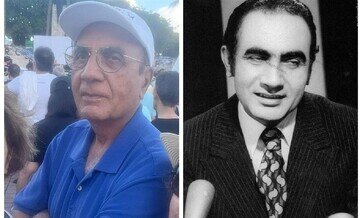
TEHRAN – A US federal court in Florida has agreed to proceed with a groundbreaking lawsuit against Parviz Sabethy, a senior official in Iran’s infamous Islamic Revolutionary Security Agency.
Survivors of the Pahlavi administration say the verdict represents the first true opportunity in almost half a century to hold one of the most feared men of the era legally responsible.
Accusations against Sabethy
Born in Semnan in 1936, Sabethy was head of Savak’s third superintendent, internal security department, and later became the deputy director of the entire organization between 1973 and 1978.
Three former political prisoners, currently 65, 72 and 85, of the United States, filed a lawsuit in 2023, demanding $225 million in damages. They accuse Sabety of coordinating the arrest, overseeing the interrogation, and allowing methods of torture, including electric shocks, wrist suspensions, genital mutilation with attached weights, and the infamous Apollo device.
A Florida court rejected Sabety’s request to dismiss the case, finding that the evidence provided by the plaintiffs, upheld by historical records, was sufficient to hold him accountable under the Torture Victims Protection Act. The court also recognized the documented threat to the plaintiff and his attorneys and granted them the right to proceed under the pseudonym.
Most importantly, the court provided enough evidence to justify the plaintiffs suspending the time bar, and instead dismissed Sabety’s argument that the suit should be repealed due to the law of restrictions. In other words, delayed justice did not mean that justice was denied.
Rebranding Survivor Accounts and Media
After fleeing Iran with his wife during the revolution, Sabethy became obscure for almost 40 years, running a real estate business in Florida under names such as “Peter Sabethy.”
His public reappearance only came during the 2022 riots in Iran, when he was seen in a gathering of American monarchical exiles
Its reappearance was no coincidence. For many years, non-Iranian Persian satellite networks have played a central role in reshaping Sabethy’s public image. In the glossy documentary, he was portrayed not as a torturer, but as a practical security officer who defended Iran from Cold War overthrow. In these programs, Sabety denied any involvement in torture and claimed that charges against him were manufactured.
This effort in image rehabilitation coincided with a broader attempt by the monarchic groups to soften the memories of the Shah’s son and present opposition Savak and the distance Reza Pallavi from the organization from the dark legacy. But for critics, attempts to whitewash Sabety’s past highlighted the unresolved trauma of the thousands of people suffering under Savac.
The court recognized the historical record that confirmed that Sabethy deliberately directed the operation at the 3rd General Directorate and the Joint Provocation Committee, allowing for torture carried out by his subordinates.
For survivors and advocacy groups such as Iran’s Justice and Accountability (ICJA), the case represents more than compensation. It’s about perception. “The plaintiffs do not seek political interests or revenge,” the coalition said. “They want the truth, accountability and the dignity that comes from making the court aware of their suffering.”