
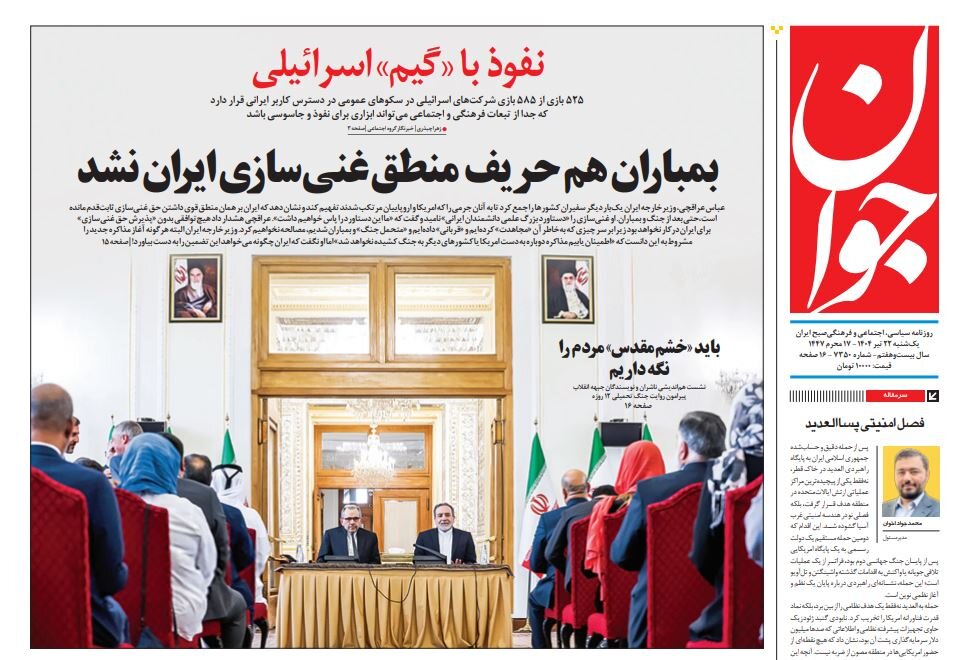
Tehran – Jawan has dedicated an editorial to the Islamic Republic of Iran’s accurate and calculated assault on the US strategic Aldeid Air Base in Qatar.
According to the paper, the attack not only targeted one of the US military’s most complex operational centers in the region, but also opened a new chapter in West Asia’s security geometry. This attack is a strategic sign of the end of order and the beginning of a new order, and is considered a turning point in the strategic discourse of resistance. On the one hand, this development is a sign of increased confidence in the Islamic Republic from a defence perspective, and on the other hand, it is evidence of the axis of promoting resistance from reactive to aggressive, effective and independent levels. In this new order, the power structure changes from monopolar to indigenous multipolarity. The foundation of its ideology is rooted in Islamic identity, and its security tools are designed based on asymmetric, mobile and indigenous deterrence. The ultimate success of this order requires the transformation of military deterrence into effective defensive diplomacy and the provision of a model for regional nation security cooperation. The future of West Asia is in the hands of the will of the nations on the path to overcoming foreign domination and achieving true independence.
Etemad: Extremism is the enemy of national unity
In an interview with political analyst and former MP Heshmatra Farahatpishe, Etemad examined the dangers of extremism in the postwar political atmosphere. Falahatpishheh said: Meanwhile, the majority of postwar analysts and political activists called for an increase in patriotic and national approaches to protect the achievements of people and government in the 12-day war. Extremists have posted several programs on the agenda after the war. Their most important strategy is to stand up against all sorts of diplomatic movements. So, when the Iranian president issued a message of peace, emissions and diplomacy in an interview with an American journalist (Tucker Carlson), they quickly attacked him. In the next phase, the militants raised money to assassinate Trump. Extremists are trying to create costs for the country and people by assassinating Trump using Iran’s name. These groups are obstructing the President’s reasonable policies for negotiations. If the government doesn’t stop these groups, they will cause more damage to the country.
Siasat-e-Rooz: The West is not reliable
In light of debates over Iran’s potential return to nuclear negotiations with the United States, it is essential to remember the history of betrayal that undermined past efforts. Negotiations should not proceed based on vague hopes of non-attack. Instead, the foundation must be an official, globally recognized declaration, acknowledging that the US and Zionist regimes have engaged in attacks on Iran. These invaders must be accountable and liable to pay compensation for damages given.
Only after such compensation has been addressed can we have a history of meaningful dialogue resumes that include discussions about Iran’s legitimate nuclear rights by binding international assurances to prevent future hostilities. The negotiated solution must clearly respect the rights of the Iranian people, particularly the rights to nuclear enrichment. However, recognition of these rights must be linked to clarity surrounding the obligations of those responsible for previous attacks.
It’s important to remember. The Western agenda has aimed to destabilize Iran and reflect Libya’s tragic fate. The only effective countermeasure is the strategic strengthening of Iran’s military, economic and security sectors rooted in national unity and carried domestic resources.
Arman-e-Emrooz: No agreement at any cost
In the memo, Ahman et Emrus discussed Netanyahu’s visit to the White House and his meeting with Trump. Netanyahu and Trump’s speeches presented contradictory calculations that three sides have faced since the US attacks on Israeli and the US nuclear facilities. Trump is relying on more attack threats to force Tehran to agree to a deal that would prevent Iran from building nuclear weapons. However, Israel doubts that a diplomatic solution would prevent Iran’s secret advances against nuclear weapons. Tehran is seeking assurances that Iran will not be attacked again in exchange for resuming talks with Washington. Western diplomats believe Iran is still discussing the next steps and how to deal with this issue. Now there is distrust of Trump and concern that he will change the tact, according to Ali Vez, a crisis group think tank. There is unlikely to attempt to reach a contract at any cost, including an agreement to end Iran’s uranium enrichment.