
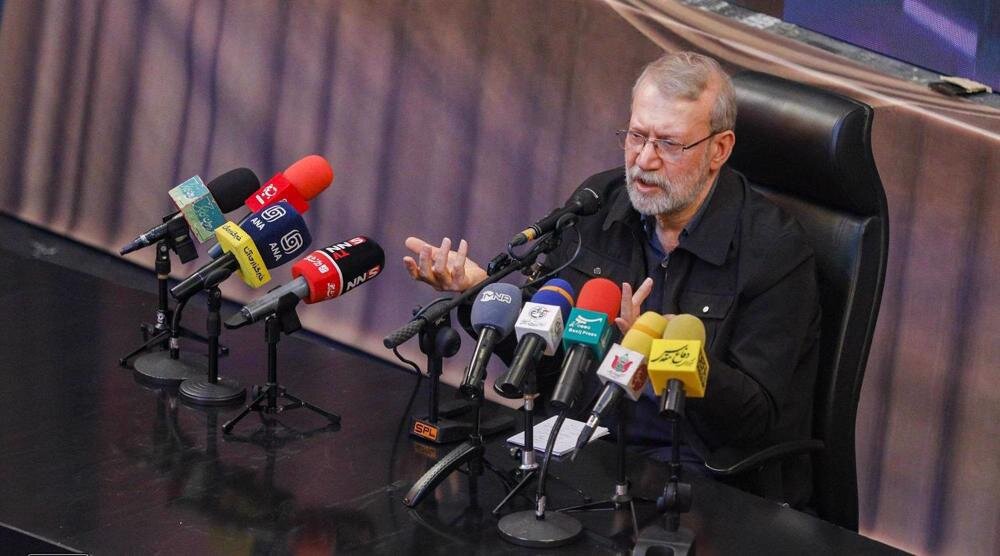
TEHRAN – The Secretary of Iran’s Supreme Council for National Security has flatly rejected Western demands to reduce the range of missiles aimed at the country.
“Calls to reduce the range of missiles are tantamount to demanding obedience and stripping away national security,” Ali Larijani said Thursday at a local event in Tehran.
“Reducing the range of missiles is tantamount to undermining this country’s most important means of defense,” he said.
Iran has made tremendous progress in its missile industry over the past few decades. The country has successfully developed all kinds of cutting-edge missiles domestically.
Iran’s armed forces have used locally developed missiles to counter the Israeli regime’s aggression against the country.
On June 13, Israel launched a blatant and unprovoked act of aggression against Iran, sparking a 12-day war that left at least 1,064 people dead in the country, including military commanders, nuclear scientists, and civilians. The United States also entered the war by bombing three Iranian nuclear facilities in a serious violation of international law.
In response, Iranian forces targeted strategic locations throughout the occupied territories, as well as Qatar’s Al Udeid Air Base, the largest US military base in West Asia.
During Israel’s 12-day invasion of Iran in June, the United States reportedly spent a significant portion (about a quarter) of its supply of advanced THAAD interceptor missiles. According to US media, the US military has fired more than 100 THAADs, possibly more than 150, to counter a barrage of Iranian ballistic missiles. The United States has deployed two of seven THAAD systems to protect Israel in the conflict. This rapid disbursement of THAAD interceptor missiles has reportedly revealed weaknesses in US missile defense capabilities and depleted valuable resources at a time when American public support for Israel’s defense has declined.
Despite massive efforts by the United States, Israel, and many European and regional countries to intercept Iranian missiles, Iran still managed to strike targets and destroy important military and strategic locations throughout the occupied territories. The unprecedented damage is believed to have forced Israel and Washington to call for a ceasefire.
The final round of nuclear negotiations between Iran and the United States was interrupted by the outbreak of war. The United States now also wants to negotiate with Iran about the range of its missiles, but Tehran officials say that is not a start. Larijani has previously said the United States wants Iran’s missiles to have a range of less than 500 kilometers, meaning it cannot retaliate against Israel if the country is attacked again.
Elsewhere in his remarks Thursday, Larijani said external economic pressure will not erode Iran’s resilience. “Western countries believe that they can weaken Iran’s resilience through economic pressure,” the security chief said, adding, “The Iranian state will also pass this stage with resistance and faith.”
“If we want national resistance to continue, we must unite and speak with one voice,” Larijani said, stressing that “national security belongs to everyone and protecting it is a collective duty.”