
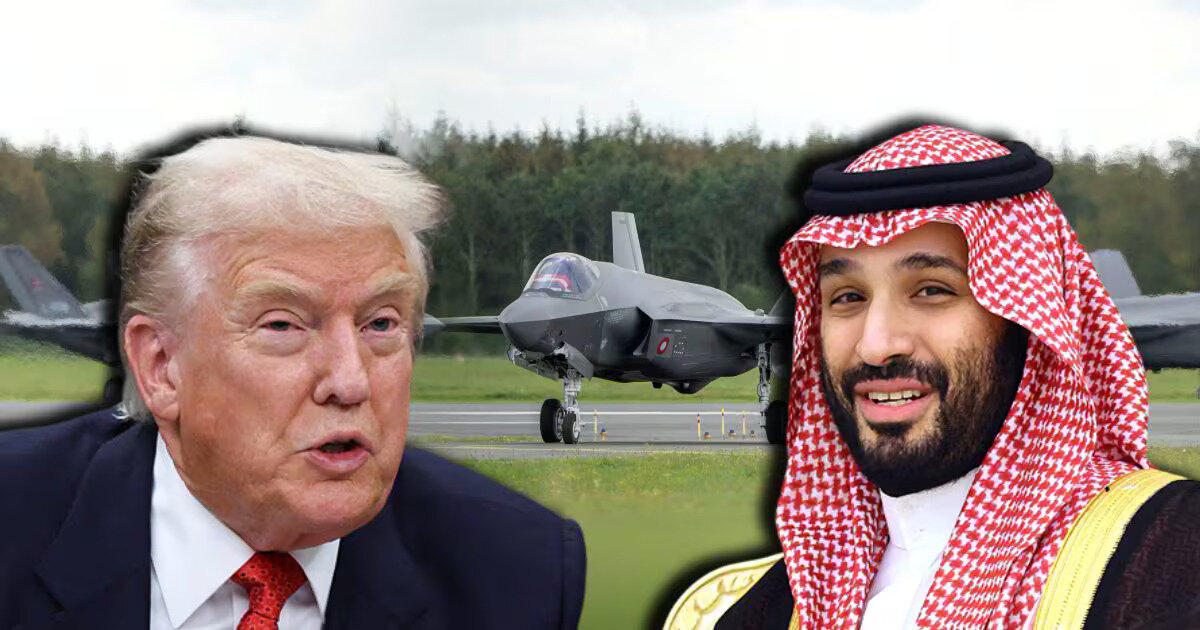
In a major policy shift, US President Donald Trump on Monday announced his administration’s intention to approve the sale of the F-35 stealth fighter jet to Saudi Arabia, the day before Saudi Arabia’s Crown Prince Mohammed bin Salman arrived at the White House.
A potentially multibillion-dollar deal involving up to 48 aircraft would end Israel’s exclusive access to F-35s in the Middle East, a position secured by U.S. preferential treatment for nearly a decade, and raise serious questions about Washington’s longstanding commitment to preserving Israel’s so-called qualitative military superiority.
Reports from Israeli sources, including Haaretz, indicate that Tel Aviv authorities are lobbying hard to make the transfer conditional on Riyadh’s formal normalization with Israel, essentially trading exclusive access to arms for political concessions and seeking to offset deepening regional isolation.
Israeli military officials have also expressed concerns that the deal could strain production lines and delay deliveries of F-35s to the country’s military, Yediot Aronos said.
Meanwhile, some Pentagon assessments highlight the risks of sensitive technology reaching China through partnerships with Saudi Arabia.
Mohammed bin Salman, Saudi Arabia’s de facto leader who effectively controls the country’s affairs on behalf of his father King Salman, will visit the White House for the first time in more than seven years.
President Trump has expressed a desire to expand cooperation with Riyadh in several areas, including military agreements, investments in artificial intelligence, liquefied natural gas projects, and civil nuclear energy.
Observers say Washington continues to push for Saudi recognition of Israel, a move that risks further destabilizing the region and deepening divisions across the Arab and Muslim world, while ignoring the need for Israeli accountability for the devastation in the Gaza Strip and the killing of more than 69,000 Palestinians since October 2023.