
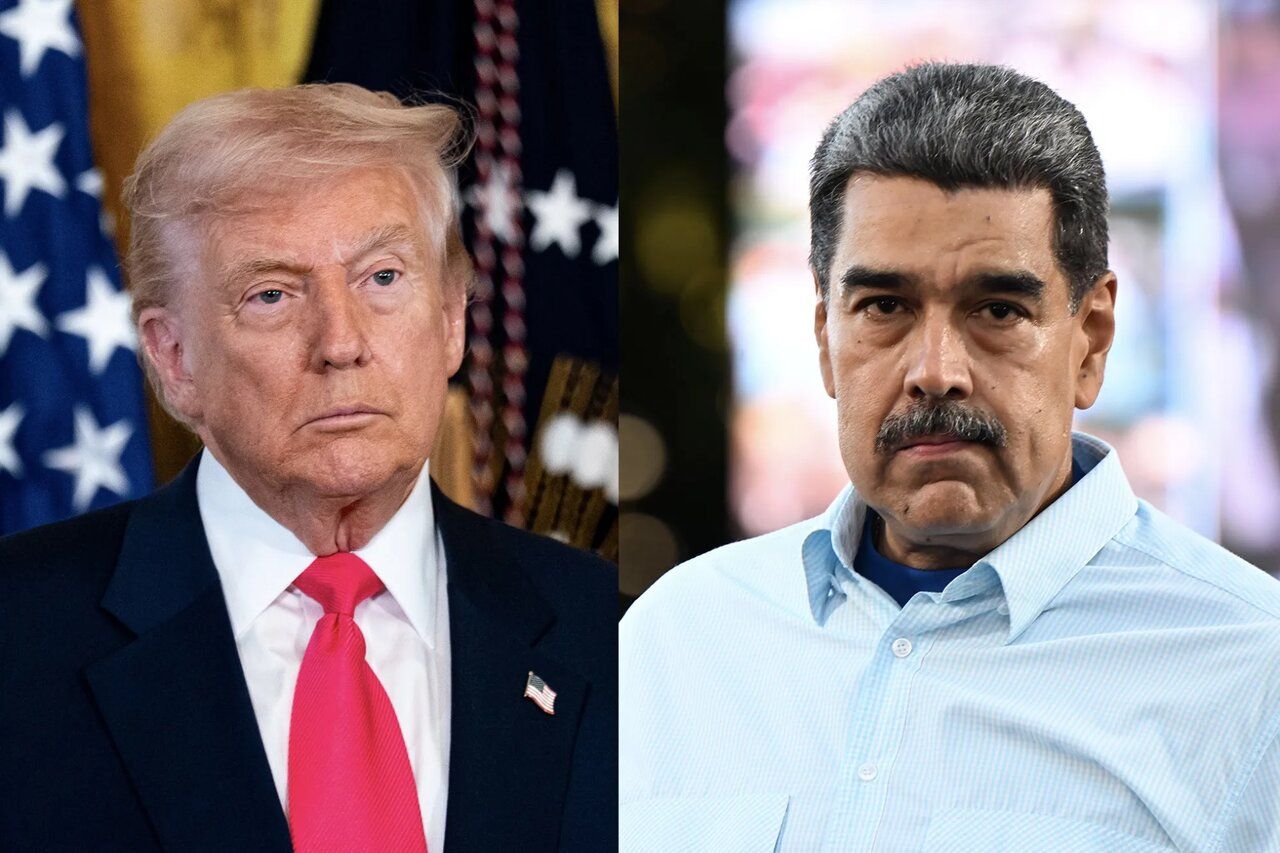
US President Donald Trump declared a “total closure” of the airspace over and around Venezuela, without providing any legal basis or operational details, a blunt social directive to “airlines, pilots, drug traffickers and human traffickers” on Saturday.
The statement came amid the largest U.S. military buildup in the region in decades, with the USS Gerald R.
Recent U.S. attacks on ships in international waters off the coast of Venezuela and Colombia have killed at least 83 people. The Washington government claims the ship carried drugs, but has not presented any official evidence.
Latin American leaders, international legal scholars and families described the attacks as extrajudicial killings and said many of those killed were fishermen.
Cuba’s Foreign Minister Bruno Rodriguez denounced the US stance as “an escalation of military aggression and psychological warfare” and accused US warships of electromagnetic interference across the Caribbean, warning that the goal was to overthrow President Nicolas Maduro.
Iberia, TAP, Avianca, LATAM, GOL, and Turkish Airlines grounded their operations following a US aviation advisory warning of “deteriorating security” and “increased military activity,” and Caracas later banned these airlines for “participating in acts of state terrorism.”
Air tracking snapshots after President Trump’s post showed Venezuela’s skies to be nearly empty, in contrast to crowded routes in neighboring countries.
The White House has doubled down on its “war on drugs” narrative, labeling the so-called Solis cartel as a narco-terrorist organization led by Maduro and suggesting operations could extend into Venezuela.
But last week, Trump reportedly spoke with Maduro about the possibility of a meeting, which would be an unprecedented move and highlight the strategic incoherence of simultaneous dialogue and brinkmanship.
Skepticism persists across the region. The drug war framework is seen by many as a flexible pretext for coercion and regime change in a resource-rich nation with vast oil reserves.
Trump’s opaque edict, which combines lethal maritime strikes and forceful deployments, reads more like a planned escalation than a defensive counternarcotics response, at great cost to civilian security, regional stability, and international law.