
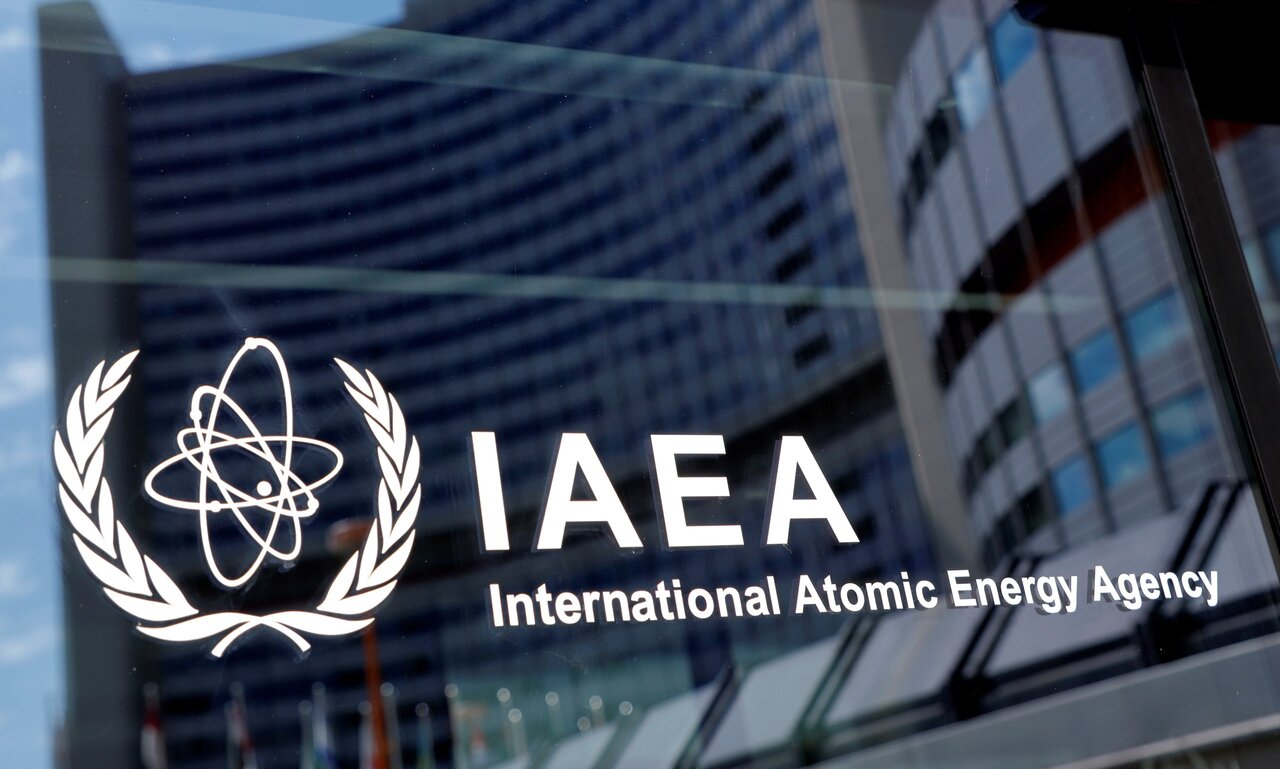
TEHRAN – Iran’s Ambassador to the International Atomic Energy Agency (IAEA) categorically rejected any future anti-Iranian resolutions scheduled for the agency’s Board of Governors, stressing that such measures will not affect the implementation of the country’s nuclear safeguards.
Reza Najafi made the remarks at the board meeting scheduled to be held in Vienna from November 19th to 21st.
Colonel Najafi criticized the United States, the United Kingdom, France, and Germany, the three European countries (collectively known as the E3), for preparing a politically motivated resolution aimed at getting Iran to cooperate with the IAEA. He accused the US government and the E3 of trying to manipulate international mechanisms to advance “unreasonable and coercive” demands against the Iranian state.
“Presuring IAEA Director-General Rafael Grossi to submit a report based on an expired UN Security Council resolution is illegal, unjustified and counterproductive,” Najafi said. “Such actions not only complicate diplomatic efforts but also undermine negotiations. Importantly, they do not alter Iran’s compliance with its safeguards obligations, which are legally fulfilled under the supervision of IAEA inspectors.”
The current tensions can be traced back to a dramatic escalation in June. On June 13, 2025, the Israeli regime launched an unprovoked attack on Iranian territory, sparking a 12-day war that claimed the lives of at least 1,064 Iranians, including military commanders, nuclear scientists, and civilians. The United States joined hostilities by bombing three Iranian nuclear facilities, an act the Iranian government strongly condemned as a serious violation of international law.
In response, Iranian forces carried out retaliatory strikes against strategic targets in the occupied territories, attacking Al-Udeid Air Base in Qatar, the largest US military installation in West Asia. Iranian officials emphasized that the Israeli attack came just hours after the adoption of a politically motivated resolution by the IAEA Board of Governors and targeted nuclear facilities that are fully monitored under safeguards agreements.
Following the June attacks, Iran’s parliament unanimously voted on June 25 to suspend all cooperation with the IAEA. Deputies stressed that the Council’s June 12 directive and related resolutions created the conditions for Israeli aggression. Since then, Tehran has consistently stressed that its nuclear program is peaceful and fully monitored by the IAEA, rejecting Western attempts to politicize the agency’s mission.
Despite the suspension, talks between Iran and the IAEA resumed in September. But Iranian officials warned that the E3’s decision to trigger the UN’s “snapback” mechanism in the wake of the Cairo deal had created “new conditions” that effectively undermined the framework for cooperation. The IAEA has not publicly criticized the move, instead continuing to pressure Iran to meet its safeguards obligations.
The diplomatic situation was further complicated by the November 12 IAEA report by Director General Rafael Grossi. The report covers developments since his assessment in early September and considers verification issues that emerged after Iran suspended cooperation for security and domestic legal reasons. It also presents the latest estimates of Iran’s enriched uranium stockpile. As of June 13, just before the suspension of cooperation, a total of 9,874.9 kg, including 9,040.5 kg in UF6 format.
According to reports, E3 is preparing a new resolution to submit to the next board meeting. The draft resolution continues to be debated in the capitals of three European countries, and it is not yet clear whether the United States will formally co-sponsor it.
Grossi’s report calls on Iran to cooperate with inspectors and allow access to affected sites, but largely avoids commenting directly on the June attacks. Iranian officials stressed that Iran will respond to any illegal or politically motivated measures and that unilateral measures against Iran are unacceptable.
The Russian government has expressed strong criticism of Europe’s efforts. Russia’s permanent representative to international organizations in Vienna, Mikhail Ulyanov, warned that the E3’s actions risked causing a complete diplomatic impasse. Meanwhile, the Iranian government maintains that its nuclear activities are peaceful and fully monitored, while reaffirming its right to defend its national interests in the face of aggression.
Mr. Najafi concluded by reiterating that Iran continues to comply with its safeguards obligations in accordance with international law and IAEA protocols. “The Iranian state will not be forced by politically motivated resolutions. We will continue to transparently implement our peaceful nuclear program. No external pressure will change our legitimate and responsible position,” he explained.
As they prepare to convene the council, Iranian officials are insisting that the international community condemn the illegal aggression against Iran and respect the country’s legal right to peacefully pursue its nuclear program without interference.