
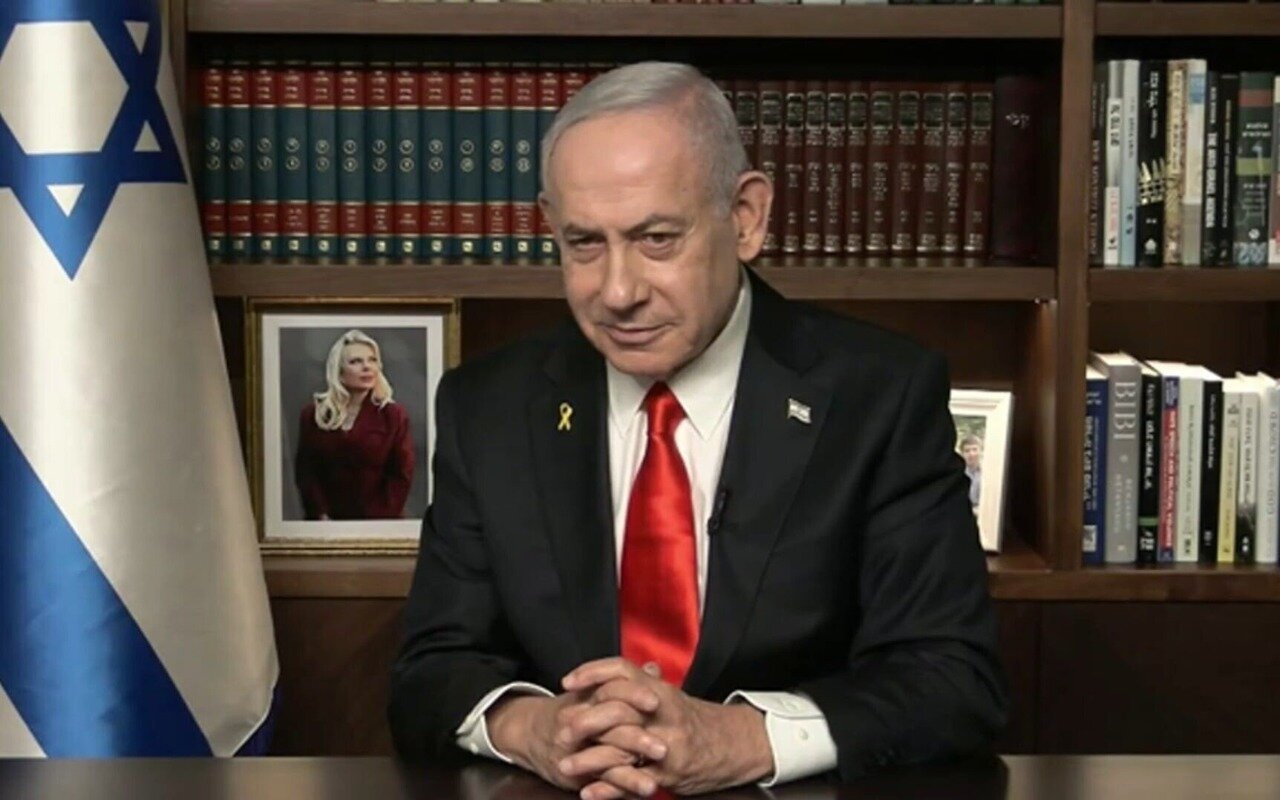
TEHRAN – Israel once again refuses to accept a Palestinian state, insisting that statehood remains off-limits “even if relations with Saudi Arabia are normalized.” Prime Minister Benjamin Netanyahu declared in an interview on November 20 that “that is not on my agenda.”
The Prime Minister declared that a Palestinian state was an “existential threat” and said: “There is no Palestinian state. It is very simple: it will not be established.”
He is not alone in hardening attitudes in Israel. Army Minister Israel Katz publicly declared that “Israel will not allow the establishment of a Palestinian state.”
Other senior officials, including Foreign Minister Gideon Saar, Finance Minister Bezalel Smotrich, and National Security Minister Itamar Ben Gvir, have repeatedly characterized the two-state outcome as an existential threat, suicidal, or the creation of a “Palestinian terrorist state.”
The concerted rejection reflects the government’s policy of accelerating settlement expansion in the occupied West Bank, displacing Palestinian families and making a future statehood geographically impossible, a move condemned by rights groups as a deliberate fragmentation of Palestinian land.
At the diplomatic level, Riyadh has sought to place a Palestinian state at the center of expanding the Abraham Accords.
Saudi Crown Prince Mohammed bin Salman told US leaders on November 18 that Saudi Arabia would only seek to join the Abraham Accords if there was a “clear path to a Palestinian state.”
But the Trump administration’s push for security guarantees, arms sales, and major investment programs are incentives that risk making Palestinian rights actually negotiable.
Israel’s refusal exposes the emptiness of its pursuit of normalization. They risk legitimizing the occupation and ongoing dispossession, ensuring Riyadh’s security at the expense of justice.
By forcing Saudi Arabia to recognize Israel without addressing core grievances, Washington could further deepen turmoil across the region and widen the rift between the Arab and Muslim worlds.
For many, normalization efforts amount to turning a blind eye to Israel’s relentless aggression in the region and the growing human tragedy since October 2023. More than 69,000 Palestinians have been killed in Gaza, thousands more in the West Bank, more than 3,800 in Lebanon, more than 1,060 in Iran, and many others in Yemen and Syria.
In fact, normalization risks becoming a diplomatic trophy for entrenched occupiers rather than a mechanism to end the occupation. Analysts warn that this approach makes Palestinian self-determination expendable and perpetuates violence as settlements expand unchecked and Gaza remains under de facto control.
As international support for Palestine grows, Israel’s isolation deepens, but it emphasizes that true stability can only come by reversing the occupation and securing binding guarantees of Palestinian sovereignty and rights.