
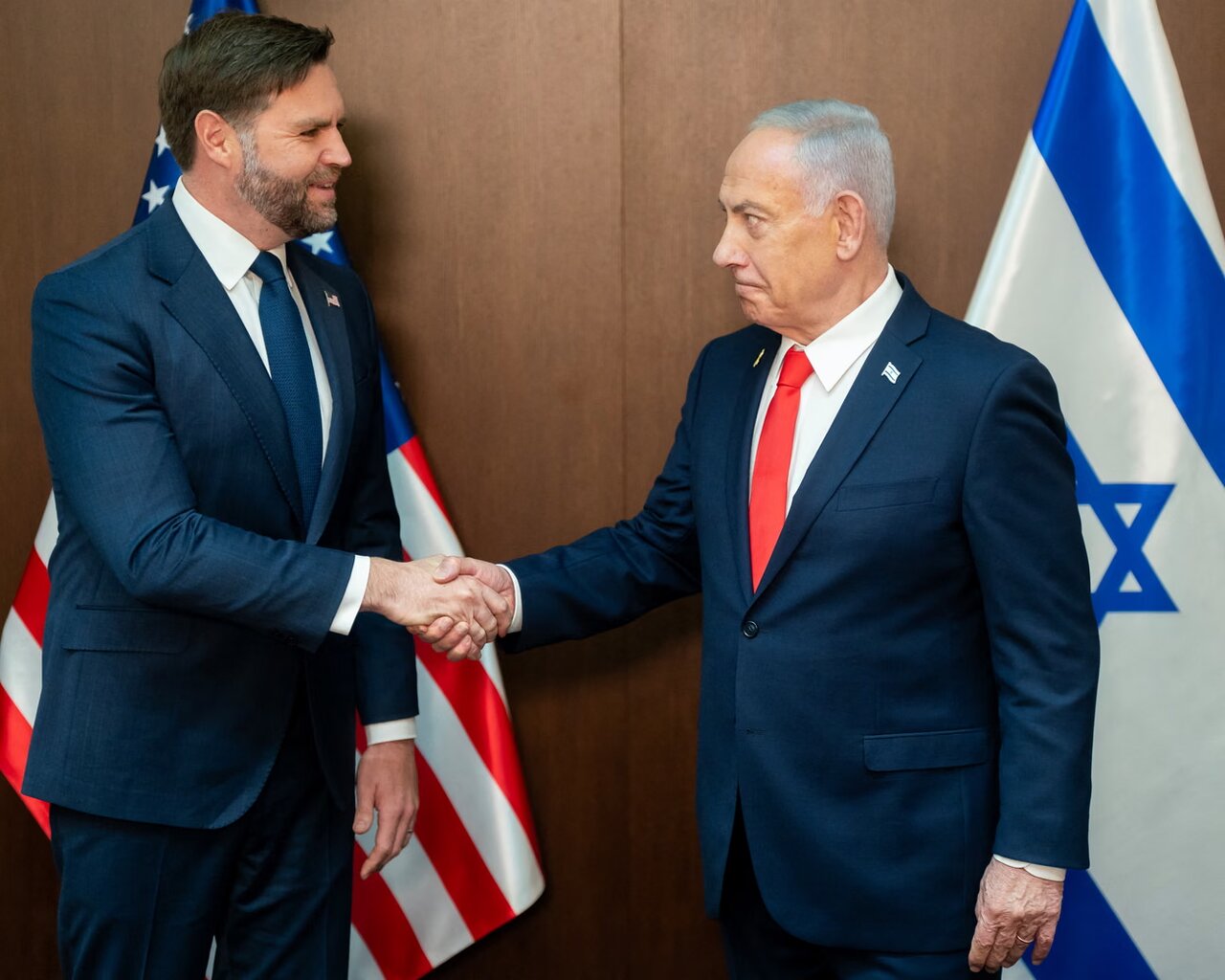
TEHRAN – US President Donald Trump has publicly declared that his administration’s priority is to end the war in Gaza through a ceasefire. Although his message is framed as an effort to prevent further escalation, Vice President J.D. Vance’s visit to Jerusalem (Al-Quds), where he met with Israeli Prime Minister Benjamin Netanyahu, shows that the ceasefire is also being used as a political tool to protect Israel and reshape regional alliances.
Despite the formal agreement, Israel continues its military operations in Gaza. The Gaza government media office reported that Israel has violated the US 20-point ceasefire plan at least 80 times since October 10. These repeated violations demonstrate that Israel has accepted the ceasefire politically but not operationally, maintaining pressure on Gaza while allowing the United States to control diplomatic discourse. In doing so, Israel plans to abide by the ceasefire internationally while weakening the ceasefire domestically.
President Trump has said a ceasefire is the path to ending the war, but the U.S. government’s actions suggest a broader strategic calculation. In a meeting with the Israeli prime minister on Wednesday, Vance said the ceasefire was a “key part” of moving forward with the Abraham Accords, a normalization agreement between Israel and several Arab countries. Therefore, the ceasefire is less about resolving conflicts on the ground and more about strengthening alliances that strengthen Israel’s regional position.
Prime Minister Netanyahu defended his acceptance of the ceasefire in a meeting with Vance, saying, “One week you say Israel controls the United States, and a week later you say the United States controls Israel. This is terrible…We have a partnership.” He also thanked President Trump for his diplomatic efforts in the region and emphasized his administration’s role in facilitating Israel’s relations with its neighbors. These statements show how the Israeli government seeks to project strength and legitimacy internationally, even as it faces domestic criticism for agreeing to a cease-fire before defeating Hamas or securing the release of prisoners.
Prime Minister Benjamin Netanyahu has been under increasing domestic pressure to accept a ceasefire before achieving his declared military goals, including annihilating Hamas. Many Israeli politicians see this as a capitulation to American pressure. “Prime Minister Netanyahu has made Israel a client state of the United States,” one Israeli politician told the Washington Post. The ceasefire provided Netanyahu with a political shield, allowing him to maintain Washington’s support while covering his failure to deliver a decisive military victory.
Experts also point out that the ceasefire framework is structurally weak. There is still no planned international security force, governance of Gaza remains unresolved, and the basic humanitarian needs of more than 2 million Palestinians living under siege remain unmet. These rifts make the ceasefire a temporary political arrangement rather than a permanent peace plan, giving the United States and Israel room to maneuver without committing to meaningful change on the ground.
President Trump’s push to end the Gaza war through a ceasefire reflects Washington’s intent to shape the outcome of the conflict rather than address Palestinian rights. For the United States, a ceasefire is a strategic tool. For Israel, it would cover military and political failures. For Palestinians, it offers little real security or protection. Without enforcement and accountability, a ceasefire risks becoming a moratorium on maintaining the status quo rather than paving the way to a just solution.