
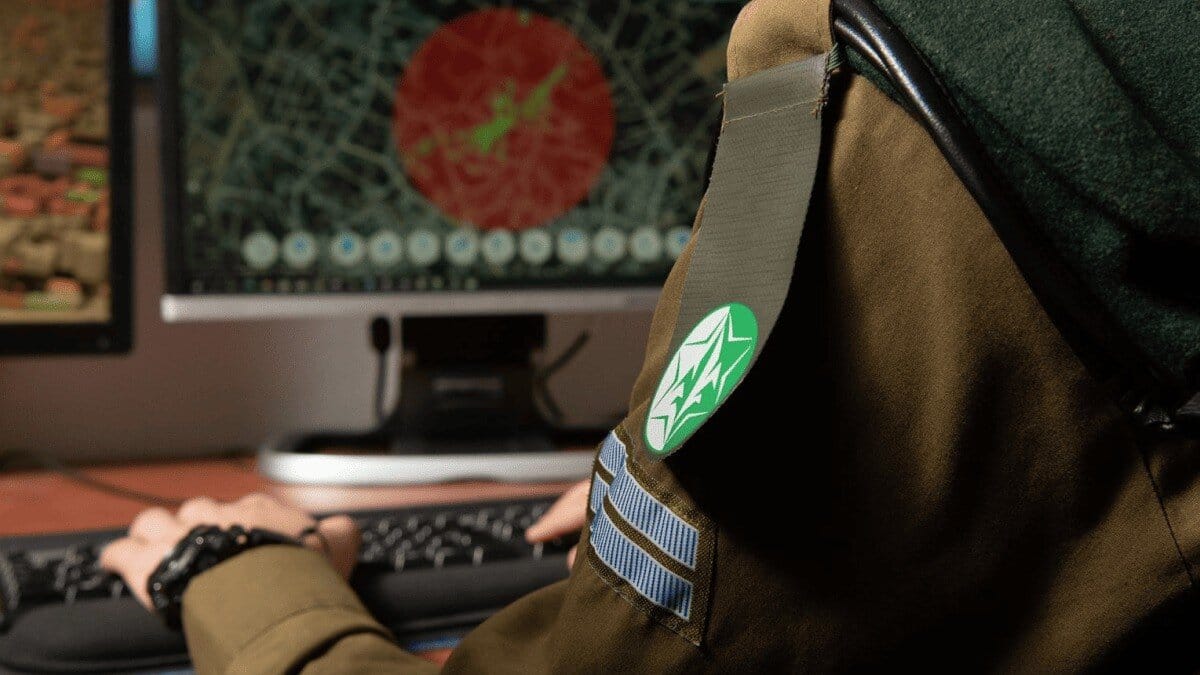
The pro-Palestinian hacking group Handara on Saturday released the personal and professional details of 10 people it identified as operatives of Israel’s Unit 8200, offering a $10,000 reward for verified information on each target.
The publication builds on Handara’s previous actions of exposing Israel’s nuclear and military facilities, revealing the personal information of senior military scientists, and claiming intrusions into radar and Iron Dome systems, and marks an escalation in the exposé campaign against Israeli military intelligence.
Unit 8200, Israel’s so-called elite signals intelligence and cyber warfare division, has come under heavy criticism for mass surveillance of Palestinians and is accused of intercepting and storing millions of private communications in order to exercise control and coercion.
Rights groups say these practices weaponize technology against civilians, violate international law and reinforce systematic repression.
Handara operates as the Handara People’s Resistance Front for Truth (HPR), which positions its activities as counter-terrorism against “Zionist regime criminals.” The individuals are “currently under investigation,” according to the website.
The group also said it had “sent flowers to the Zionist extremists and left them in their cars,” and published photos as evidence of physical proximity.
designated agents
Former cybersecurity chief Ron Weinberg allegedly “advised senior officials” at 8200 from 2019 to 2021.
Roy Calfon, of Hadera, is described as a “cyber and RF intelligence analyst” who “investigated cyber incidents” and “gathered intelligence on enemy activities” from 2017 to 2020.
Holon’s Daniel Elishaev, who worked at 8200’s Cyber Technology Center for six and a half years, reportedly “led cross-functional teams in 13 operational projects.”
Elad Katz is said to be a major who led the cyber products division from 2012 to 2020, “managed 70 analysts in intelligence gathering” and is currently engaged in threat research.
Jonathan Assayag specialized in “Network Protocols and Cyber Security” during his four-year tenure as leader.
Khama Ben Yaakov, a former intelligence analyst training commander, is credited with “leading the SIGINT investigation” and “mobilizing a multidisciplinary team.”
Liad Israel Rozenberg is said to be a data scientist who “performed advanced big data analysis” and “developed a framework that reduced the team’s workload by 40%.”
Blue Team co-leader Noah Haas reportedly “led research during the cyber incident” and managed the SIEM solution.
Squad leader Omer Rizi, who received the “Colonel Excellence Award,” is credited with “developing new technological solutions.”
Senior security researcher Omer Yehudai is said to specialize in “DNS server research and Android reverse engineering.”