
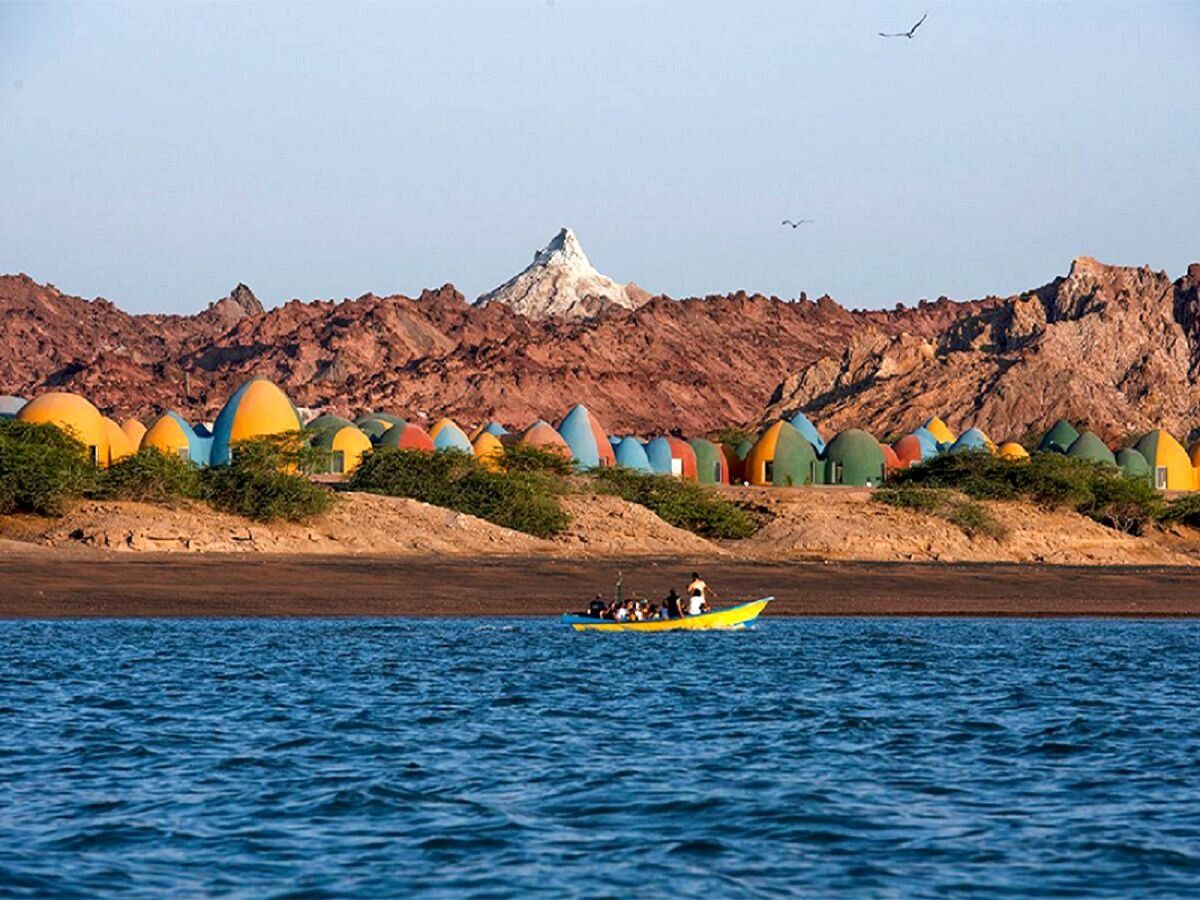
TEHRAN – Home to 149 guesthouses and ecolodges, Qeshm Island, the jewel of southern Iran in the Persian Gulf, is emerging as a model for community-based and sustainable tourism.
These locally owned accommodations not only promote the island’s tourism economy, but also contribute to the preservation of the island’s unique cultural heritage and ecological diversity.
In fact, by using locally sourced materials and promoting traditional lifestyles, the island’s ecolodges play an important role in creating jobs, supporting small businesses and encouraging environmental stewardship.
Ecolodges help foster deep and meaningful connections between tourists and local ways of life by providing visitors with authentic cultural experiences rooted in the island’s customs, cuisine, and natural environment.
Qeshm Island is famous for its rich cultural heritage and breathtaking landscapes. The island’s ecolodges, especially those in the western region, exhibit traditional architecture adapted to the local climate, including thick walls, wind towers, and natural materials, all of which reflect knowledge passed down through generations over centuries. This blend of sustainability and tradition not only attracts environmentally conscious travelers, but also motivates residents to preserve their traditions.
Located along the Strait of Hormuz, Qeshm Island stretches parallel to Iran’s southern coast. It is 135 kilometers long and has an average width of 11 kilometers. Qeshm Island has an area of approximately 1,491 square kilometers, which is larger than several countries such as Bahrain and Singapore. The island is part of Hormozgan province and, together with nearby Ralak Island, forms the Qeshm province and is home to approximately 190,000 people.
Strategically located at the mouth of one of the world’s most important maritime trade routes, Qeshm Island is a place where geography, biodiversity and ancient culture come together.
The island is known for its ecological richness, including the Hara Forest, a vast mangrove ecosystem spanning over 8,000 hectares. Designated as a UNESCO biosphere reserve, these forests serve as important breeding grounds for migratory birds, fish and reptiles, and play an important role in maintaining the ecological balance of the Persian Gulf.
Qeshm Island is also home to 26 geosites that form part of the Qeshm Island Geopark, the Middle East’s first UNESCO Global Geopark. The geopark was first designated in 2006, but was temporarily removed from the list, but reinstated in 2017 with improved conservation measures and infrastructure.
Qeshm Island, also known as the “Natural and Geological Museum,” is famous for its surreal rock formations and dramatic landscapes. One of the most iconic natural attractions is the Valley of the Stars, a maze of wind-carved valleys and towering sedimentary structures formed over thousands of years. According to local legend, a star once fell in this area, giving the place its mysterious name.
With its unique blend of natural, cultural and community-driven tourism, Qeshm continues to attract travelers seeking meaningful, responsible and immersive experiences.
morning