
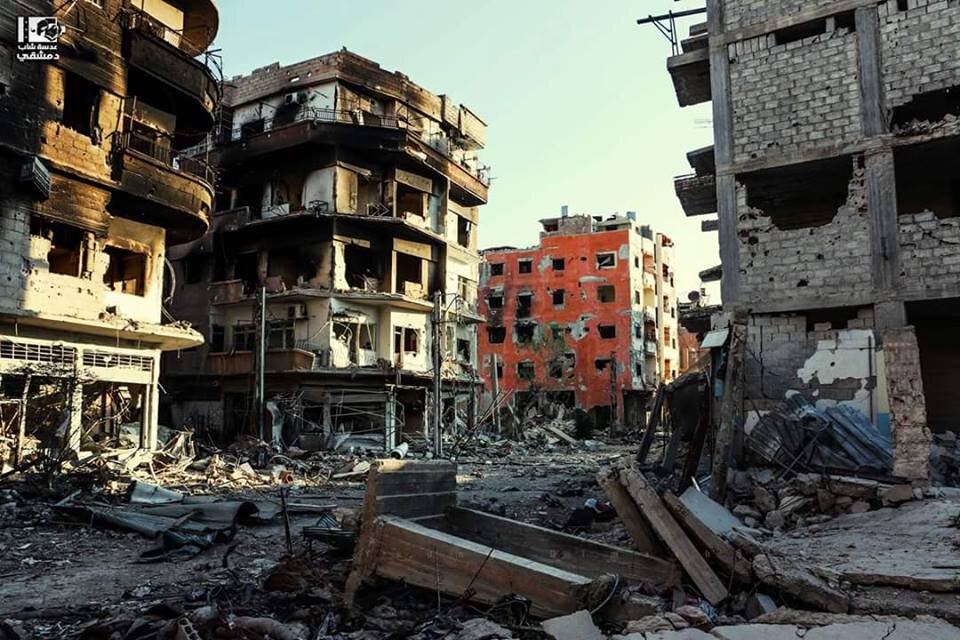
BEIRUT—Fourteen years after the start of the war, Syria’s recovery remains more of a mirage than a milestone. Once the beating heart of Arab civilization, the region is now caught between foreign agendas, economic collapse, and a global tug-of-war over its soil, sovereignty, and soul.
Despite official promises and lavish meetings, Syria’s path to recovery is blocked by political manipulation and external interests disguised as “humanitarian aid.”
The World Bank estimates that Syria will require more than $345 billion to rebuild, but its current GDP hovers around $20 billion, just one-third of its pre-war level. This gap reflects not only the scale of physical devastation, but also the decline of the nation itself.
The World Bank warns that without a credible political, legal and security framework, recovery pledges will remain on paper.
Western countries, on the other hand, condition financial support on drastic political concessions such as constitutional reform, regime change, and tacit normalization of diplomatic relations with Israel.
Reconstruction has thus turned into a geopolitical weapon. Not to rebuild Syria, but to reshape Syria.
French daily Le Monde described the current rhetoric around reconstruction as “a sham to burnish the regime’s image” while millions of Syrians still live in poverty.
The World Food Program reports that 12 million people face severe food insecurity, with more than 90% living below the poverty line. Aleppo, Homs, and Deir Ezzor, once symbols of industry and culture, have become the ruins of a new war, with power outages, hunger, and displacement.
Israel’s role: From covert destabilization to economic leverage
Throughout the conflict, the Israeli occupation regime pursued a consistent strategy to ensure that Syria never reemerged as a unified or influential state.
Regional analysis and documented evidence suggest that Tel Aviv supported extremist armed groups in southern Syria early in the uprising. Its purpose was to divide the country and dismantle the axis of resistance.
This strategy continues today through regular airstrikes against critical infrastructure, oil convoys, and military installations in the name of countering Iran.
In reality, this is part of a calculated effort to prevent Syria from rebuilding and keep it locked into external dependence.
At the same time, so-called “peace incentives” promoted by Western countries and Persian Gulf emirates link reconstruction funds to normalization of relations with Israel, turning Syria’s suffering into a bargaining chip for political realignment.
What bombs could not accomplish, conditional aid now seeks to impose obedience through starvation.
Moreover, Israel’s territorial ambitions extend beyond military dominance to outright resource exploitation. The annexation of the Golan Heights in 1981, combined with continued control over territory rich in water and oil resources, effectively turned parts of Syria into a reservoir for Israeli interests.
Analysts warn that such annexations could enable the systematic diversion of water, confiscation of energy infrastructure and commercial plunder of natural resources.
In reality, control of territory has become control of wealth, draining Damascus’ ability to finance reconstruction and deepening its economic subjugation.
A new battle over Syria’s resources
Other foreign powers are also entrenching themselves in Syria’s wealth as Western sanctions strain the economy. The US military and its allied militias occupy oil-rich areas in the northeast and control nearly 70% of Syria’s energy production, while Turkey exploits its fertile northern plains through cross-border trade and resource extraction.
These dynamics are tearing Syria’s sovereignty apart, and its reconstruction is determined not by national planning but by competing powers that divide the spoils.
But even beneath the rubble, Syria remains resilient. The country still has vast natural resources such as phosphates, gas, and agricultural potential, as well as a renewable population.
But without genuine administrative reform, transparency, and national reconciliation efforts that restore public and national trust, this capacity will remain dormant.
Beyond concrete and capital
Rebuilding Syria is not just an engineering undertaking. It is a test of sovereignty and identity. Without true political independence and social restoration, urban rebuilding will only mask a deeper state decline.
True recovery begins not with cranes and contracts, but with justice, dignity, and unity.
The fate of Syria’s revitalization will not be determined by Western councils or pro-Israel summits. It will be written by those who refuse to surrender their homeland to foreign conditions. Only then will recovery cease to be a mirage and become the dawn of recovery.