
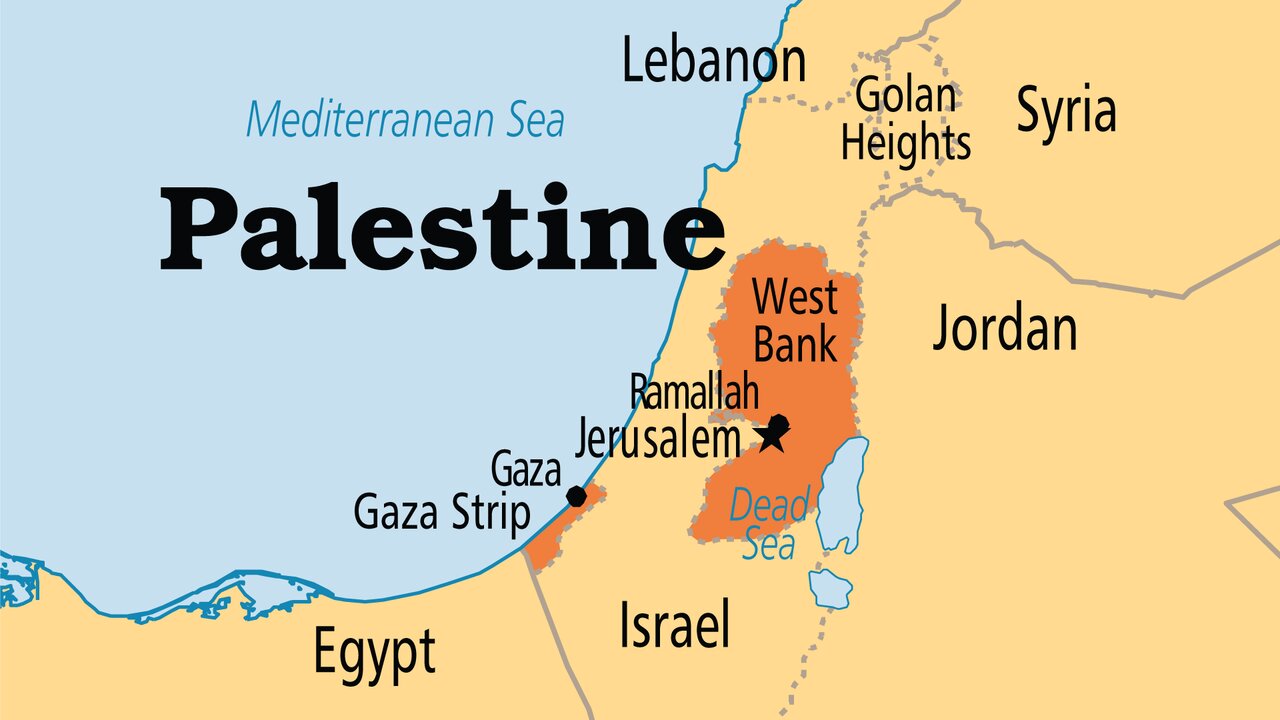
Tehran-Palestinian Issues are one of the oldest and most complex political conflicts of the present day, forming a broader international order not only for the Middle East but for over 70 years.
The conflict came from the collapse of the Ottoman Empire, British colonial rule, the Balfour Declaration in 1917, and ultimately the establishment of the state of Israel through the occupation in 1948 and the forced displacement of hundreds of thousands of Palestinians. Despite widespread resistance since then, the Palestinians remained deprived of their most fundamental rights: their right to self-determination.
1. Legal and historical foundations of Palestinian rights
Palestinians’ rights to their independent homelands are firmly rooted in international law. The UN Charter disgraces the principle of self-determination, but numerous UN resolutions (including resolution 194 (1948) and resolution 242 (1967)) call to end the right to occupation and refugee return. Historically, Palestine has always been an Arab and Muslim land, with Muslims, Christians and Jews coexisting without exclusive sovereignty. Therefore, Zionist legitimacy is based not on history or law, but on power and colonial support.
2. Two State Solutions: From Western Concepts to Legal Tools
The two state solutions were originally proposed by the Western powers as a way to end wars in the region while protecting Israel’s presence. Two independent states, Israel and Palestine, live side by side within the borders of 1967. But in reality, Israel undermines this vision through ongoing expansion of reconciliation and military occupation. Nevertheless, the importance of this idea lies in the perception of Palestine as a political and legal entity. This recognition, although limited, provides a legitimate basis for expanding Palestinian rights and regaining the occupied territories.
3. The global meaning of Palestine perception
Recognizing Palestine’s perception as an independent state within international organizations and by individual governments has several important consequences.
• Undermining the story of Israel’s occupation: Israel has consistently denied the Palestinian state. Recognition exposes this denial and puts Israel in defense.
•Palestinian Legal Empowerment: The state allows Palestinians to pursue lawsuits against Israel in international courts and invoke a global treaty to hold Israel accountable.
• Strengthening Palestinian diplomatic leverage: As a recognized state, Palestine gains greater negotiating power in negotiations and increases its influence in the Global Forum.
•Expanding rifts among Israeli supporters: Perceptions of Palestinians by Europe and several western provinces exert political pressure on close US and Israeli allies.
4. Limitations of two-state solutions
While perceptions of Palestine are a step forward, the two-state framework does not represent perfect justice. While Palestine does not answer the 1948 land and refugee questions, it restricts it to its historic homelands, namely parts of its West Bank, Gaza and East Jerusalem. Therefore, this framework should not be viewed as an endpoint, but as a platform through which Palestinians can continue to make broader claims.
5. A step-by-step approach to the Palestinian struggle
Understanding the Palestinian perception based on the two-state framework should be understood as an early step rather than an end goal. This gradual approach allows Palestinians to continue their resistance and benefit from international legitimacy while demanding a complete recovery of historic rights. In other words, recognition provides a starting point for moving forward, not a stopping point.
Today, more than 140 countries officially acknowledge Palestine. This global change growth reflects a change in public opinion and a rethinking of international responsibility. Recognizing Palestine within the framework of two states, despite its inherent limitations, can lay the foundation for strengthening the legitimacy of the Palestinian struggle and reclaiming all occupied land. Ultimately, the only path to lasting peace and historical justice lies in the full recovery of Palestine to its righteous people. Therefore, every step towards recognition and support of Palestinians represents a prelude to its return.