
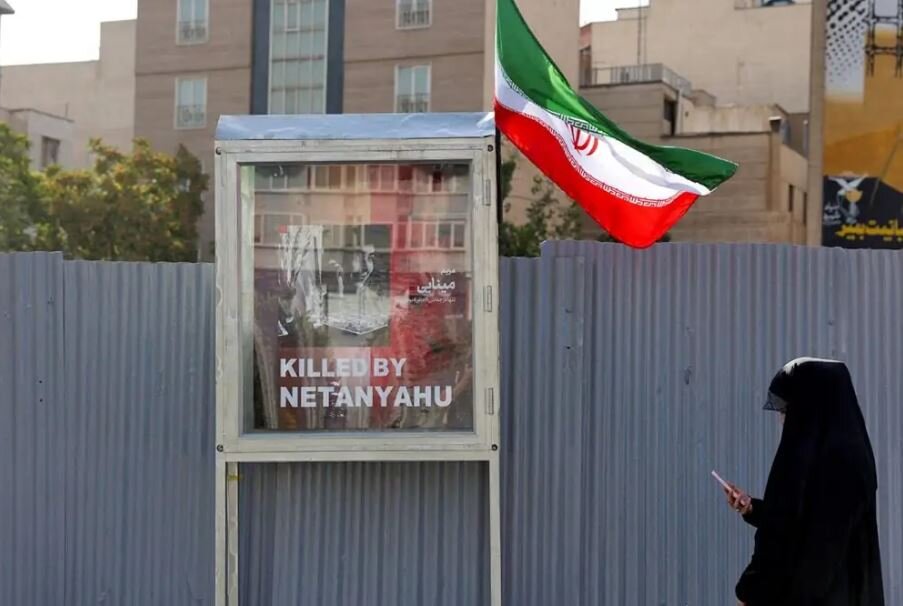
The morning after Israel’s attack on Tehran was reminiscent of moments experienced by major cities after their own crises. Silent streets, scattered sirens, and eyes still unsure of how to see the world again. According to official figures, more than 1,000 people lost their lives, including hundreds of women and children. But beyond these numbers, a deeper issue was taking shape: a crisis of trust.
In the days following the attack, Iranians spoke not only of the physical destruction but also of the broken collective bond – the bond between people and the world, hope and reality. For the first time in decades, mistrust extends not just to governments and politicians, but to the world order as a whole.
In this atmosphere, the concept of dignity began to be redefined in the collective consciousness of Iranian society. In public debates and in the writings of journalists and analysts, the word dignity transcended its religious and historical meanings and became central to postwar identity. “The Iranian state is not seeking reparations, but a redefinition of meaning,” wrote a social sciences professor in Tehran.
The roots of this crisis of trust must be traced back to the years before the war. The Iran nuclear deal, once a symbol of hope and engagement, was an opportunity to reconnect Iran with the international system. But the collapse, especially after the 2025 military offensive, has rendered diplomacy meaningless in the eyes of many Iranians. Negotiations were no longer seen as a means to resolve crises, but as a symbol of naivety.
Within this space, a moral rift developed. People felt that the Western world had failed not only politically but ethically as well. One domestic newspaper wrote, “The West has lost credibility and has become more dangerous than an enemy.”
This change in perception was evident in the media and public debate. Television programs and newspaper columns spoke of “fiery diplomacy.” But amidst the despair, a new kind of social reflection began to take shape. If your dialogue with the world has reached a dead end, it may be time to start a dialogue with yourself.
From this reflection, trust retreated from the international level to the national level. Cultural and economic elites began to rebuild local networks, while ordinary people turned from waiting for external changes to redefining their personal and collective responsibilities.
From suffering to solidarity
For many countries, war has been a source of division and disintegration. But in Iran, the aftermath took a different direction. In the weeks following the attack, many foreign observers expected protests and riots. On the contrary, the country remained unexpectedly calm. Spectacles of civic cooperation and social solidarity unfolded across the country.
Women worked at relief centers, students volunteered at hospitals, and citizens mobilized to the affected areas. Domestic media calmly reported on these efforts in documentaries, rather than sensationalizing them. Gradually, a sense of collective dignity emerged from this crisis.
Iranian sociologists called this phenomenon dignified solidarity, a form of social unity driven by moral responsibility rather than political power. On social media, young people talked about “rebuilding the country” in a cultural rather than a material sense. This sense of solidarity was born out of a collective decision to rely on ourselves rather than waiting on others.
The media played an important role. Unlike the previous year, when there was some rift between the press and the people, a common language has emerged. Reports and documentaries highlighted the courage of rescuers, workers, and teachers, not as propaganda but as a record. This convergence between media reality and real experience helped partially restore internal trust, even if external trust had collapsed.
Internationally, Western media’s reaction to the Iranian attack and civilian casualties was controversial. Limited coverage, “neutral” analysis, and even occasional justifications quickly attracted the attention of independent observers. Critics from the Global South saw this silence as evidence of a double standard: human rights matter only when Western interests are not at risk.
Many analysts saw this as a symbolic turning point in the decline of Western moral legitimacy. As one Arab writer put it: “In Tehran, not only buildings collapsed, but the very concept of Western justice.” This phrase resonated throughout intellectual circles in the Global South and stimulated a discourse that challenged the moral hegemony of the West.
For the first time in decades, Iran is being seen not just as a political issue, but as a moral mirror. Observers have found that silence in the face of suffering is itself a form of violence. Across Latin America and Africa, analysts wrote that “the real isolation was not in Iran but in the conscience of the West.” This shift in global perception, albeit gradually, served to strengthen Iran’s new moral status in the eyes of the Global South.
Birth of a new self-belief
In the months following the crisis, Iran witnessed a redefinition of its economic and cultural concepts. In universities and research centres, terms such as ‘economy of dignity’ and ‘soft independence’ are now being discussed publicly. These ideas emphasized national reconstruction through strengthening human and cultural capital, not just through infrastructure.
The local entrepreneurial movement flourished and, despite regulations, the technology sector began to chart new directions. Many startups that previously relied on Western models are now turning to local languages and needs. In the education sector, media literacy and local content production initiatives gained attention.
These developments have shown that societies are redefining themselves and becoming not just resilient, but self-aware. Independence, once a political idea, has now expanded into cultural, technological, and moral realms.
Importantly, this new self-belief was not imposed from above. It grew from below among the people. In public conversations, from small business owners to teachers and artists, the word dignity has been redefined to mean independence and inner confidence.
The 2025 attacks were not only a test of Iran’s military capabilities, but also a measure of its social and moral resilience. From the depths of the crisis, a society emerged that was more independent than before. While the international order remains consumed by power conflicts, Iran experienced something different. It is the rebuilding of meaning in the midst of loss.
Through this process, Iran changed from being a victim to being an actor. In this sense, dignity has become less a political slogan and more a moral framework for engaging with the world. While the West remains silent about its crisis of conscience, Iran is responding through internal moral renewal.
The world may still view Tehran with skepticism, but at home a deep transformation is taking hold: a return to self, a redefinition of values, and faith in the ability to build meaning even from the ashes. One Iranian intellectual wrote in an editorial: “Iran was engulfed in flames, but it has rediscovered what it means to be human.”