
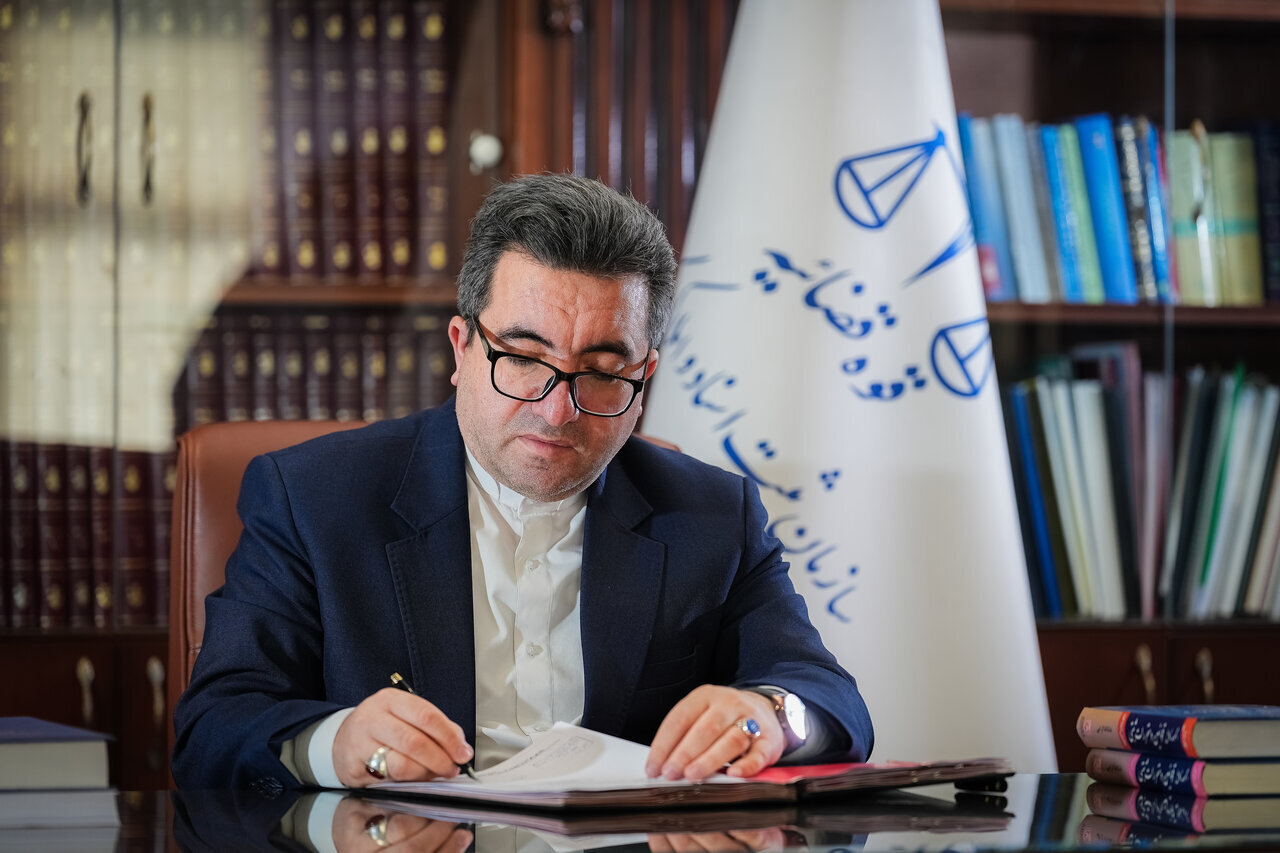
In line with the directives and transformation policies announced by Attorney General Mohseni Ejei, with the aim of fulfilling legal obligations, strengthening the institutional position and addressing registration-related obstacles, the National Registry of Deeds and Property has taken an important step towards structural excellence, improving the efficiency of registration operations and strengthening its sovereign role in the country’s legal framework.
The report details the organization’s key achievements and strategic initiatives, focusing on four key pillars.
Organizational Transformation and Positioning for Excellence
In line with the overarching goals of the national administrative and judicial system, the National Deeds and Property Registration Authority has embarked on a path of fundamental transformation, with a focus on modernizing its processes and strengthening its technological infrastructure. The main measures to be taken in this area are:
– Establishment of the Supreme Council for Transformation and Excellence, with the participation of legal and management experts, as the main body for policy formulation and supervision of the implementation of development programs.
– Design and implementation of new digital systems, including a redesigned intellectual property system, informal document management system, and transactional escrow account system, aimed at increasing transparency, reducing legal risks, and protecting the rights of transacting parties.
– Digitization and automation of processes related to notary public inspections, enforcement of legally enforceable documents and electronic registration of information. All of this is aimed at improving accuracy, speed, and administrative completeness.
These efforts strengthened the organization’s position within the national administrative system, fostered public trust, and facilitated legal interactions among citizens.
Fulfillment of legal obligations and preparation of strategic documents
In recent years, the National Deeds and Property Registration Authority has played the role of an enforcement arm of justice in the registration field by adhering to the principles of the rule of law and adhering to strategic documents. Notable actions under this framework include:
– Enforcement of the “Mandatory Public Registration of Real Estate Transactions” law as a strategic step to reduce property disputes, increase the reliability of documents and strengthen the legal security of citizens.
– Reasoned opposition to the proposed separation of the organization from the judiciary on the grounds of its inconsistency with comprehensive national policy, constitutional principles and successful global experience in sovereign registration systems.
– Expansion of cadastral mapping and public land registration, especially in rural and marginal areas, to secure property rights, prevent land grabbing and promote social justice.
– Enactment of the Industrial Property Protection Law (2024) and establishment of related enforcement mechanisms.
– Pursue accession to international intellectual property treaties, including accession to the Vienna Convention on the Establishment of the International Classification of Iconographic Elements of Trademarks and the ratification of the Strasbourg Agreement on the International Classification of Patents.
– Participated in the Diplomatic Conference on Genetic Resources and Traditional Knowledge (GRTK) and the Design Law Treaty (DLT) as the head of the diplomatic delegation of the Islamic Republic of Iran, and was actively involved in the adoption of the treaties.
These measures reflect the organization’s commitment to its legal obligations and its effective contribution to promoting the overarching goals of the national legal system.
Collaboration and collaboration with related organizations
In line with strengthening institutional synergies and strengthening inter-institutional communication, the National Registration Authority adopted a collaborative and participatory approach aimed at improving the status of notary offices and related bodies. The main actions in this domain are:
– Organize regular meetings with the Association of Notaries and Deputy Notaries in order to promote dialogue, address operational issues and promote the professional status of the Notary Public Office;
– In order to ensure public transparency, promote healthy competition, and improve service quality, office rankings will be made clear and required to be displayed at office entrances.
– Actively engage with the judiciary, government, media, and academic institutions to clarify the organization’s mission, respond to public debate, and improve legal literacy across society.
This approach not only strengthened the organization’s social capital, but also paved the way for meaningful stakeholder participation in the registration process.
Remove barriers to registration and promote services
In pursuit of administrative justice, reduction of bureaucracy and improvement of public satisfaction, the National Deeds and Property Registration Authority has leveraged its technical and administrative capabilities to implement effective measures aimed at removing obstacles to registration and streamlining services. Major initiatives include:
– Launch the “Online Inquiry” and “Smart Contract Termination” systems to accelerate the registration process, reduce in-person visits and improve operational accuracy.
– Redesign the system for enforcing public records regulations in Tehran and expand it across the country to unify services and increase efficiency.
– Promote the digitalization of commercial offices and corporate registration to simplify procedures, reduce costs and increase economic transparency.
These initiatives have positioned the National Registry of Deeds and Property as one of the pioneers of digital transformation in the country’s administrative system.
In parallel with the structural and technical efforts, the National Registry of Title Deeds, as the national authority for intellectual property and the official representative of the Islamic Republic of Iran at the World Intellectual Property Organization (WIPO), pursuant to Article 134 of the Law on the Protection of Industrial Property (2024), launched joint international projects with WIPO in line with the capacities and interests of each country. One such initiative is an international branding project for Iranian saffron and pistachios that leverages intellectual property tools such as geographical indications and trademarks. This project represents an important step towards strengthening the national brand, supporting domestic producers, increasing the added value of Iranian products, and securing Iran’s position in the world market.
Overall, the measures taken across structural transformation, fulfillment of legal obligations, inter-institutional engagement, removal of registration barriers, etc. have not only enhanced the organization’s position within the country’s legal and administrative framework, but have also significantly strengthened public confidence in the efficiency and transparency of registration services. These achievements clearly prove the potential of the organization and highlight the need to maintain this approach in future stages.
*Mr. Hassan Babaei is Deputy of the Ministry of Justice and Head of the State Agency for the Registration of Deeds and Property