
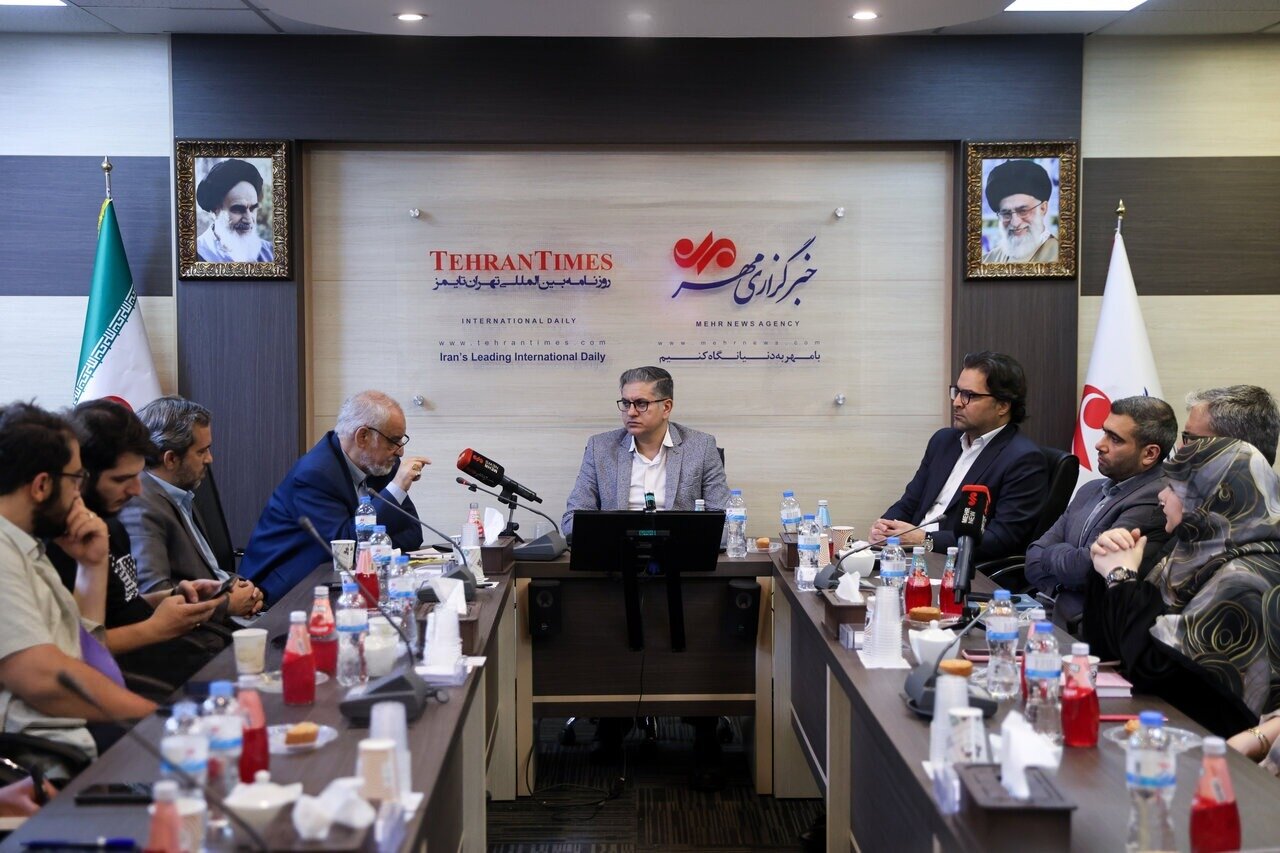
Tehran – Mehr Media Group held an international conference Tuesday entitled “Hezbollah Disarmament and the Future of Lebanon” to consolidate prominent regional experts to discuss the pressures of foreigners to disarm Hezbollah and its deep impact on Lebanon’s sovereignty.
One of Iran’s leading news organizations, the Media Group consists of the country’s most important international daily newspapers, the Tehran Times and MEHR News Agency.
The event, held amid a fierce effort to undermine resistance between us and Israel, highlighted Hezbollah’s essential role in protecting Lebanon and fighting foreign attacks.
Since the November 2024 ceasefire that ended a 14-month war with Israel, Hezbollah has been the target of a permanent call for disarming.
Conflict – Tel Aviv’s escalating attacks on Gaza and Lebanon have witnessed Israel’s devastating airstrikes and the assassination of Hezbollah’s Chief of Hezbollah, along with principled and unwavering solidarity with Palestine following the October 2023 operation.
Despite the sacrifices endured, Hezbollah remains a key shield and deterrence against Israel’s ongoing ceasefire violations, including repeated airstrikes and the continued occupation of Southern Lebanon’s territory.
The US and Saudi Arabia exerted increased political and economic pressure on Lebanon, providing coordinated and reconstruction aid for disarmament.
In line with these requests, the Lebanese Cabinet approved the US Support Plan on August 5 to restrict arms to the military. Hezbollah’s Executive Director Sheikh Naim Qassem has firmly rejected the instructions and vowed to preserve the weapons of the movement as an important means of protecting Lebanon and countering Israeli invasion.
Mohammadreza Moradi, editor of the Mehr News Agency’s international desk, warned at the roundtable that disarmament plans threatened Lebanon’s stability and rephrased Kasem’s vow to “fight like Kalbara.” He emphasized that Hezbollah’s weapons are essential to resisting Israeli occupation.
Lebanese political scholar Ali Ahmad criticized the current government’s consistency with US interests, saying “the government believes the resistance must end.” He added that Hezbollah prevented further Israeli invasion during the September-October war, and that while the group is open to strategic dialogue, it will not disarm while the Israeli invasion continues.
Ahmad Dustmarian, former Iranian ambassador to Lebanon, framed the issue as part of a wider regional struggle, saying, “Hezbollah’s weapons were a matter of honor and rooted among the people.” He argued that the Arab reactionary efforts to disarm us, Israel and Hezbollah are strategic miscalculations that can destabilize the region.
Ahmad al-Shami, an expert at Yemeni Al-Masila TV, highlighted Hezbollah’s historic victory, saying, “These weapons stopped the enemy in 2000 and 2006.” He called Hezbollah’s Arsenal “national honor” and warned that disarmament would enable Israel’s regional ambitions.
Mohammad Kawajuui, Tehran-based director of Lebanon Studies at the Center for Middle East Strategic Studies, said disarmament was a US-compiled attempt to destroy resistance, saying, “Now disarming Hezbollah would be a fatal blow.” He highlighted concerns among the Shiite community in Lebanon that the plan is targeting their security, given its proximity to Israel.
Zainb Farhat, a Lebanese NABA television expert, calls the disarmament decision “purely Americans” and cites the threat of US envoys to turn Lebanon into “a different Syria.” She warned of potential citizen disobedience or cabinet resignation if the plan goes ahead, but Hezbollah opposes internal conflict.
Mohammad Ali Hasania, an expert on issues in the Arab world, tracked the rise of Hezbollah on the Israeli invasion of the 1980s and the effects of the Islamic Revolution in 1979. He argued that once Hezbollah disarmed him, Israel’s efforts to target Iraqi resistance, in turn “the Lebanese army, trained only with light American weapons, cannot handle Hezbollah’s arsenal.”
The speaker refused to push for disarmament, portraying Hezbollah’s weapons as a national and regional deterrent that destabilizes Lebanon and obstructs its enemies.