
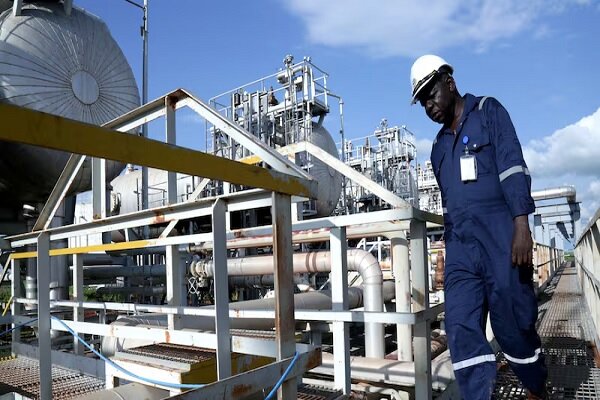
Paramilitary, military and industry officials said on Monday that emergency aid forces had captured Sudan’s largest oil field, as the group seeks to take control of the strategic and resource-rich Kordofan region, according to AFP news agency.
Since the paramilitary RSF drove troops from their last stand in Darfur in late October, the focus of the fighting has shifted to neighboring Kordofan.
An engineer at the Heglig oil field, far south of Kordofan, confirmed that the RSF had taken over the facility, telling AFP that his team “shut down the factory, stopped production and evacuated the workers to South Sudan.”
A military source told AFP that the army had withdrawn from the area “to protect oil facilities and prevent damage.”
The three officials spoke on condition of anonymity because they were not authorized to speak to the media.
Since April 2023, the RSF has been at war with regular forces, killing tens of thousands of people, displacing another 12 million, and destroying the country’s already fragile infrastructure.
Sudan is now effectively split in two, with the military controlling the north, east and center, and the RSF controlling much of the south with support from the west and allies.
Since September 26, international and regional organizations have accused the RSF of committing crimes against humanity in El Fasher and Darfur, amid reports of widespread executions and sexual violence by paramilitary forces.
Last week, an RSF drone attack hit a kindergarten and hospital in South Kordofan province, killing 114 people, including 63 children, and drew widespread international condemnation.
Director-General Tedros Adhanom Ghebreyesus condemned the “senseless” attack.
“Alarmingly, emergency personnel and response personnel who were attempting to transfer the injured from the kindergarten to the hospital came under attack,” Ghebreyesus wrote in X.
The Heglig field is the country’s largest and the main processing facility for South Sudan’s oil exports, which account for almost all of Juba’s government revenue.
“Processing plants near the oil fields through which South Sudanese oil passes have also been shut down,” the engineer said.
The pipeline, which transports South Sudanese oil from the southern border to Port Sudan on the Red Sea, is also a key source of income for impoverished Sudan, whose economy has collapsed due to war.
When Juba seceded in 2011, nearly all of Sudan’s oil reserves were taken with it. The Hegrig is disputed between the two countries, leading to a brief clash in 2012.
In addition to Heglig, RSF also controls a major oil field in the west, operated by China since the 1990s until it was forced to close early in the war.
Last month, China National Petroleum Corporation notified the Sudanese government of its intention to end the investment, according to a copy of the letter obtained by AFP.
Former oil minister Gadein Ali Obeid described the situation as a “disaster” for Sudan.
He said the country has now “lost two major oil-producing regions, Heglig and Block 6,” referring to Chinese-operated fields further west.
“All of Sudan’s oil production comes from both of them…Even the oil from Block 6 is processed at Heglig, which used to process 80,000 to 100,000 barrels per day for Sudan and South Sudan,” he added.
Since losing their last foothold in western Darfur, the military has been on the defensive, trying to block the militia’s advance through Kordofan back to the capital Khartoum, according to an AFP report published by Egypt’s Ahram Online.
MNA