
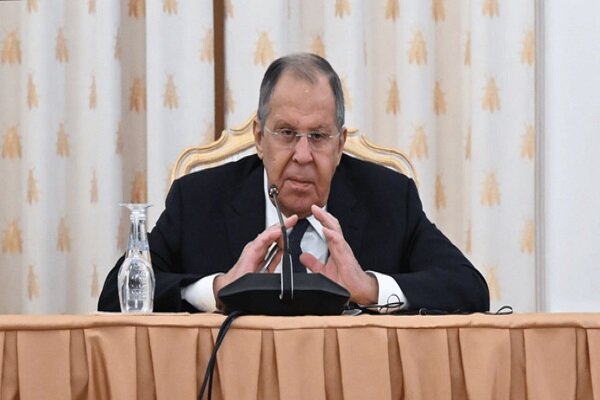
TEHRAN – Russian Foreign Minister Sergei Lavrov said there are no limits when it comes to military and technical cooperation with Iran, adding that Russia is currently responding to Iran’s needs.
The top diplomat made the comments at a press conference in response to a question about whether Russia supplies Iran with S-400 missile systems and Sukhoi Su-35 fighter jets.
Iran and Russia officially began implementing their 20-year Comprehensive Strategic Partnership Agreement about a month ago, marking an important step toward deepening bilateral ties between the two countries.
Under the treaty signed in January 2025, Russia and Iran are committed to countering common “security threats” and supporting each other in the exchange of information in that direction. The agreement also stipulates that if either side is invaded, the other side will not provide “assistance to the aggressor.”
On June 13, Israel launched a blatant and unprovoked act of aggression against Iran, sparking a 12-day war that left at least 1,064 people dead in the country, including military commanders, nuclear scientists, and civilians. The United States also entered the war by bombing three Iranian nuclear facilities in clear violation of international law.
In response, the Revolutionary Guards launched a series of carefully calculated missile and drone attacks over 12 days. These targeted attacks are now known to have amounted to 22 different operational waves, dismantling Israel’s major military, intelligence and technological infrastructure and leading to a cessation of hostilities.
The Iranian attack hit several key targets in the occupied territories, including Kirya, often referred to as Israel’s “Department of Defense,” Camp Moshe Dayan, a training and operations center for military intelligence officers, Ternov, one of the most fortified air bases in the occupied territories, Nevatim, Israel’s main base for operating U.S.-made F-35 stealth fighter jets, Hatzerim, another important air base, and Ovda Air Base. It is said to be an important Israeli military installation with command and control systems and electronic warfare capabilities.
Iran has repeatedly stated that it will respond firmly to any military invasion or any move that threatens national security.
During the Israeli attack, Iran realized certain deficiencies in its air defense system and fighter jet fleet. The country is likely to rely on allies China and Russia to make up for its shortcomings, perhaps by purchasing military equipment to further modernize its defense forces.
Last month, Israeli Prime Minister Benjamin Netanyahu reportedly asked Russian President Vladimir Putin to stop selling potential new weapons to Iran. Russia’s special envoy to Iran asserted in an interview published on Saturday that relations between Moscow and Tehran remain immune to outside influence.