
Beirut – Five months have passed since the establishment of the government of Nawaf Salam. But his promise is simply ink on paper.
The Minister’s Statement issued on February 26th has not been implemented regarding the fact that “accelerating the reconstruction of what was destroyed by Israeli invasion and eliminating damage” has not been implemented.
In contrast, the government of NAWAF SALAM is mercilessly compliant with the terms of the World Bank.
According to its website, the World Bank has 10 active projects in Lebanon, worth $4.4 billion, of which $2.46 billion has been paid up to date and $1.34 billion has been cancelled. The interest rate on these loans is $786 million, equivalent to 3% of GDP.
Over this year, the World Bank has loaned Lebanon $250 million under the pretext of emergency reconstruction support. It also lends $257.8 million to provide water to the larger Beirut region.
In 2024, Lebanon was loaned $250 million. This is said to promote alternative energy systems.
These loans confirm the failure of the Nawaf Salam government and its ministers, particularly Joe Sadi, Minister of Energy and Water in the Lebanese Army.
Thus, Lebanon has been linked to an electrical crisis and repeated blackouts for decades, but appears to be facing a new “adventure” led by the Lebanese army.
This includes expanding the electric subsea cable from Cyprus to Beirut as a “promising” solution to the worsening power crisis, which is about 190 kilometers away.
Clearly, neither the Lebanese nor the Cyprus Ministry of Energy has issued a clear position on the implementation mechanism or entities overseeing the project, as detailed formulas or technical research have not yet been presented to the Lebanese masses.
The leak reveals some of the violations that impose choices that do not serve Lebanon’s best interests.
The contracts with Murad, KVA, NEUC and Bus with service providers have been renewed via email with direct World Bank orders “to ensure business continuity.”
The World Bank argues that Electricity Du Liban (EDL) is not prepared to impose control of the distribution and services sectors and cannot ensure the continuity of billing, maintenance or operation of some transformer stations.
Moreover, the World Bank has set a specific deadline for recovery of Lebanon’s electricity sector for more than two years.
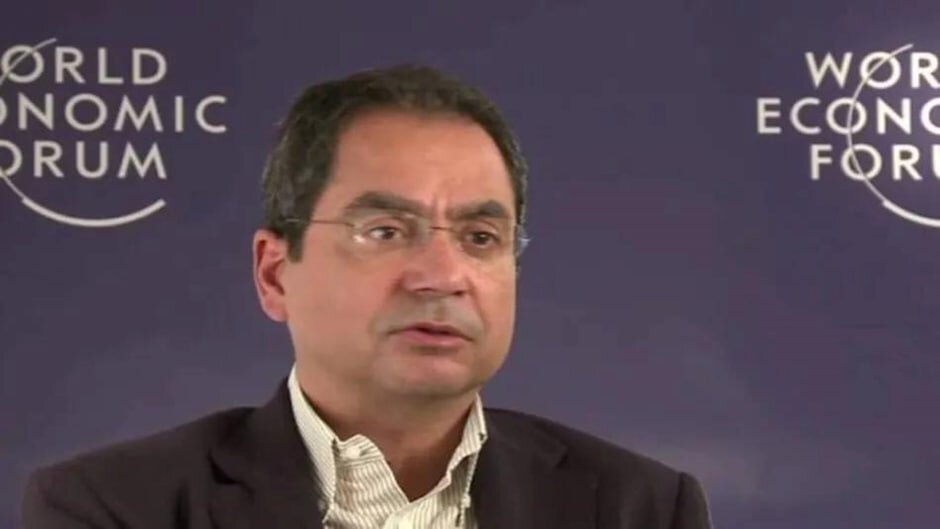
The World Bank, known as the “Devil’s Fund” by the Argentineans, continues to threaten and drag the country into a trap of debt.
When Malaysia experienced the Asian Tigers crisis, former Malaysian Prime Minister Mahathir Mohamad refused to accept international loans and successfully overcome it with minimal losses compared to other countries.
In an interview with Bloomberg, Mahathir Mohammad said, “When you borrow money from them, the condition they often impose is that they have their hands on managing the country’s economy, including the finances.”
Mahathir managed to manage the economic crisis in Malaysia without relying on international financial institutions and without turning Malaysia into an economic giant. Is there anyone who listens?
In the near future, Lebanon’s formal power sector is heading towards collapse, as the World Bank hopes.