
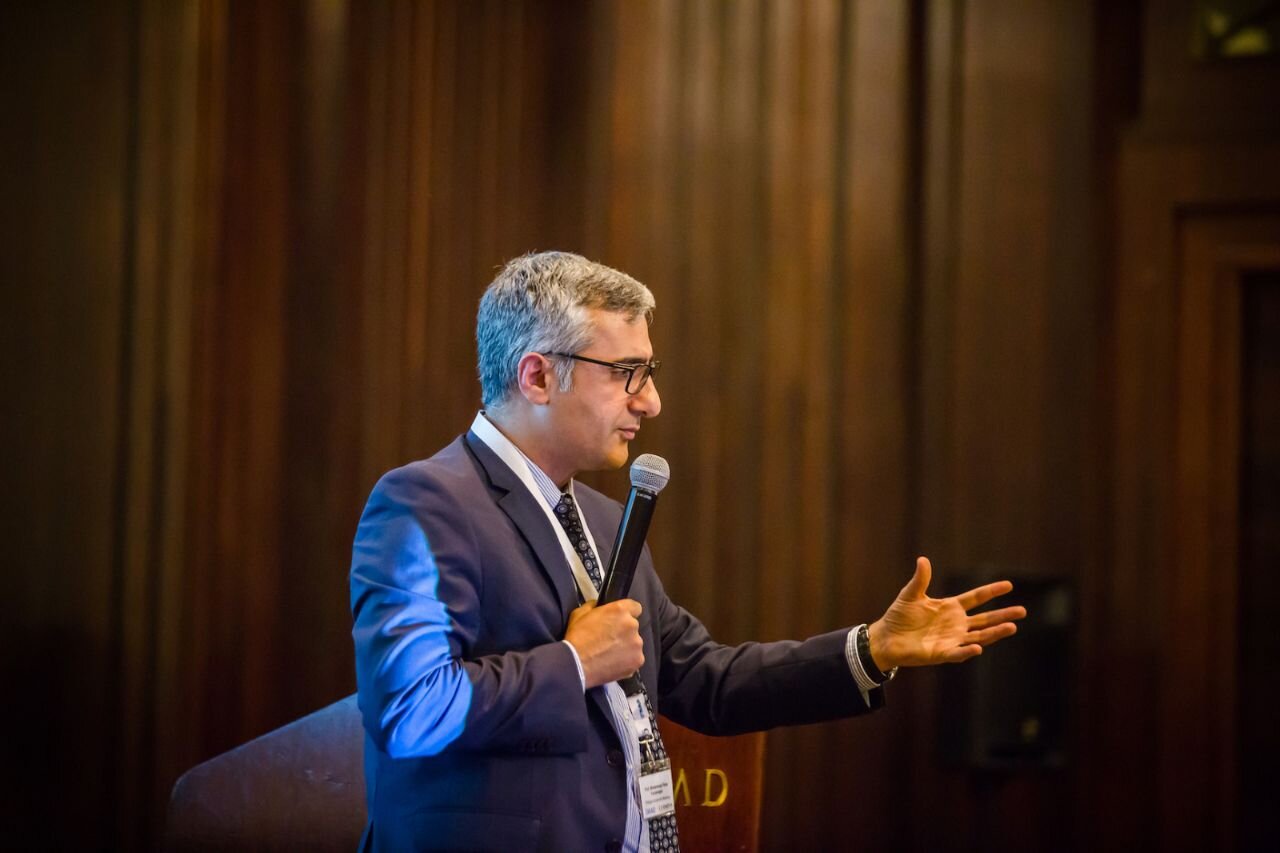
Tehran – This is the second part of an exclusive interview with Dr. Mohammad Reza Farzaneghan, Professor Tehran Times, on the activation of the snapback mechanism and the wider impact of new UN sanctions on Iran.
Farzangan is focusing on Iran’s resilience and reform capabilities in the face of new sanctions. Recognizing the multifaceted challenges, from pressure on the middle class to corruption and rising social tensions, he also highlights the undeveloped potential of a country that turns a crisis into opportunity.
He emphasizes that, although it is causing damage in the short term, external pressures can serve as a catalyst for long-term structural reforms. He points to the growing role of digitalization, taxation and subsidy reform and the empowerment of women in the workforce as the key levers for sustainable development. Furthermore, he suggests that Iran’s diplomatic pragmatism, particularly efforts to maintain dialogue within the NPT framework while deepening partnerships in the East, reflects strategic adaptation rather than isolation.
Below is the full interview:
Based on what you just explained, what does these sanctions mean in view of Iran’s social stability, particularly the impact on the middle class?
The middle class of Iran is clearly declining under sanctions. The analysis up to 2019 estimated that the middle class share was about 50% of the population prior to the pandemic, but could have been closer to 80% in the absence of sanctions. This represents a gap of about 30% points.
But your question is about the impact on social stability. The photos are complicated here. Sanctions generate some negative externalities. They increase corruption, especially political and administrative corruption. Under sanctions, governments often restrict the disclosure of information to avoid external exposure, resulting in lower transparency while rising rent-seeking behavior. This lack of transparency creates fertile ground for further decay.
Corruption undermines social trust. It reduces trust in the institution, but also weakens individual trust. This is damaging the stability of the social system. Empirically, rising corruption is associated with greater risks of conflict, protest and violence. Our study of Iranian sanctions and conflicts shows that increased sanctions are associated with more civil disability and terrorism. Interestingly, the risk of large-scale conflicts such as the Civil War actually decreases. This is due to the effect of “meetings around the flag.” Even opposition groups tend to oppose the threat of fragmentation and separatism when the country is perceived as being at stake.
Still, the broader mechanism is clear. Sanctions cause economic pain through rising inflation, currency depreciation, unemployment, capital flight and poverty. These pressures reduce the opportunity costs of joining radical groups or engaging in violent protests. In a growing economy, individuals need to lose more and are less likely to take such risks. Under sanctions, the reverse is held. This helps explain signs of radical behavior and the decline in social cohesion.
In short, sanctions erode the middle class, fuelling fuels fuelling fuels and weakens social trust. Together, these dynamics make Iranian society more vulnerable to instability, even if the forms of instability differ from different types of conflict.
How could the ongoing sanctions shape Iran’s foreign policy, particularly approaches to nuclear negotiations and cooperation with institutions?
Iran’s foreign policy based on the new round of UN sanctions will likely change further east. This trend is not new. In recent years, China has already become Iran’s major trading partner, buying more than 95% of Iran’s oil exports. Europe and the West are reduced to marginal roles. Because trade and foreign policy are closely linked, this dependence has strengthened Iran’s political and economic alignment with China and to some extent strengthened cooperation with Russia. Reinvigorating UN sanctions deepens this change.
At the same time, Iranian authorities recognize the importance of keeping diplomatic channels open. If diplomacy is completely closed, it will strengthen those who advocate for more fundamental and conflicting strategies, including military options against Iran. Leadership has been learned from experience. The UN sanctions from 2006 to 2015 ultimately created strong domestic pressure on negotiations that helped lead Luhani to power with the promise to lift the sanctions. That diplomatic track led to the JCPOA. Therefore, I expect there will be ongoing efforts to maintain some form of dialogue, even under current sanctions.
However, this challenge lies in deep distrust between Iran and the West. It only got worse after the recent 12-day war between Iran and Israel and direct US intervention in Iran. This makes it much more difficult than it was 10 years ago. Nevertheless, I believe Iran will strive to stay within the NPT despite calling for some domestic factions to leave. The administration understands the risks of more fundamental movements and the value of maintaining at least minimal cooperation with international organizations.
Still, the situation is far more dangerous than it was 10 years ago. The sanctions issue is now exacerbated by the real risk of a direct military conflict between Israel and the United States. My concern is that reinvigorating UN sanctions will not only deepen Iran’s oriental orientation, but also open the way for a new round of military escalation without intentionally.
In this situation, what strategies can Iran adopt to mitigate the impact of sanctions and restructure its economy and society?
Of course, strategies are more difficult under sanctions. Under sanctions, domestic capacity and resources must be mobilized for production and investment, and the sanctions environment further complicates the problem. Transparency will decrease, rent-seeking, corruption will increase. Society is heading in a shorter term as inflation uncertains the future value of money. From a private sector perspective, this hinders investment in long-term projects.
The government also faces limited resources under sanctions. Oil exports are constrained, and if possible, financial sanctions complicate the repatriation of funds. Buyers demand higher discounts, intermediaries appear, and transaction costs increase. UN sanctions add testing, increased delays and insurance costs. Even regional partners such as Iraq, Afghanistan and Pakistan can cause compliance issues and further complicate trade.
In this sense, strategy is constrained. It is important to reduce the costs of doing business and encourage domestic entrepreneurs. Tax reform and formalization of informal economies may help streamline energy subsidies to reduce government spending and improve efficiency. Digitalization, including AI and digital banking, offers additional pathways to increase productivity and reduce waste. Iran has made significant advances in digitalization over the past year.
It is difficult to implement major reforms under sanctions, as governments must consider social and political influences. Ideally, reforms such as subsidies adjustment, taxation, and economic diversification should occur before external pressure occurs. Sanctions force the government to pursue postponed and politically expensive reforms, including reducing its dependence on oil. Sanctions increase the cost of living, but also create opportunities to promote reasonable resource use, human capital development and wider inclusion of women in the workforce.
Women’s labor participation in Iran remains low at around 10-15%. Most working-age women are not employed or actively seeking jobs. While some may work in an informal economy, social, cultural, legal and economic barriers prevent many from contributing to a formal economy. Reducing these barriers could lead to a significant increase in talent pools, especially in the services sector. Gender equality in education has improved, enrollment is almost specific, and in some cases there are more women than college men. The challenge is now to integrate these graduates into the labor market. Simple reforms could raise the global average of 50% of women’s labor participation, generating significant economic benefits.
Although Iran has skilled human capital and ample domestic resources, short-term investment behaviours shaped by sanctions, political constraints and corruption limit productive use. High corruption promotes faster returns than long-term investments, reducing entrepreneurship and industrial development.
In short, sanctions negatively affect several aspects of Iran’s economy, but also create incentives for innovation and efficiency. External pressure can highlight opportunities for reform, increased productivity and better use of human capital. Sanctions are not simply harmful. They can push the economy towards more rational and sustainable practices.