
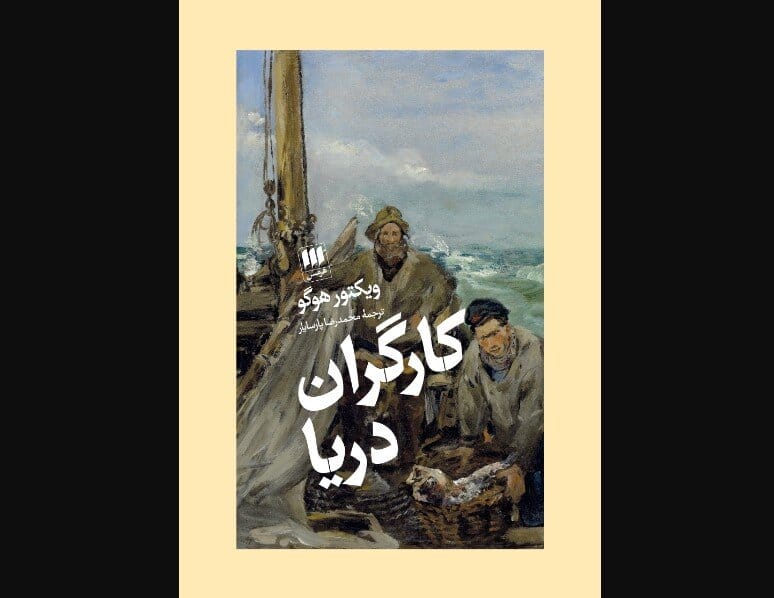
Tehran – “The Sea Toiler” by French author Victor Hugo was published in Persian by Hermes Publishing.
Mohammadreza Parsayar was the translator of the book, first released in 1866.
“The Toilers of the Sea” is a novel that captures the stern spirit of Guernsey, where Hugo spent 15 years in exile.
The novel’s setting (a small isolated community) is structured as a powerful backdrop to transforming normal events into dramatic stories of heroism, love, and human endurance. Set shortly after the Napoleonic Wars, Hugo’s story also explores the profound influence of the Industrial Revolution on island life, mixing social commentary and adventure.
“Toillers of the Sea” centers around Gilliatt, a humble fisherman and social exile who becomes an unexpected hero. The story is the owner of his love for Delchette, the nie of Mess Rechiere, and the owner of Durande, Guernsey’s first steamship. The island community is plunged into chaos when Durande is destroyed in a dangerous double double Leaf leaf distance from Roches Douvres. Deruchette promises to marry someone who can save the ship’s steam engine. This is almost impossible task. Driven by love and duty, Gilliat volunteers set out on a dangerous mission to test both his physical endurance and moral strength.
The novel clearly depicts Giliat’s struggle. It is to fight hunger, cold, fatigue, and fight the fierce octopus protecting the sunken shipwreck. Hugo’s depiction of his battle with the octopus is particularly memorable, symbolizing the universal battle between Giliat’s courage and the chaos of nature. In these adventures, the story highlights patience and resilience in social themes (Gilliat’s status as an outsider and the doubts he faces from the community).
The origins of the story are personal. Exiled in Guernsey, Hugo was inspired by a real maritime encounter with local scenery. It starts with a woman arrives on the island with her young son, Giliat, who grows up in the superstitions that consider him a wizard. After her death, Giliat becomes a skilled fisherman and sailor known for his courage. Meanwhile, Mess Lethierry’s peaceful life becomes confused when Deruchette notices Gilliatt and writes his name in the snow, causing her obsession. He begins to chase her, playing bagpipes outside her house, dreaming of love despite his outsider status.
Adding tension is Sir Crabung, the captain of Durande, who plans to sink the ship into Hanoi Reef and escape with stolen money. He is colluding with Rantane, a fraudulent trader, to carry out his plans. However, due to the fog, Crabung accidentally arrives at the Double Reef and attempts to escape by jumping into the sea. Tragically, he is pulled and drowned, his fate is determined to entangle and entangle with the shipwreck and save him.
As news of the wreck spreads, Rechiery is desperate to retrieve the engine. Delchette promises to marry a successful man, and Giliat accepts the challenge. His relentless efforts will take him deeper, fighting hunger, cold, danger, and symbolic battles with the octopus. During this underwater expedition, he discovers Club Inn’s skeleton and stolen money, adding a mystery to his heroic journey.
At the climax, Gilliatt brings the engine to the rechiere and manages to fulfill his promise. Despite his heroism, he declined Delchette’s love and saw her accept the proposal from the tail of Ebenezer, a young Anglican priest. In selfless act, Giliat helps the couple escape with cashmere on the sailing ship. Overwhelmed by heartbreak and loneliness as the ship departs, Giliat waits for Guild Holm Ur (sea rock), drowns as the tide rises, symbolizing his ultimate sacrifice.
“The Sea Toiler” is notable for its engaging adventures, but also for its linguistic influence. It introduced the Garnesian language of Octopus Pubre to French. Its themes of resilience, love and sacrifice continue to resonate, securing its place as a timeless maritime epic rooted in Guernsey’s rugged spirit.
sab/