
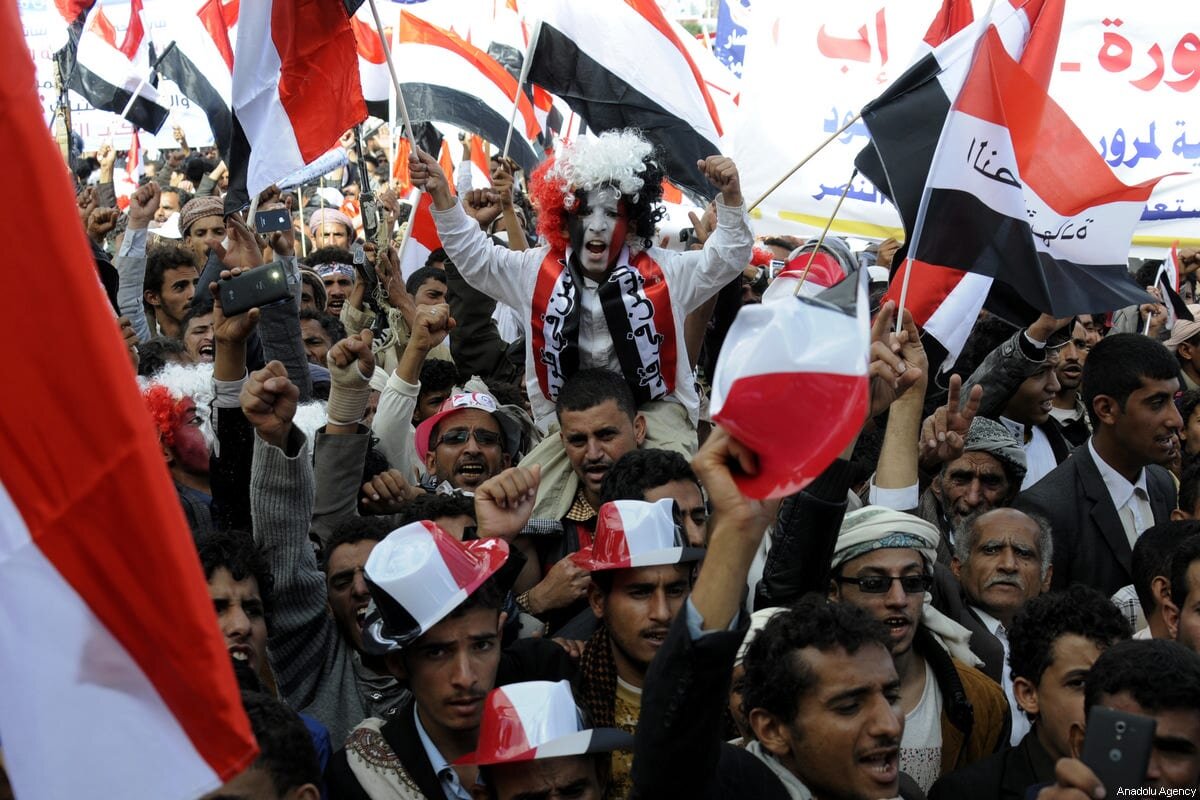
Beirut – The September 21st Revolution of 2014 marks a historic turning point in the Yemeni landscape. It was not merely a protest against corruption and alienation, but rather a fundamental change in the structure of national sovereignty and national sovereignty, relocating Yemen to regional and international geopolitics.
This revolution represents a pathway to changing the internal balance of electricity. Traditional elites, which had been linked to external dependence for decades, have subverted, and the concept of “national sovereignty” has been restored with new authorities’ discourse.
This transformation is clearly reflected in the social and political structures of northern Yemen, and Sanaa became the epicenter of intense regional conflict.
From day one, Sanaa’s leadership raised the slogan of “independence” as one of the pillars of the revolution, which was achieved by encouraging local production of agriculture and light industries. They attempt to break foreign monopolies over economic input. Build national discourse that rejects dependencies.
However, despite its symbolic and political success, this strategy clashed with the reality of blockade and war, limiting the realities of actual economic independence. However, this approach has contributed to integrating cultures of economic resilience and exploring local alternatives.
This revolution has further changed the regional security equations, particularly with the management of capital and national institutions, and Sanaa has become an undeniable player in the Red Sea and Bab al-Mandav Straits.
Furthermore, one of the most notable achievements of the revolution was the adoption of explicit discourse in the defense of the Palestinians, as one of the most notable achievements of the revolution became the central setting for demonstrations supporting the Palestinian people, and viewed the Palestinian cause as an integral part of the revolution’s identity.
Yemen, therefore, effectively entered the axis of resistance, particularly in the Red Sea, through military operations directed towards Israeli groups or related transport.
This strengthened Sanaa’s position in regional networks, including Iran, Hezbollah and Palestinian resistance movements. Therefore, it provided symbolic, political and military aspects that were not present in Yemen by 2014, and contributed to the widening of the geography of resistance in the face of Israeli occupation.
With regard to Iran, Iran and Yemen’s relationship is limited to political and ideological aspects, including moral and media support for the Ansalala movement, and falls short of strategic partnerships.
Since 2014, relationships have witnessed qualitative changes, expanding communication channels, strengthening military and technical cooperation, and direct intersections in political and media discourse.
Without a doubt, the September 21 revolution in Yemen cannot be understood without considering the ideological and political aspects that link it to the Islamic revolution in Iran, as both revolutions share common references.
Ideologically, the Islamic Revolution relied on the principles of “real Muhammadhan Islam” against “American Islam.” It raised the slogan “Death to America, Death to Israel” as a cry to express awareness of the threat of global arrogance. This slogan wasn’t just a tool for protest. It became a political doctrine that symbolized subordination and rejection of integration into the Western system.
In the Yemeni context, the revolution on September 21 carried the slogan “The Scream,” launched by Martyr said Hussein Badr al-Din Al-Houthi (R) at the turn of the millennium. This consisted of the same phrase. This cry wasn’t just a popular slogan. It has transformed into a mobilization and intellectual framework that expresses the essence of the revolution and ideologically links it to Iran’s Islamic Revolution project.
Political, like Iran in 1979, the revolution on September 21 constituted a declaration of the end of subordinates and the establishment of independent sovereign decisions. Iran defeated the pro-western Shah, but Sanaa defeated the political elites that have long been associated with regional and international alliances.
What brings together the two experiences is that the Palestinian cause became central to their political projects. Iran has declared “International Quds Day” to embarrass the centrality of Palestine.
Furthermore, the Sanaa government has shown growing interest in strengthening its relations with emerging international powers, particularly with the BRICS countries, in order to break the political isolation imposed by the Western and the Arab Union. It opens new trade and financial channels away from the Western financial system that is subject to sanctions. It benefits from the expertise of these countries in the fields of technology, energy and infrastructure.
However, the real challenge lies in the lack of official international recognition of the Sanaa government, limiting the scope of potential cooperation. Thus, the expected cooperation could be selective and unannounced through intermediary channels or limited agreements, but it represents an important strategic horizon in Sanaa’s future discourse.
The revolution on September 21 shows that it is not merely an internal event, but a fateful historical transformation that shaped Yemen’s position in the regional equation. These transformation studies have revealed that since September 21, 2014, Yemen is no longer a field for regional conflict, but rather a key player in the balance of its statements and influential regional and international power.