
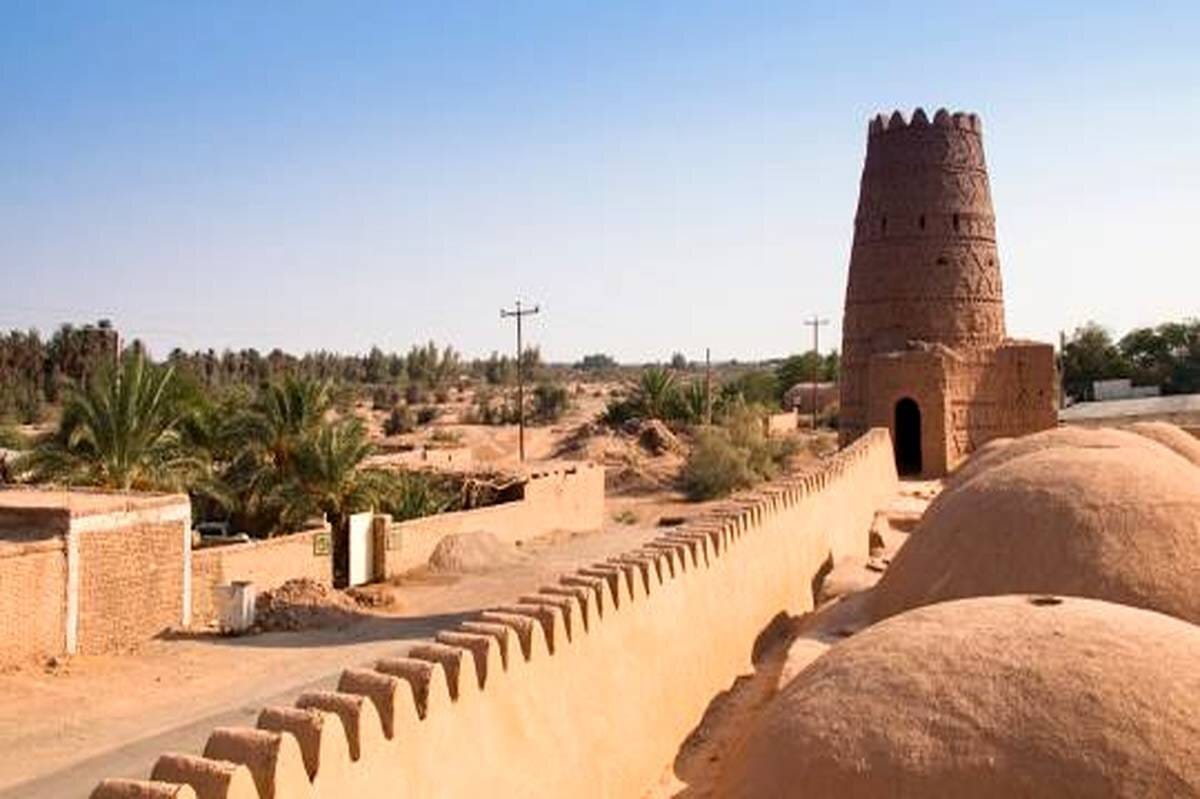
TEHRAN – The village of Shafiabad, located in the famous Shahdad district of southern Iran’s Kerman province, stands as a remarkable example of the harmonious coexistence of human settlements and the harsh desert environment.
Strategically located along the historic Silk Road and adjacent to the world-famous Shahdad Qarut, one of the world’s most extraordinary desert landscapes, Shafiabad offers a unique blend of cultural, historical and natural significance.
The village, located along Khanderous in northern Iran and Soheili in southern Iran, was named the Best Tourism Village by the United Nations Tourism Organization on October 17th.
In the center of the village is the Shafiabad Fort, which dates back to the Qajar period of the 19th century. Built using traditional adobe techniques, the fortress features strong defensive walls, corner watchtowers, and a complex internal layout that shows an adapted architectural response to desert conditions.
Nearby is the Shafiabad Caravanserai, an authentic example of Persian caravanserai architecture. Historically, it served merchants and travelers along the Silk Road. Its central courtyard and carefully designed rooms reflect Shafiabad’s important role in regional trade and cultural exchange.
Shafiabad’s location lends it importance as the gateway to the Shahdad Qalut, a vast Yardang formation formed by wind and erosion over thousands of years. These unique geological features are located within the Rut Desert, which was declared a UNESCO World Natural Heritage Site in 2016. The village therefore represents an important interface between culture and nature, demonstrating human adaptation to one of the harshest climates on Earth.
The local community of Shafiabad, which has historically relied on agriculture and livestock farming, is increasingly embracing sustainable tourism. The establishment of ecolodges and the promotion of cultural festivals such as the 1st Garlic Festival to be held at Shafiabad Fort in April 2025 highlight community-led efforts towards preserving intangible cultural heritage and promoting rural development.
Furthermore, the village maintains a high degree of architectural and spatial integrity. The restoration work respects traditional construction methods and guarantees the historical authenticity of the village. The surrounding desert landscape remains largely untouched, preserving the cultural context and visual harmony between the village and its natural environment.
morning